
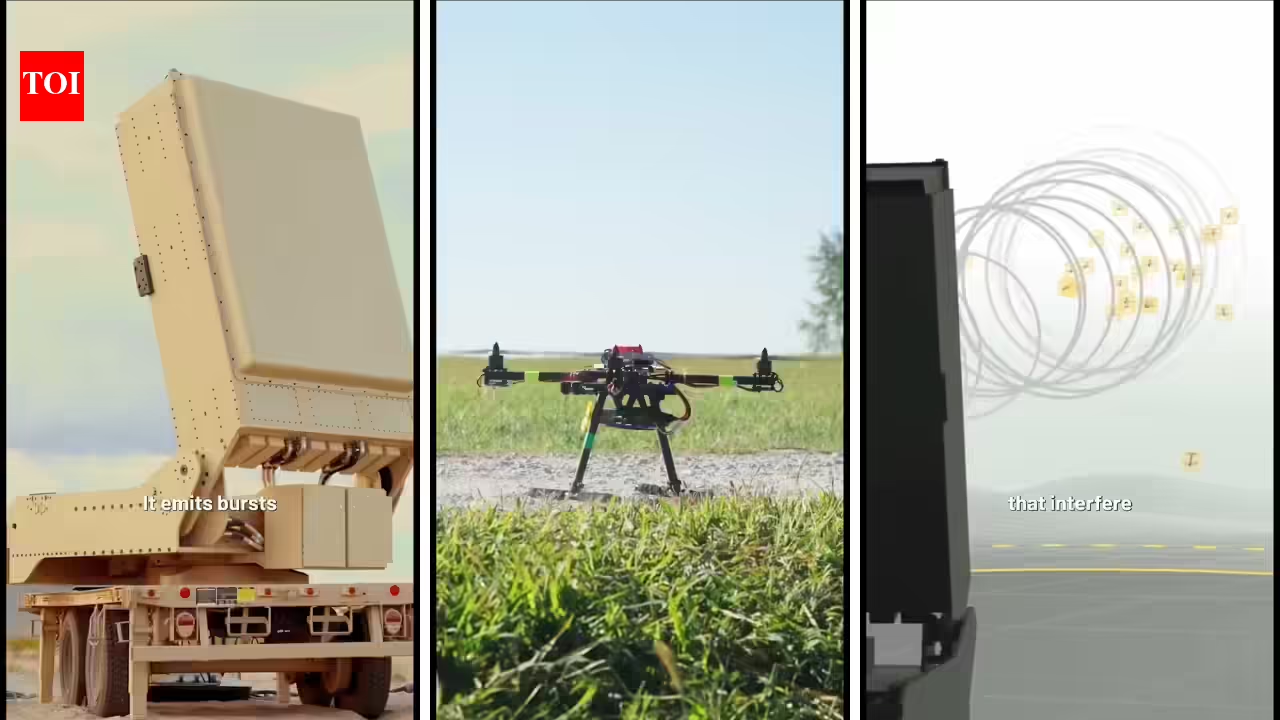
Anand Mahindra is backing a solution to counter drone swarms more efficiently. In a recent post shared on the microblogging site X, he shared a video of a High-Power Microwave (HPM) system named Leonidas which is capable of disabling multiple drones at once to highlight the shift of modern warfare. In the post, he wrote “49 drones. One pulse. In contrast to traditional interceptors or even lasers that engage one target at a time, these systems can target multiple threats simultaneously.Stressing the need for India to adapt, Mahindra wrote, “For India, importing solutions reactively isn’t a strategy,” calling instead for building indigenous, AI-enabled HPM and laser capabilities supported by faster procurement, patient capital and stronger deep-tech ecosystems. He also underlined the growing cost imbalance in conflicts, stating, “Recent conflicts highlight a brutal reality: cheap kamikaze drones cost a fraction of the interceptors sent to destroy them. The aggressor doesn’t need to win. He just needs to keep the math working in his favour.”
Read Anand Mahindra’s full message on HPM anti-drone weapons
In his X post, Mahindra wrote, “49 drones. One pulse. All gone.Beyond the tech, it shows a shift where scale and economics matter as much as firepower. Recent conflicts highlight a brutal reality: cheap kamikaze drones cost a fraction of the interceptors sent to destroy them. The aggressor doesn’t need to win. He just needs to keep the math working in his favour.And while lasers are much cheaper & great for precision, they only engage one target at a time. Against a swarm, that’s a problem. HPM doesn’t have that constraint. It covers a volume of space, not a point.Both are meant to complement kinetic systems (missiles, guns) rather than replace them. The future of air defense is clearly layered, with each technology filling a different niche.For India, this is very pertinent. Importing solutions reactively isn’t a strategy. Building indigenous, AI-enabled HPM and laser capability is early.We have the talent. We just need faster procurement, patient capital, and institutions that let deep-tech startups scale.On a personal note, I’ve recently taken on the role of Chairman of iCreate, a leading deep-tech incubator in Gujarat. I would like it to be the home for exactly this kind of innovation. If you’re building the technologies that will define tomorrow’s defense, do check it out at https://icreate.org.in”