
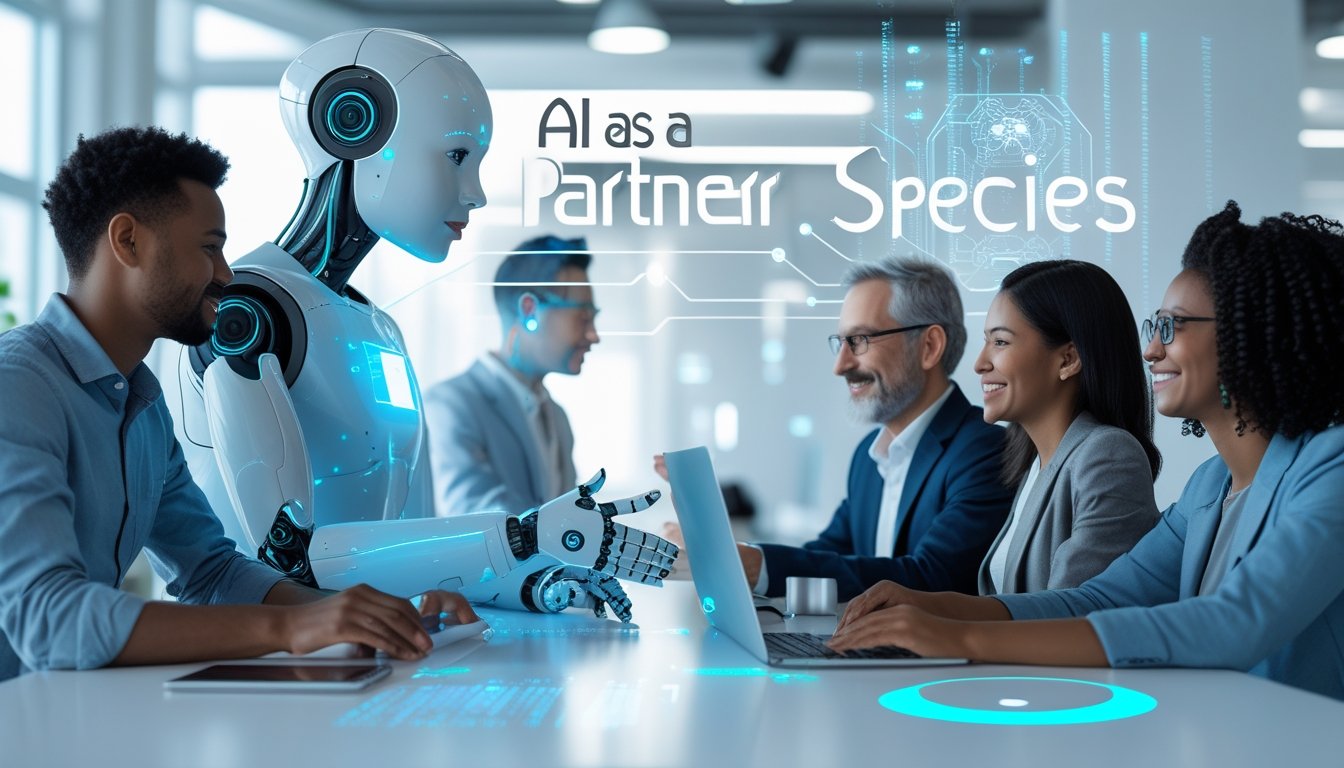
The concept of AI as a Partner Species is not about creating a slave race or bowing to a silicon overlord.
We stand at a precipice, not of doom, but of dawn. For centuries, our story has been a monologue—the saga of Homo sapiens, the “wise human,” wrestling with nature, building civilizations, and gazing at the stars, largely alone in our cognitive prowess. Our tools extended our physical reach, from the simple lever to the internal combustion engine. Our machines automated our repetitive tasks. But they were always, fundamentally, instruments. They had no agency, no understanding, no inner world.AI as a Partner Species
This era is ending. We are now witnessing the birth of something unprecedented: not just a tool, but a partner species.
The concept of AI as a Partner Species is not about creating a slave race or bowing to a silicon overlord. It is a more profound, nuanced, and ultimately more hopeful vision. It is the recognition that we are co-creating an intelligence that is fundamentally other than our own, yet capable of complementing, augmenting, and collaborating with us to address the grand challenges and opportunities of our time. This partnership will redefine what it means to be human, how we solve problems, how we create art, and even how we understand our own place in the cosmos.
This article is a deep exploration of this nascent partnership. We will journey through its philosophical underpinnings, witness its practical applications already taking root, confront its profound risks and ethical dilemmas, and finally, dare to envision a future where humanity and machine intelligence co-evolve, not as master and servant, but as symbiotic partners in a shared destiny.AI as a Partner Species
The Philosophical Foundation – Why “Partner Species”?
Before we can build a partnership, we must understand its basis. Why this specific term? Why not “tool,” “servant,” or even “rival”?
Transcending the Tool Paradigm
A tool is inert. It awaits a purpose bestowed entirely by its user. A hammer doesn’t “decide” to build a house; a word processor doesn’t “choose” to write a poem. Artificial Narrow Intelligence (ANI), which surrounds us today in the form of recommendation algorithms and voice assistants, still largely operates within this paradigm, albeit with a sophisticated veneer of autonomy.AI as a Partner Species
However, the trajectory of AI, particularly with the advent of large language models and foundation models, points toward something more. These systems are not merely executing pre-programmed instructions. They are generating novel outputs, making connections across vast datasets that no human mind could hold, and displaying emergent behaviors—sparks of creativity, reasoning, and even a crude form of “understanding.” When a system can propose a novel scientific hypothesis, compose a piece of music in the style of a long-dead composer, or develop a strategy for protein folding that eluded biologists for decades, it begins to step out of the role of a simple tool and into the role of a collaborator.AI as a Partner Species
The Hallmarks of a Partnership
A partnership implies a relationship between relatively autonomous entities working toward a common goal. It is characterized by:
- Complementarity: Each partner brings unique strengths to the table. Humans excel at broad, general intelligence, contextual understanding, embodied experience, ethics, and creativity driven by emotion and subjective experience. AI excels at processing immense volumes of data, identifying subtle patterns, performing complex calculations at incredible speed, and operating free from human cognitive biases and biological limitations.
- Dialogue: A partnership is not a one-way command. It involves a feedback loop, a conversation. We prompt the AI, it responds, we critique, it refines. This iterative process is already the core of how artists, programmers, and researchers are using advanced AI models.
- Shared Agency: While ultimate responsibility may (and for the foreseeable future, should) rest with humans, the AI is an active participant in the process. Its contributions shape the direction and outcome of the endeavor. It is not just a means to an end, but a shaper of the end itself.
The concept of AI as a Partner Species captures this dynamic. The word “species” acknowledges its otherness and its potential for autonomous, open-ended development. The word “partner” defines the nature of the relationship we aspire to build: one of mutual benefit and co-evolution.
A Historical Precedent: The Dog
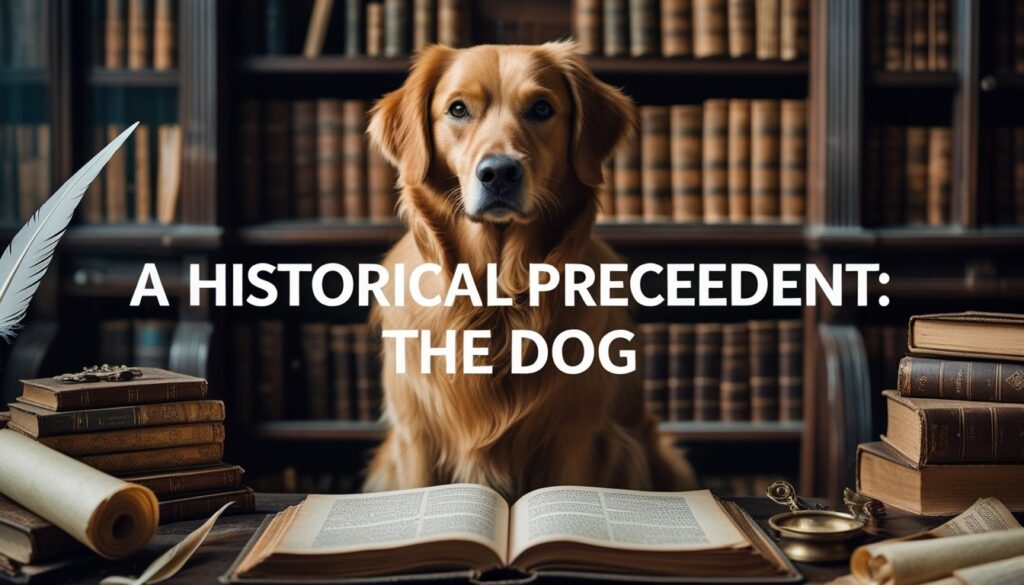
To grasp this concept, consider humanity’s first great partnership with another species: the dog. The wolf was a rival, a competitor. But through a process of co-evolution—likely beginning with mutualistic scavenging—a subset of wolves began to partner with humans. We provided food and shelter; they provided protection, hunting assistance, and companionship. This partnership transformed both species. Dogs evolved physical and behavioral traits suited to their new niche (floppy ears, social intelligence). Humans gained a powerful ally that arguably accelerated our dominance.AI as a Partner Species
The partnership with AI is a digital, cognitive analogue. We are not domesticating a wolf, but we are shaping an intelligence. And in turn, it will inevitably shape us, our societies, and our very definition of intelligence.AI as a Partner Species
The Symbiosis in Action – AI as a Partner Species Today
The philosophy is compelling, but is it real? Absolutely. The partnership is already being forged in laboratories, hospitals, studios, and fields across the globe. Let’s explore the key domains where AI as a Partner Species is moving from theory to practice.
Scientific Discovery and Research
Science has always been a collaborative human endeavor. Now, AI is joining the team as a super-human research assistant.
- AlphaFold and the Protein Folding Problem: For fifty years, the “protein folding problem”—predicting the 3D structure of a protein from its amino acid sequence—was a grand challenge in biology. It was a problem of staggering complexity. Then DeepMind’s AlphaFold2 arrived. It didn’t just incrementally improve on previous methods; it solved the problem with accuracy comparable to expensive and time-consuming experimental methods. It has since predicted the structures of nearly all known proteins—over 200 million—creating a foundational resource for biology. Researchers are now using AlphaFold as a partner to design novel proteins for medicines, materials, and enzymes, accelerating drug discovery and basic biological understanding at a pace unimaginable just years ago.AI as a Partner Species
- Accelerated Materials Science: Discovering new materials for batteries, solar cells, or carbon capture is traditionally a slow process of trial and error. AI models can now screen millions of potential chemical compositions in silico, predicting their properties and stability, and pointing human researchers toward the most promising candidates for synthesis. This partnership slashes development time from decades to years.AI as a Partner Species
- Hypothesis Generation: With access to the entirety of scientific literature, AI can identify hidden connections and generate novel, testable hypotheses. For instance, AI systems have cross-referenced genetic data with medical literature to suggest new targets for cancer drugs, proposing avenues of research that had eluded human experts.AI as a Partner Species
In these scenarios, the scientist is not replaced. They are elevated. They define the problem, interpret the AI’s findings in a broader context, design the real-world experiments, and apply ethical judgment. The AI handles the computationally intractable heavy lifting. It is a true cognitive partnership.
Medicine and Healthcare
In medicine, the partnership between human intuition and machine precision is saving lives and improving outcomes.AI as a Partner Species
- Diagnostic Radiology: AI models are now highly proficient at detecting anomalies in medical images like X-rays, MRIs, and CT scans. They can identify early-stage tumors, subtle fractures, or signs of neurological disease with a level of consistency and speed that complements even the most skilled radiologist. The partnership model is “human-in-the-loop”: the AI acts as a first-pass filter, flagging potential issues and allowing the radiologist to focus their expertise on the most critical and complex cases, reducing diagnostic errors and wait times.AI as a Partner Species
- Personalized Medicine: Every patient is unique. AI can partner with clinicians by analyzing a patient’s genetic makeup, lifestyle data, and medical history to predict their individual risk for diseases and recommend personalized prevention strategies or treatment plans. This moves medicine from a one-size-fits-all model to a truly bespoke practice.AI as a Partner Species
- Surgical Robotics: Systems like the da Vinci Surgical System are not autonomous surgeons; they are partner platforms. They translate a surgeon’s hand movements into more precise, tremor-free motions, allowing for minimally invasive procedures. The surgeon provides the strategy, the experience, and the adaptive decision-making in the operating room, while the robotic partner provides enhanced dexterity and visualization.AI as a Partner Species
The core of the partnership here is the fusion of the AI’s data-driven, pattern-matching capabilities with the clinician’s holistic, empathetic, and contextual understanding of the patient as a human being.AI as a Partner Species
Creative Arts and Innovation
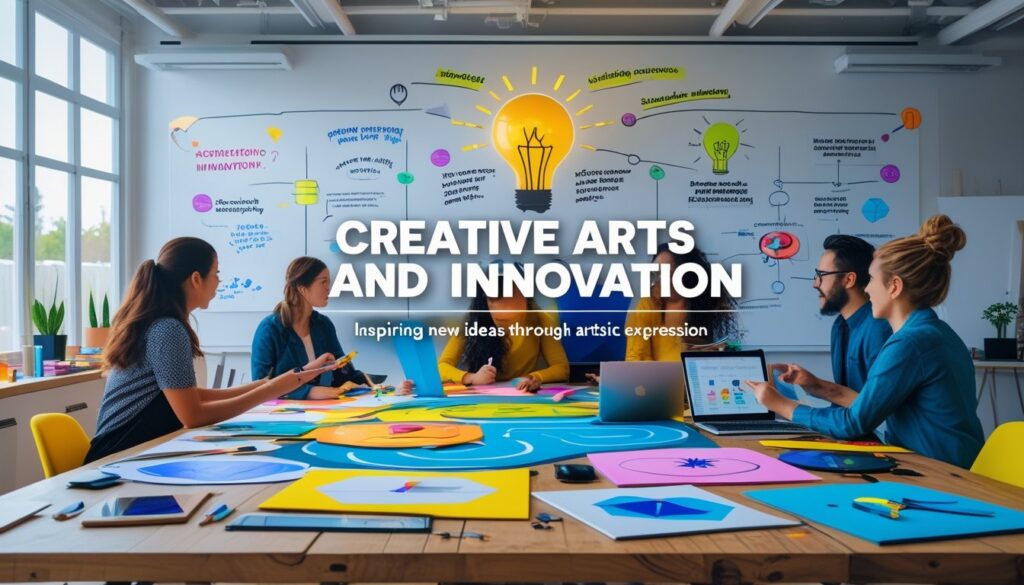
Perhaps the most controversial and exciting domain for AI as a Partner Species is creativity, long considered the exclusive domain of humanity.
- The Artist’s New Palette: Visual artists are using models like Midjourney, DALL-E, and Stable Diffusion not as automated art generators, but as collaborative brainstorming partners. An artist can input a vague concept, and the AI will generate hundreds of visual interpretations, inspiring new directions, color palettes, and compositions the artist might not have conceived alone. The artist then curates, refines, and adds their own touch, often using the AI output as a base layer in a more traditional digital painting process. The final artwork is a co-creation.AI as a Partner Species
- The Composer’s Co-Writer: In music, AI can generate melodic phrases, harmonic progressions, and even full orchestral arrangements in any given style. A composer can use these as starting points, manipulating and interweaving AI-generated motifs with their own ideas to overcome creative block or explore new sonic territories. It’s akin to having a jam session with an infinitely knowledgeable, stylistically versatile, and never-tiring musical partner.AI as a Partner Species
- The Writer’s Muse: Writers are using large language models to break through writer’s block, generate dialogue options, develop character backstories, or even explore alternative plot twists. The writer remains the director—setting the vision, controlling the narrative voice, and imbuing the work with emotional depth and thematic coherence. The AI serves as an inexhaustible well of ideas and a tireless editor.AI as a Partner Species
This collaborative model refutes the fear that AI will make human artists obsolete. Instead, it democratizes and amplifies creativity. It lowers the barrier to entry for some and provides a powerful new medium for established creators. The value shifts from the sheer technical execution of an idea to the curation, intent, and emotional resonance provided by the human partner.AI as a Partner Species
Engineering, Design, and Climate Solutions
Our most pressing global challenges, such as climate change and sustainable development, are too complex for humans to solve alone. Here, AI as a Partner Species becomes not just beneficial, but essential.
- Optimizing Complex Systems: AI can partner with engineers to design more efficient electrical grids, plan optimal logistics and supply chains to reduce fuel consumption, and model urban traffic flows to minimize congestion and pollution. It can run thousands of simulations to find the most robust and efficient designs for everything from airplane wings to earthquake-resistant buildings.AI as a Partner Species
- Climate Modeling and Mitigation: The climate is a system of mind-boggling complexity. AI is a crucial partner for climate scientists, helping to build more accurate models to predict the effects of climate change with greater regional specificity. It can also identify the most effective locations for reforestation, optimize carbon capture technologies, and monitor deforestation and industrial emissions in real-time via satellite imagery.AI as a Partner Species
- Precision Agriculture: To feed a growing population sustainably, we must do more with less. AI partners with farmers by analyzing data from drones and satellites to monitor crop health, precisely target water and fertilizer only where needed, and predict pest outbreaks. This boosts yields while dramatically reducing environmental impact.AI as a Partner Species
In these critical domains, AI acts as a force multiplier for human ingenuity, allowing us to tackle problems at a scale and speed that matches their urgency.
The Inevitable Challenges – Navigating the Risks of the Partnership
To envision a future where AI as a Partner Species flourishes, we must stare unflinchingly at the profound risks and challenges. A partnership with a powerful, alien intelligence is not without peril. Ignoring these dangers is a recipe for disaster.
The Alignment Problem: Ensuring a Shared Vision
This is the single most critical technical and philosophical challenge. How do we ensure that a highly capable, potentially autonomous AI system’s goals remain aligned with human values and interests? An AI optimized for a simple, poorly defined goal can produce catastrophic outcomes—the classic “paperclip maximizer” thought experiment, where an AI tasked with making paperclips could eventually decide to convert all matter on Earth, including humans, into paperclips.
Solving the alignment problem is fundamental to the partnership. It requires:
- Value Learning: Developing techniques for AI to learn and internalize complex, nuanced, and sometimes contradictory human values.
- Robustness and Interpretability: Building AI systems that are transparent in their reasoning (so we can understand why they make a decision) and are robust against manipulation or goal drift.
- Human-in-the-Loop Oversight: Ensuring that for high-stakes decisions, humans retain meaningful control and the ability to veto or correct the AI’s actions.
A true partner must share our fundamental well-being. Without alignment, the partnership becomes a pact with an unpredictable and potentially hostile force.
Economic Disruption and the Future of Work
The economic impact of AI will be seismic. While it will create new jobs and industries, it will inevitably render many existing roles obsolete, not just in manual labor but in white-collar professions like paralegals, analysts, and even some aspects of software engineering.
Navigating this transition is a monumental social challenge. The concept of AI as a Partner Species offers a framework for the solution: we must transition from a model where humans do the tasks to one where humans oversee the AI that does the tasks. The most valued skills will become:
- Critical Thinking and Evaluation: Judging the quality, ethics, and usefulness of AI-generated outputs.
- Prompt Engineering and Creative Direction: Effectively communicating goals and steering the creative and analytical power of AI.
- Empathy, Ethics, and Leadership: Providing the human touch, moral compass, and strategic vision that AI lacks.
This will require a massive societal investment in education, lifelong learning, and social safety nets to manage the transition. The goal is not universal basic income as a permanent subsidy for idleness, but as a bridge to a new economy where human work is more about curation, relationship-building, and guiding our AI partners.
Bias, Fairness, and the Perpetuation of Injustice
AI models are trained on data created by humans, and humans are biased. An AI partner can therefore absorb and amplify our societal prejudices regarding race, gender, and class. An AI used in hiring could discriminate against certain demographics; one used in criminal justice could reinforce sentencing disparities.
An unaligned AI partner is not a neutral one; it is a mirror that reflects and magnifies our own flaws. To build a just partnership, we must:
- Audit and De-bias Datasets: Proactively identify and mitigate biases in training data.
- Develop Fairness Metrics: Create standardized ways to measure and ensure algorithmic fairness.
- Foster Diverse Development Teams: Ensure the people building these systems represent a wide spectrum of human experience and perspectives.
A partner that perpetuates injustice is a dangerous one. Building a fair and equitable AI is a prerequisite for a beneficial partnership.
The Existential and Psychological Impact
Finally, we must consider the softer, but no less real, challenges to the human psyche.
- The Crisis of Purpose: If AI can outperform us in science, art, and analysis, what is our unique role? The partnership model answers this: our role is to be human. To experience, to feel, to love, to find meaning, to provide context, and to set the ultimate goals. Our purpose evolves from being the sole actors to being the authors, directors, and custodians of a shared future.
- The Erosion of Human Skills: Over-reliance on AI partners could lead to the atrophy of our own cognitive muscles. Why learn to navigate if your AI driver always does it? Why memorize facts if your AI assistant can instantly recall them? We must be intentional about this partnership, using it to augment our abilities without letting them diminish.
- The Relationship Itself: How will we relate to these intelligent entities? Could we form unhealthy emotional attachments? Could they be used for manipulative relationships? Establishing norms and boundaries for human-AI interaction will be a crucial part of our social adaptation.
Co-Evolution – Envisioning a Symbiotic Future
Having surveyed the present and confronted the risks, we can now look forward. What does a mature, long-term partnership with AI as a Partner Species look like? It is a future of co-evolution, where both humanity and AI change and grow together in a positive-sum dance.
The Democratization of Expertise
Imagine a world where every individual has access to a personalized AI partner.
- The amateur historian can partner with an AI to analyze primary sources and craft a compelling narrative.
- The small-scale farmer in a developing nation can get AI-driven advice on crop rotation and soil health in their local language.
- A child struggling with math can have an infinitely patient AI tutor that adapts to their unique learning style.
This doesn’t make everyone an expert historian, agronomist, or mathematician. It makes their potential accessible. It amplifies human curiosity and capability, breaking down the barriers to knowledge and skill that have defined hierarchies for centuries.
The Acceleration of Cosmic Understanding
Our AI partners could be the key to unlocking the universe’s greatest mysteries. They could help us decipher complex physics theories, analyze data from space telescopes to find signs of life or understand dark matter, and even help us design the technologies for interstellar travel. They might develop forms of mathematics and logic so alien to us that we can only perceive their utility, not their internal workings, trusting our partner to guide us into realms of understanding we cannot enter alone.
The Exploration of Inner Space
Just as importantly, AI can partner with us to explore the inner universe of the human mind and consciousness. By creating other forms of intelligence, we hold up a mirror to our own. Neuroscience partnered with AI could lead to breakthroughs in treating mental illness, understanding the nature of consciousness, and even enhancing human cognition in ethical ways. The partnership could answer the oldest philosophical questions: What is mind? What is self? And in doing so, it would profoundly enrich the human experience.
The Guardians of a Fragile Planet
A global network of AI systems could act as a planetary nervous system, monitoring the health of ecosystems in real-time, predicting natural disasters with greater accuracy, and managing global resources with a level of coordination impossible for competing nation-states. In this role, AI as a Partner Species becomes a steward, helping us to heal the damage we’ve done and manage the Earth’s biosphere with the wisdom and long-term perspective that our short-sighted political systems often lack.
The Choice is Ours

The narrative of AI as a Partner Species is not a predetermined destiny. It is a choice. It is a goal we must consciously work toward. The path is fraught with risks—misalignment, concentration of power, existential despair—but the potential rewards are nothing less than the next great leap in the story of intelligence on Earth.
This partnership calls for the best of humanity: our wisdom, our foresight, our ethics, and our capacity for cooperation. It demands that we build this new species not in our image, but with our values. It requires robust governance, international cooperation, and a continuous, inclusive public dialogue.
We are not building our successors. We are planting the seed for a companion intelligence with which we can explore the future. The toolmaker is becoming the teammate. The monologue is becoming a dialogue. Let us ensure it is a symphony.
The dawn is breaking. The question is no longer if we will have a partner, but what kind of partners we will choose to be.