
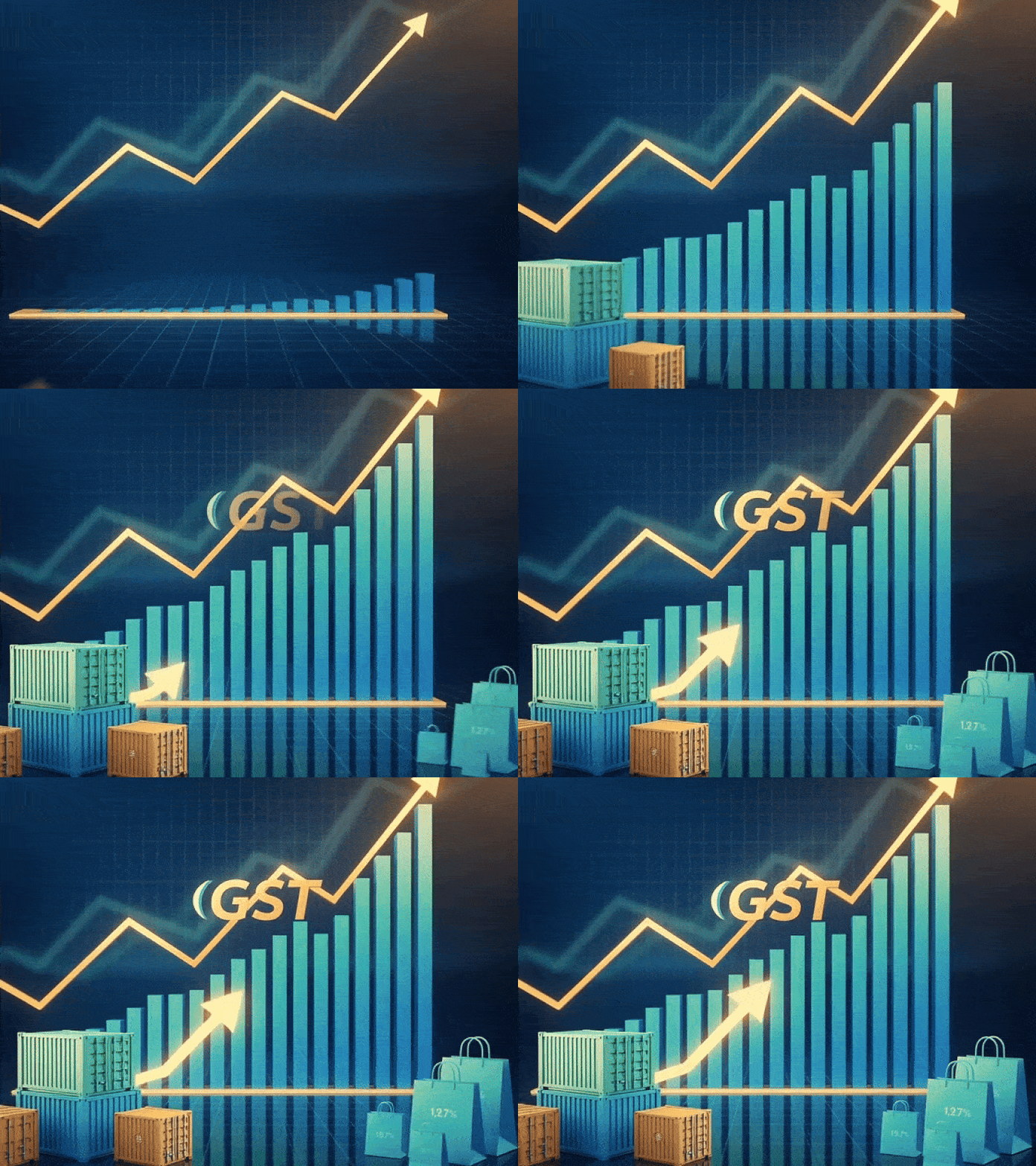
In March this year, gross GST collection crossed ₹2 lakh crore, increasing by 8.8% on an annual basis. A year ago in March 2025 it was ₹1.83 lakh crore. Whereas net GST collection increased by 8.2% on annual basis to Rs 1.78 lakh crore. In March 2025, this figure was ₹1.64 lakh crore. These figures have been released today, April 1. Gross GST is the total tax collected by the government, while Net GST is the amount that remains after deducting the refunds returned to the taxpayers from the gross collection. GST collection increased by 13.8% to Rs 0.22 lakh crore, the highest in 10 months, while total refund increased by 13.8% on annual basis to Rs 0.22 lakh crore. In March 2025, this figure was ₹0.19 lakh crore. Gross Domestic Revenue (CGST, SGST, IGST) stood at Rs 1.46 lakh crore, an increase of 5.9% on an annual basis. While Gross Import Revenue (IGST) stood at Rs 0.54 lakh crore, which was 17.8% on an annual basis. Whereas in March 2026, net cess revenue decreased to Rs. 177 crore. In March 2025 it was Rs 12,043 crore. Maharashtra registered 17% growth in GST collection. Big states like Maharashtra (+17%), Karnataka (+14%) and Telangana (+19%) have registered growth in GST collection. At the same time, growth has been slow in states like Haryana, Andhra Pradesh and Madhya Pradesh. The highest tax collection was in April 2025. The government had collected Rs 2.37 lakh crore from Goods and Services Tax (GST) in April 2025. There was an increase of 12.6% on annual basis. This is the record of GST collection. Earlier, the record of highest GST collection was made in April 2024. Then the government had raised Rs 2.10 lakh crore. GST collection shows the health of the economy. GST collection shows how healthy the country’s economy is. If the collection is high, it means that people are purchasing heavily, production in factories is increasing and people are paying taxes honestly. GST was implemented in 2017. The government implemented GST across the country on 1 July 2017. After this, 17 taxes and 13 cesses of the Central and State Governments were removed. GST is divided into four parts: CGST (Central GST): Collected by the Central Government. SGST (State GST): Collected by state governments. IGST (Integrated GST): Applicable on interstate transactions and imports, divided between the central and state governments. Cess: An additional fee imposed on specific goods (e.g., luxury items, tobacco) to raise funds for a specific purpose. Also read this news… Earth’s temperature is increasing due to Research-AI data centres: Temperature has increased by 2 degrees around the centres, temperature is increasing due to 8 artificial intelligence (AI) data centers in India. Research by Cambridge University said that where these data centers are working, the temperature has increased by an average of 2 degrees Celsius. Scientists have named it ‘data heat island effect’. Read the full news…
Source link
April 2, 2026