
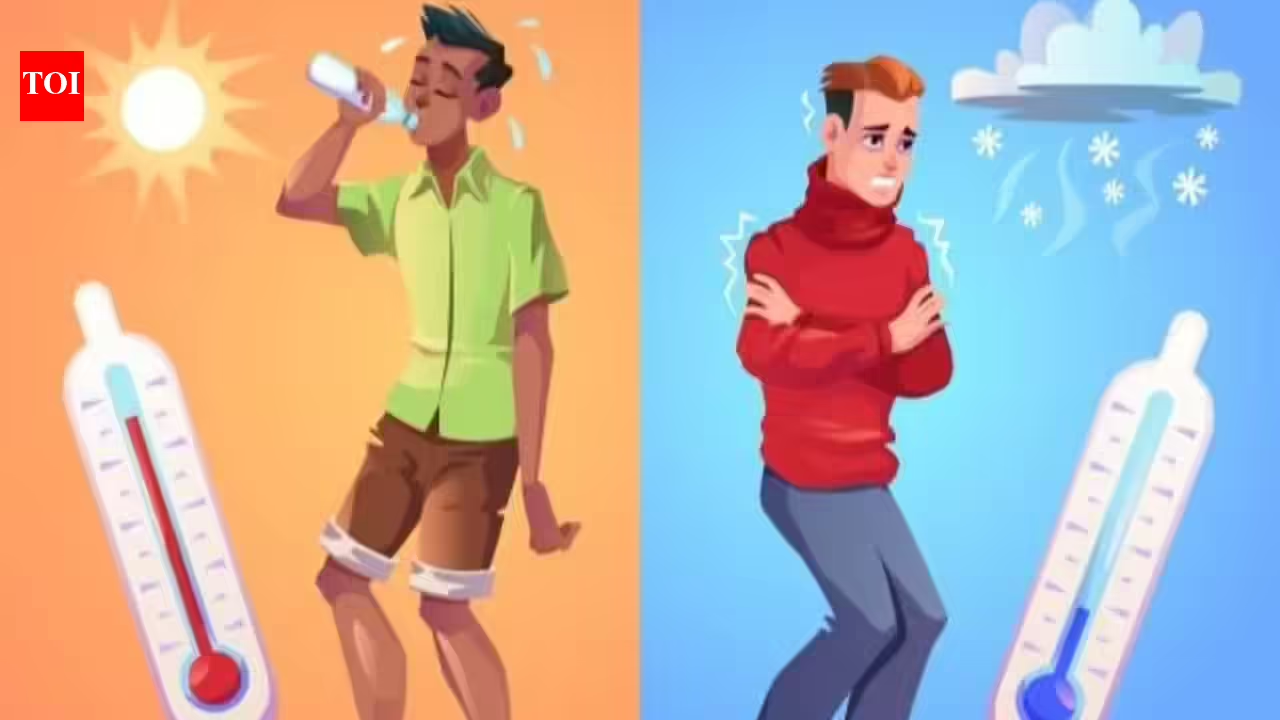
Have you ever thought about why some places on Earth are really hot and others are really cold? This is something that a lot of kids wonder about when they see kinds of weather or learn about countries with snow and deserts. The Earth gets heat from the Sun. It does not get the same amount of heat everywhere. This is because of things like where a place is, what the air is like, and what the land is like. The Earth does not get heated equally everywhere. That is what makes different climates. Let us look at this in a way.
The Sun heats the Earth in a way
The main reason why some places are hot and some are cold, is that the Sun does not heat the Earth the same everywhere. Places near the equator get sunlight that comes to them, so they are hotter. Places near the poles get sunlight that comes at an angle, so they get heat and are colder. This makes a difference in how hot or cold a place is.
How far a place is from the equator matters
If a place is close to the equator, it is usually hot. Countries near the equator have weather all year because they get a lot of sunlight. When we move towards the North Pole or the South Pole, it gets colder. That is why places near the equator are hot, and places near the poles are cold. How far a place is from the equator is a reason why climates are different.
Land and water make a difference
The Earth’s land gets hot and cold faster than water. Places near oceans are often not too hot or too cold because water takes a long time to get hot and a long time to get cold. This keeps places near the ocean cool in the summer and warm in the winter. Places that are far from water can get very hot during the day and very cold at night. That is why deserts have temperatures that change a lot.
How high a place is above the sea makes a difference
Places that are high above the sea, like mountains, are usually colder than places that are lower. When you go up higher, the air gets thinner. Cannot keep the heat. That is why places in the mountains are often cool or cold, even if they are in a country. For example, people like to go to hill stations in the summer because they’re cooler.
Wind and air movement
Winds also play an important role in temperature differences. Warm air moves from hot regions to cooler regions, and cold air moves in the opposite direction. This movement of air helps distribute heat across the planet. Some winds bring warmth, while others bring cold weather. Ocean currents, which are like rivers in the sea, also carry warm or cold water and affect nearby land temperatures.
Disclaimer:
This article is for educational and informational purposes only and is designed to help children understand basic science concepts in a simple and engaging way. The explanation of why some places are hot and others are cold is simplified and may not cover all scientific details. For deeper learning, readers are encouraged to explore textbooks or consult teachers and educational resources.