
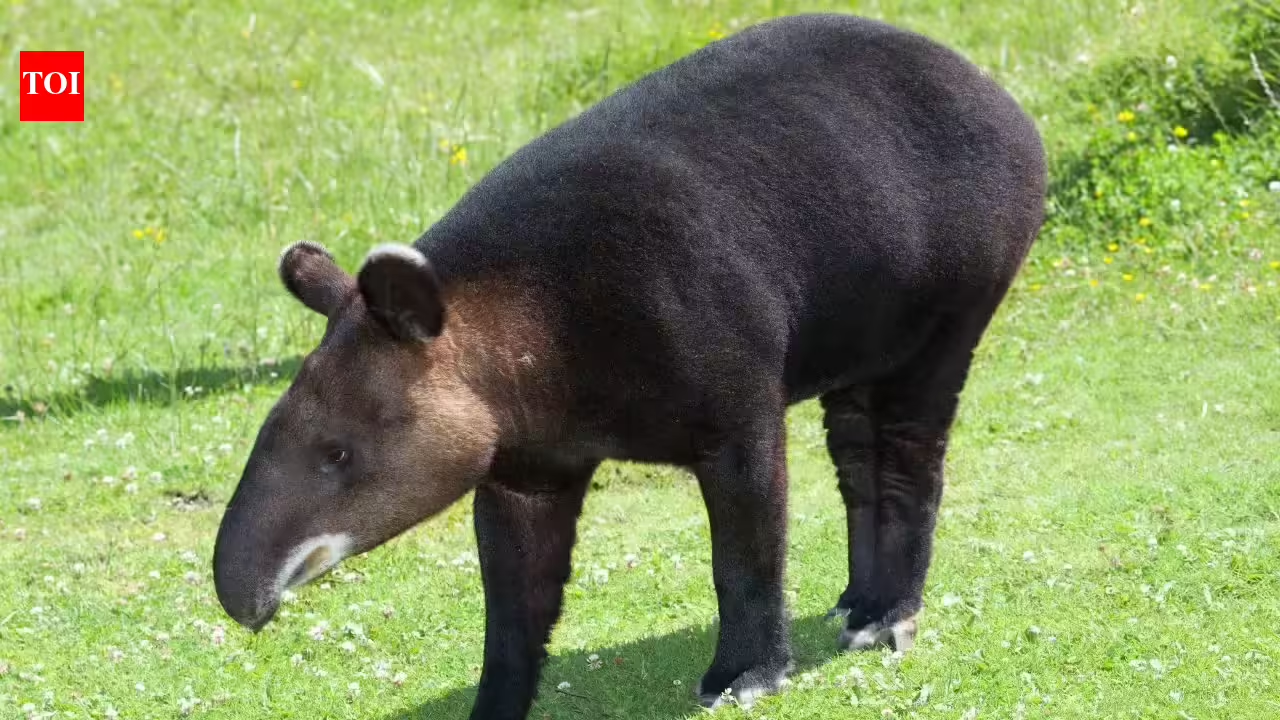
A tapir, from first impression, seems to be a bizarre blend of multiple animal species; a body that resembles a hog with a small proboscis like an elephant. Such odd appearances make most people question whether it is a true representation of an animal species. Tapirs are not related to any other animal species, such as pigs. They represent a distinct mammalian species, each of which is evolutionarily distinct.Tapirs are one of the few remaining mammals and have been described as living fossils owing to their long evolutionary history and minimal physical change. They are commonly found in forested areas, especially those close to water bodies. These interesting creatures are becoming quite rare due to various factors, hence the need to get more information about them.
Tapir: Where is this rare animal found
The tapir is a huge herbivorous mammal that belongs to the Tapiridae family. There are four major types of tapirs, and they inhabit various regions across the globe. Three types are present in Central and South America, while the fourth type, popularly called the Malayan tapir, is in Southeast Asia.The tapir is fond of inhabiting tropical rainforests and dense woodlands near riverbanks and lake shores. The places offer adequate food sources, protection against enemies, and suitable shelters for their survival. They are timid animals, and they usually hide themselves in bushes; hence, they are rarely seen by people due to their secretive nature.
Why the tapir looks like a pig with a trunk and know its unique features
Another unique characteristic of the tapir is the presence of its small and flexible nose, commonly called a trunk. Such a physical trait distinguishes this animal and explains why people compare tapirs to a mixture of pigs and elephants.However, such a trunk has many useful functions. It is used by animals to grab leaves, fruits, and branches while foraging. Furthermore, with the help of this organ, animals can sense the surrounding area and sniff out food and dangers. Finally, tapirs are good swimmers, and they can breathe underwater using this peculiar part of their body.The physique of tapirs is round and robust, and the animals have short legs. Besides, they have thick skin that enables them to protect themselves when they move through the harsh terrain. Furthermore, the feet of the tapirs have several toes that allow them to walk comfortably through the mud.
Behavior, diet, and survival skills of tapirs in the wild
Tapirs tend to be solitary in nature and nocturnal by default. This is meant to aid in staying away from predators and human disturbance. They tend to be sensitive to sight and sound rather than vision, and this becomes particularly useful when navigating forests.As far as food intake goes, they primarily feed on leaves, fruits, and even twigs. Being that they are key seed dispersers, they help promote forest regrowth and increase biodiversity.According to the study “On tapir ecology, evolution and conservation,” published in Integrative Zoology, tapirs are the oldest surviving species of large herbivore and play a key role in forest ecology through seed dispersal.In addition to that, they are excellent swimmers and tend to live close to bodies of water. In case of danger, they may seek refuge in rivers or lakes where they float and breathe through their snout.
Why tapirs are rare and why they need protection
Although tapirs have survived for a very long time, they are now deemed endangered or vulnerable due to various reasons. First, there is an immense reduction in their habitat owing to deforestation. As deforestation occurs, the forests which house the animals vanish.Secondly, hunting is a threat that threatens tapir’s existence since people hunt them for either their skin or flesh. Finally, their inability to reproduce quickly makes their conservation difficult.The conservation of tapirs is vital both for their own sake and that of the environment since they play an important role in ensuring healthy forests through seed dispersal.
Why the tapir is one of the most unique animals on Earth
It can be stated that tapirs have an unusual physical form, evolutionary history, and environmental function. The fact that this species looks like a mixture of several different animals does not make it similar to anything else.The long presence of this species demonstrates its adaptability in different conditions. But being in danger now means the effect of man’s activity on wildlife species.Studying tapirs and protecting them is important since these creatures symbolize the variety of flora and fauna. By saving tapirs, we can save their environment as well.