

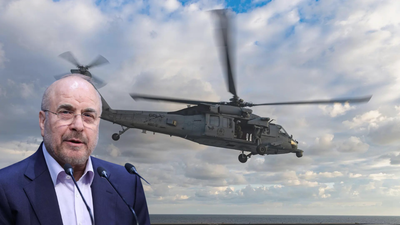
As Donald Trump threatened a naval blockade on Iran, Tehran responded with a stark warning on rising fuel costs. Iran’s Parliament Speaker Mohammad Bagher Ghalibaf said global consumers would soon feel the impact, writing on social media, “Enjoy the current pump figures. With the so-called ‘blockade’, soon you’ll be nostalgic for $4–$5 gas.”The post also featured a mathematical equation which, as per reports, signals that any increase in Hormuz blockade severity leads to a compounding, nonlinear surge in oil prices rather than a simple one-to-one rise: ΔO_BSOH > 0 ⇒ f(f(O)) > f(O).The warning came after talks between the United States and Iran in Islamabad ended without a deal, despite days of negotiations aimed at securing a longer ceasefire. Soon after, the US military announced it would begin enforcing a blockade on Iranian ports and coastal areas, raising tensions in an already volatile region.US Central Command said the blockade would target vessels entering or leaving Iranian ports, while allowing ships traveling to non-Iranian destinations through the Strait of Hormuz to continue for now. The waterway remains one of the world’s most critical energy routes, carrying a significant share of global oil supply.Trump expressed confidence that Iran would eventually????? to US demands. “I predict they come back and they give us everything we want,” he said, adding, “They have no cards.” He also repeated warnings of severe military action if Tehran refused to comply, saying the United States could act decisively if needed.Iranian leaders rejected the pressure. Ghalibaf said the threats would have “no effect on the Iranian nation” and warned Washington against escalation. “If you fight, we will fight, and if you come forward with logic, we will deal with logic,” he said, adding that Iran would not bow to threats.The failed talks exposed key disagreements, particularly over Iran’s nuclear program and control of the Strait of Hormuz. US officials insisted Tehran must meet their conditions, while Iranian negotiators described the demands as excessive.