
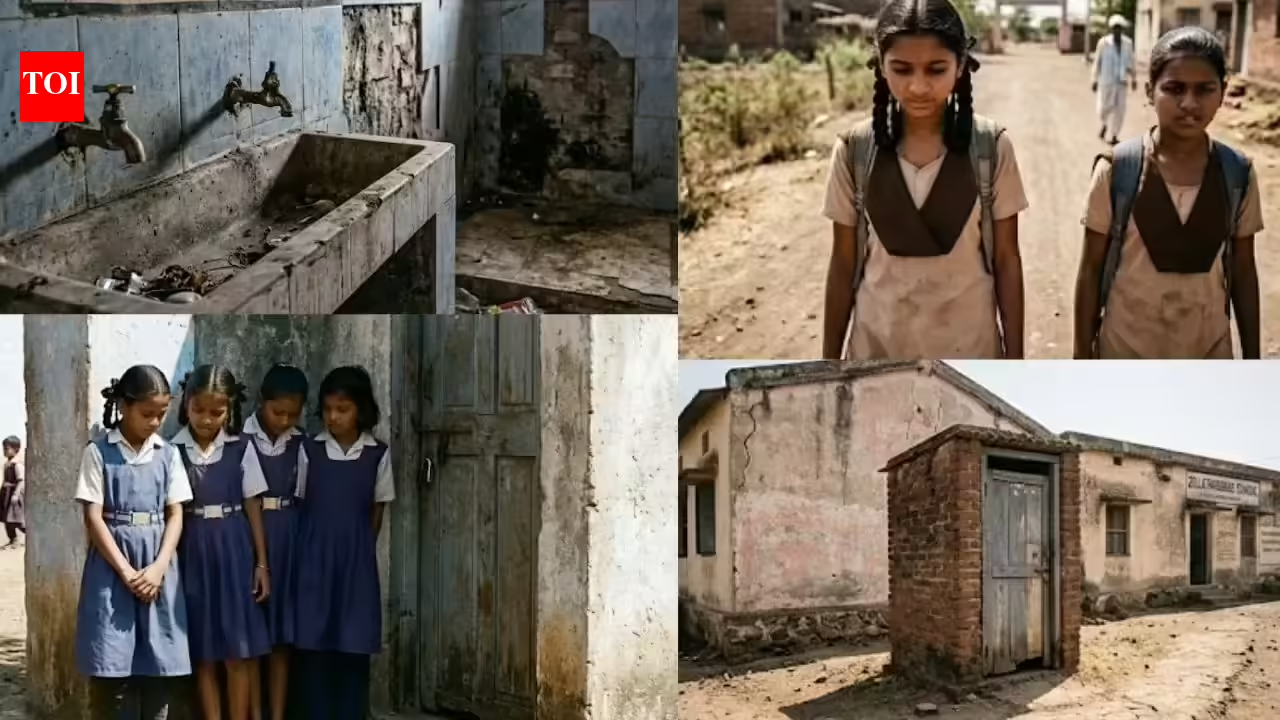
While Maharashtra races to build AI-powered classrooms, smart boards and digital learning systems, a far more basic question refuses to fade: how do 890 schools still function without separate toilets for girls? It is a striking contrast playing out inside classrooms across the state. One side is pushing towards artificial intelligence and modern learning tools, while the other continues to struggle with something as fundamental as sanitation.
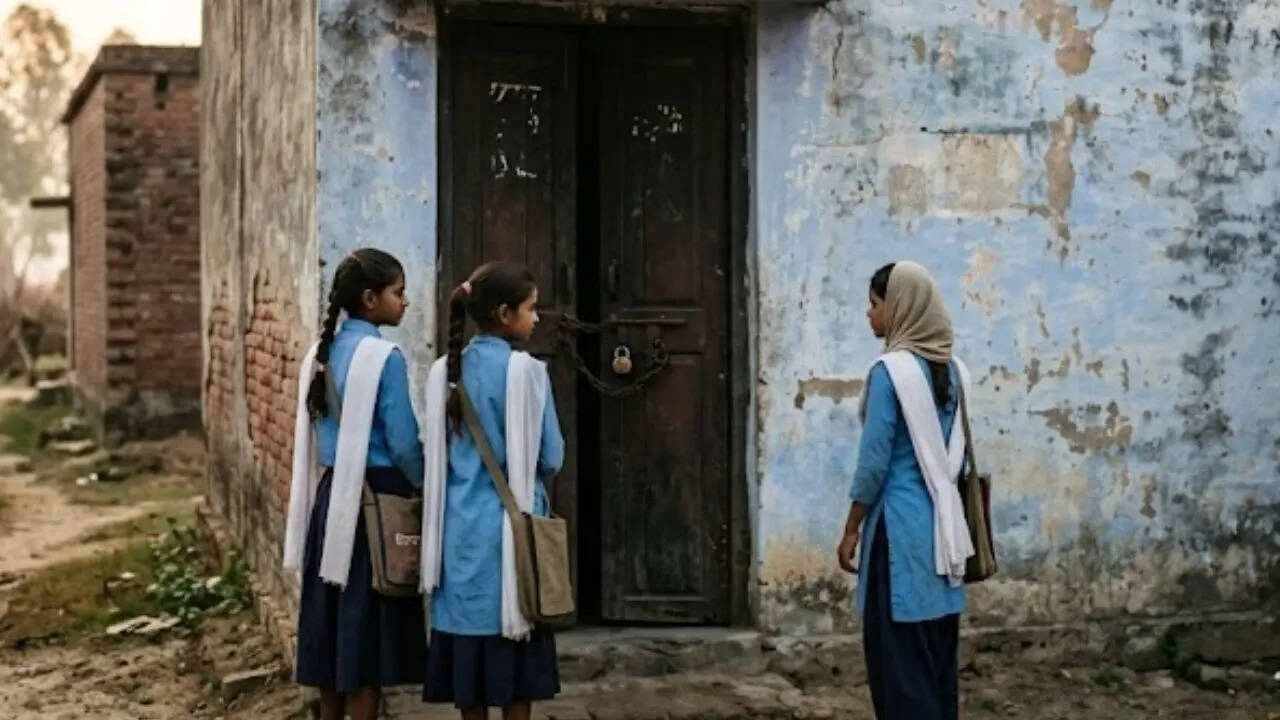
Girls wait near inadequate toilet facility (AI image used for representational purpose only)
As the state expands investments in technology-driven education, gaps in basic school facilities continue to persist across several districts. The contradiction is becoming increasingly visible ambitious digital upgrades on one hand, and unresolved infrastructure shortages on the other. While classrooms are being modernised, many schools still lack facilities that directly impact attendance, dignity and safety of students, especially girls.
890 schools, one clear shortfall
Out of 29,641 secondary and higher secondary schools in Maharashtra, nearly 3% (890 schools) do not have separate toilets for girls. Beed reports the highest number at 112 schools. It is followed by districts such as Hingoli, Nanded, Parbhani, Gadchiroli, Jalgaon, Amravati, Nashik and Sindhudurg, each reporting between 50 and 100 schools without separate toilet facilities. The spread of the data suggests the issue is not confined to isolated pockets, but is distributed across multiple regions. Even as some districts have seen improvements, others continue to lag, creating uneven learning conditions within the same system.
When access decides attendance
The absence of separate toilets is not just an infrastructure gap it directly affects whether girls continue attending school regularly.
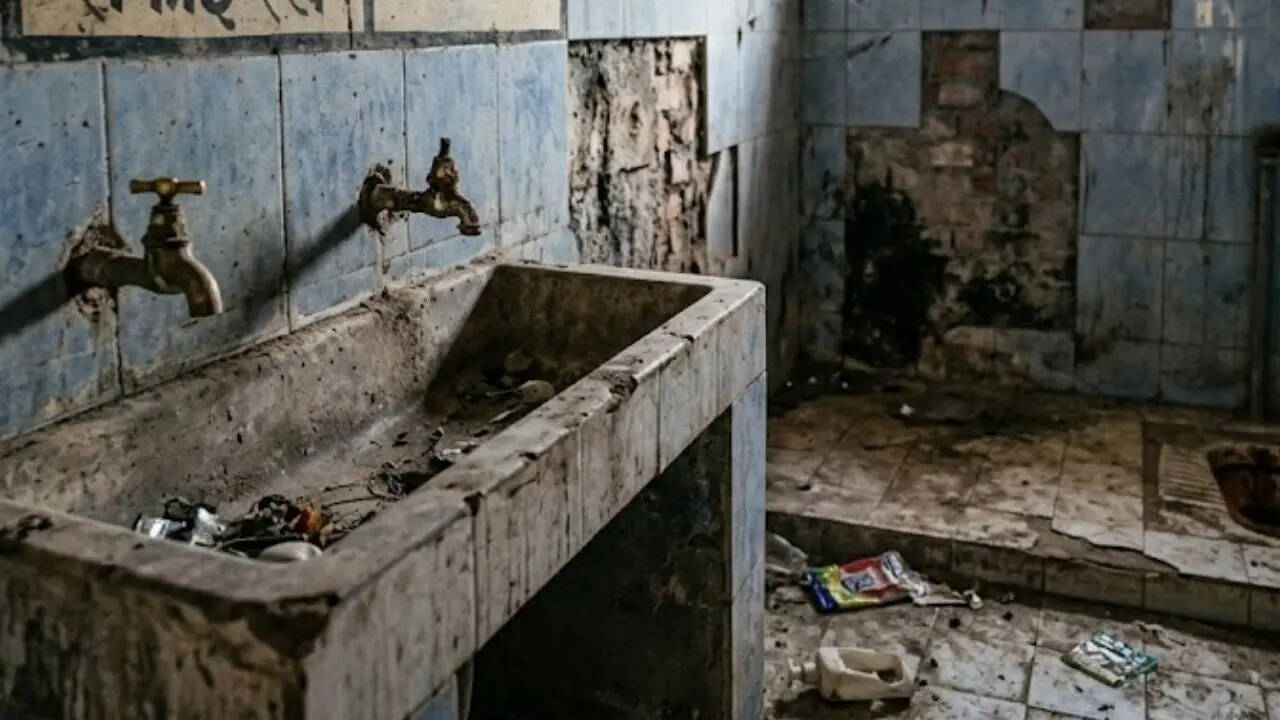
Abandoned school toilet shows neglect (AI image used for representational purpose only)
Across studies and field observations, a clear pattern has emerged:
- Decline in attendance among adolescent girls
- Dropouts after puberty due to lack of privacy
- Health issues linked to poor hygiene conditions
- Anxiety and discomfort in attending school
- Reduced sense of safety within school premises
In rural and semi-urban areas, these factors often determine whether girls continue education beyond middle and secondary levels. For many families, the condition of school infrastructure becomes a deciding factor in continuing education.
Smart classrooms, uneven foundations
The state’s education system has seen a steady push towards digital transformation, with growing emphasis on modern learning tools. Key developments include:
- Expansion of smart classrooms and digital boards
- Use of AI-based learning tools and platforms
- Increased access to online educational content
However, the pace of change has not been uniform. While some schools are moving towards advanced learning systems, others continue to struggle with basic infrastructure requirements. This has created a dual reality modern classrooms on one side, and schools lacking essential facilities on the other. Experts point out that technology can enhance learning, but its impact remains limited if basic conditions such as hygiene, safety and access are not consistently met.
District divide remains sharp
A closer look at district-wise data highlights persistent regional disparities. Districts such as Beed, Hingoli, Nanded, Parbhani and Gadchiroli continue to face infrastructure challenges, particularly in rural and semi-rural areas.
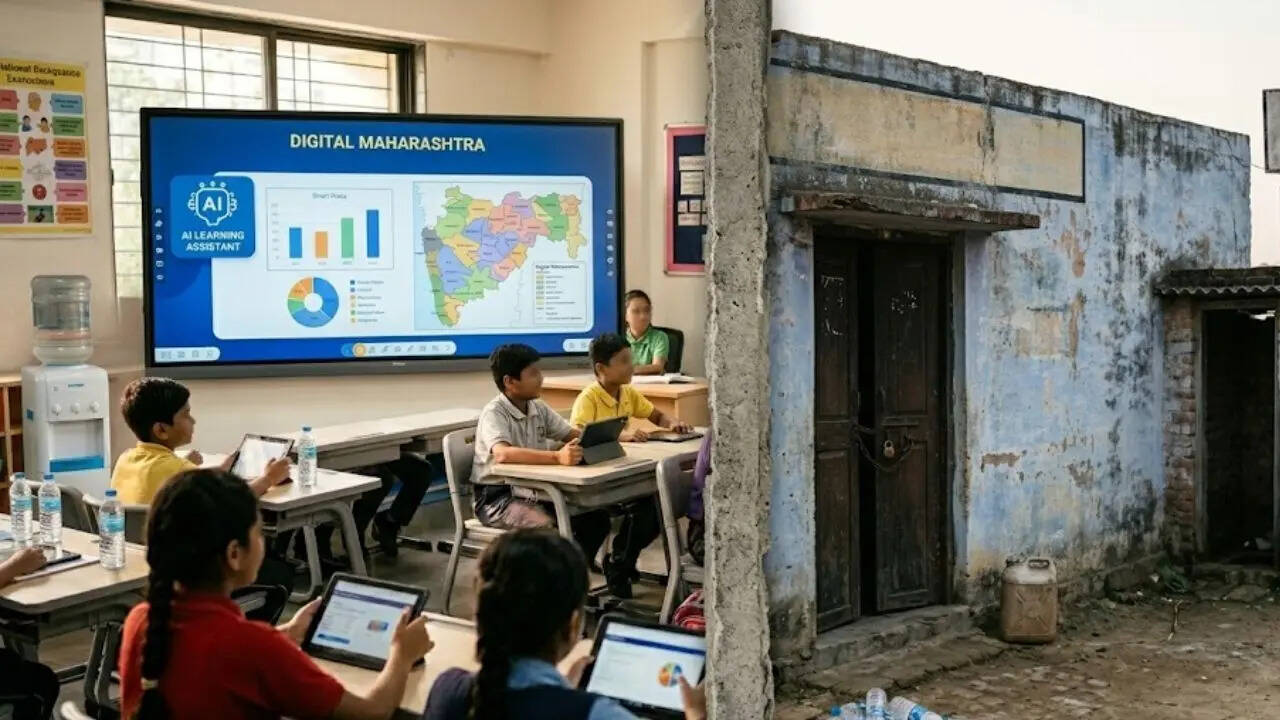
Modern learning vs missing school toilets divide (AI image used for representational purpose only)
In several schools across these regions, issues extend beyond sanitation:
- Irregular electricity supply
- Limited digital infrastructure
- Inadequate classroom maintenance
- Lack of supporting campus facilities
Such gaps affect both day-to-day functioning and long-term learning outcomes.
Safety gaps add to concerns
Beyond sanitation, school safety infrastructure remains another concern. Nearly 5% of schools do not have protective boundary walls, exposing campuses to multiple risks:
- Unrestricted access to school premises
- Entry of stray animals into campus areas
- Safety concerns during school hours
- Lack of controlled entry and exit points
In rural and remote locations, these risks become more pronounced, influencing parental decisions particularly for girls.
Why gaps persist despite interventions?
Despite multiple programs aimed at improving school infrastructure, several challenges continue to slow progress:
- Delays in construction and project completion
- Lack of regular maintenance after installation
- Uneven monitoring across districts
- Infrastructure existing on paper but not fully functional
- Resource constraints in remote and rural areas
In many cases, toilets may exist but remain unusable due to poor upkeep or lack of water, reducing their practical value.

Unfinished school toilet construction site (AI image used for representational purpose only)
The rural-urban imbalance
The gap between rural and urban schools remains a persistent issue. Urban schools typically benefit from:
- Better infrastructure and resources
- Faster implementation of upgrades
- More consistent maintenance
Rural schools often face:
- Delays in infrastructure development
- Limited access to basic resources
- Inconsistent maintenance and support
This imbalance continues to shape both infrastructure quality and educational outcomes.
Beyond numbers, a daily reality
While the figure of 890 schools highlights the scale of the issue, its impact is felt in everyday school life. For students, especially adolescent girls, the absence of proper sanitation affects:
- Daily decisions on attending school
- Comfort during school hours
- Participation in extended schedules
- Confidence in continuing education
Teachers note that such infrastructure gaps directly influence attendance patterns and classroom engagement.

Long walk to school for rural girls (AI image used for representational purpose only)
Focus shifts to core infrastructure
As Maharashtra continues to invest in digital education, attention is increasingly shifting towards strengthening foundational infrastructure. Key priorities include:
- Functional and well-maintained toilets
- Proper boundary walls for safety
- Reliable electricity supply
- Improved campus maintenance
A contradiction that persists
The data underlines a continuing challenge ensuring that modernization in education is matched by improvements in essential infrastructure.Until then, the contrast between advancing classrooms and missing basics is likely to remain one of the most visible contradictions in Maharashtra’s education system.