
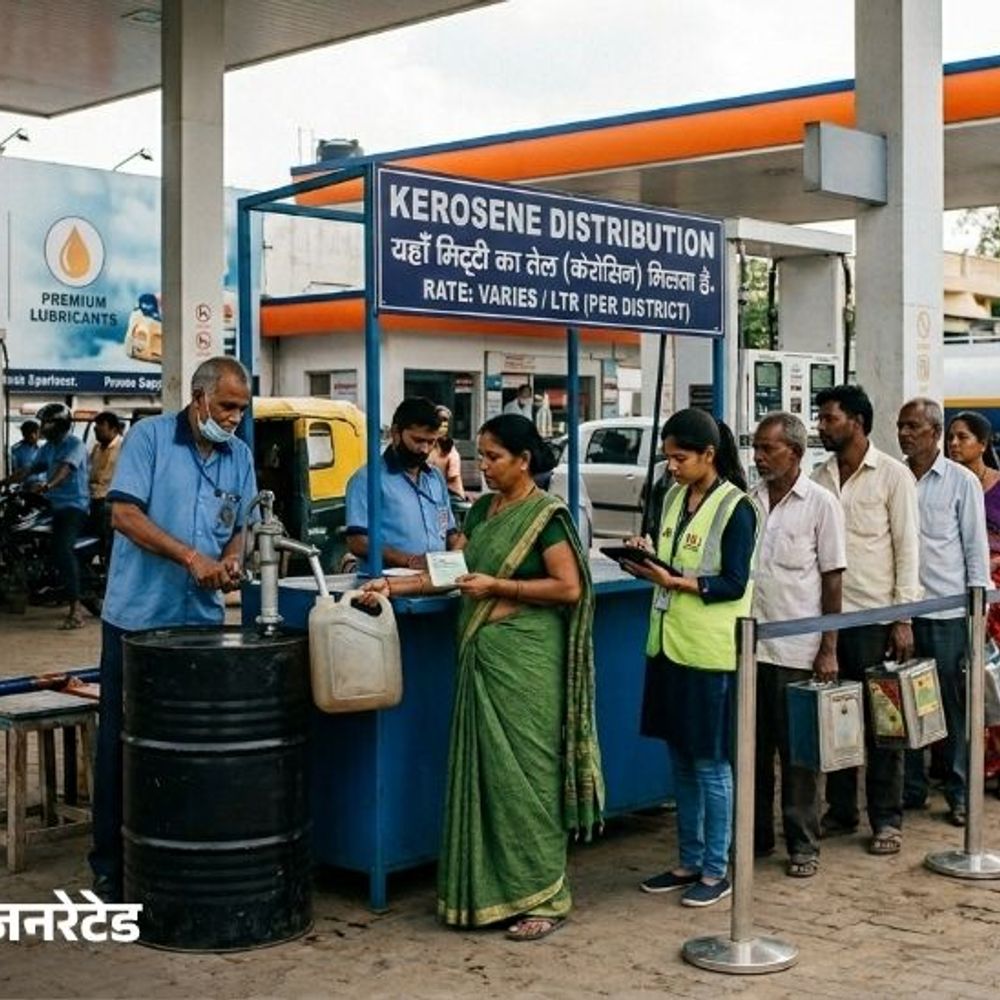
The Central Government has decided on Sunday that now kerosene will be available at ration shops as well as petrol pumps. Now government oil companies will be able to store and distribute kerosene from designated petrol pumps also. In every district, the state government or union territory administration will select a maximum of 2 petrol pumps, where this facility will be provided. A maximum of 5 thousand liters of kerosene can be kept at these petrol pumps. The government has relaxed the Public Distribution System (PDS) rules for 60 days to ease the supply, so that oil can reach needy families on time. The government has taken this decision due to America-Israel Iran conflict. Due to the ongoing war in the Middle East, there is a shortage of gas, petrol and diesel in India. The central government is continuously expressing concern over the current situation. What relaxations were given in the rules, the government said – Adequate stock of crude oil. According to the government, all the refineries are working at high capacity and there is adequate stock of crude oil. The availability of petrol and diesel remains normal at all petrol pumps across the country. Keeping in view the domestic consumption, LPG production in refineries has also been increased. In some states, rumors led to crowding and higher sales at petrol pumps. The government clarified that there is no shortage of any kind and appealed to the people not to do panic buying. LPG and gas supply situation Emphasis on kerosene and alternative fuels The government has allocated additional 48000 kilo liters (4 crore 80 lakh litres) of kerosene to the states. To reduce the demand for LPG, the use of alternative fuels like kerosene and coal is also being promoted. The government has instructed city gas companies to increase PNG connections in hotels, restaurants and commercial institutions. At present, 80% of the average gas consumption is being given to industrial and commercial gas consumers. March 29: PM Modi said – There is a crisis of petrol and diesel in the world due to war. Prime Minister Narendra Modi mentioned the war between America, Israel and Iran in the 132nd episode of Mann Ki Baat on Sunday. The PM had said that there is a war going on in the world. Petrol-diesel crisis has arisen, but India is dealing with this challenge. The government appeals to the people not to fall prey to any kind of rumours. Trust information from the government. Some people are trying to spoil the atmosphere. By this they are causing harm to the country. Read full news… March 27: Excise duty on petrol and diesel reduced by Rs 10 each, prices will not increase. The government has reduced the excise duty on petrol and diesel by Rs 10 each. Duty on petrol reduced from ₹13 per liter to ₹3. At the same time, excise duty on diesel was reduced from ₹10 to zero. The government has kept the prices of petrol and diesel stable by reducing the excise duty. Due to Iran’s war with US-Israel, the price of crude oil in the international market has increased from $ 70 to $ 110 per barrel. Due to this, oil companies were incurring losses of up to Rs 30 per litre. Oil companies could increase prices to cover losses. Read full news… Excise duty is an indirect tax. It is a type of indirect tax, which is imposed on goods manufactured within the country. In the case of petrol and diesel, when the crude oil comes out of the refinery after getting cleaned, the central government collects fixed excise duty on it per liter. Since excise duty is fixed, the government can provide relief to the general public by cutting it or increase its revenue. The current cuts will reduce government revenue but will help oil companies reduce losses. …………………. Also read this news… Center increased commercial LPG quota from 50% to 70%: Priority to steel-auto and textile sector, 20% additional supply to big industries after restaurants. The Central Government has once again instructed the states to increase the LPG supply amidst the ongoing gas crisis in the country. On March 27, the government has increased the allocation i.e. quota of commercial LPG cylinders from 50% to 70%. Those industries which are completely dependent on LPG will get the most benefit from this decision. Read the full news…
Source link
April 2, 2026