
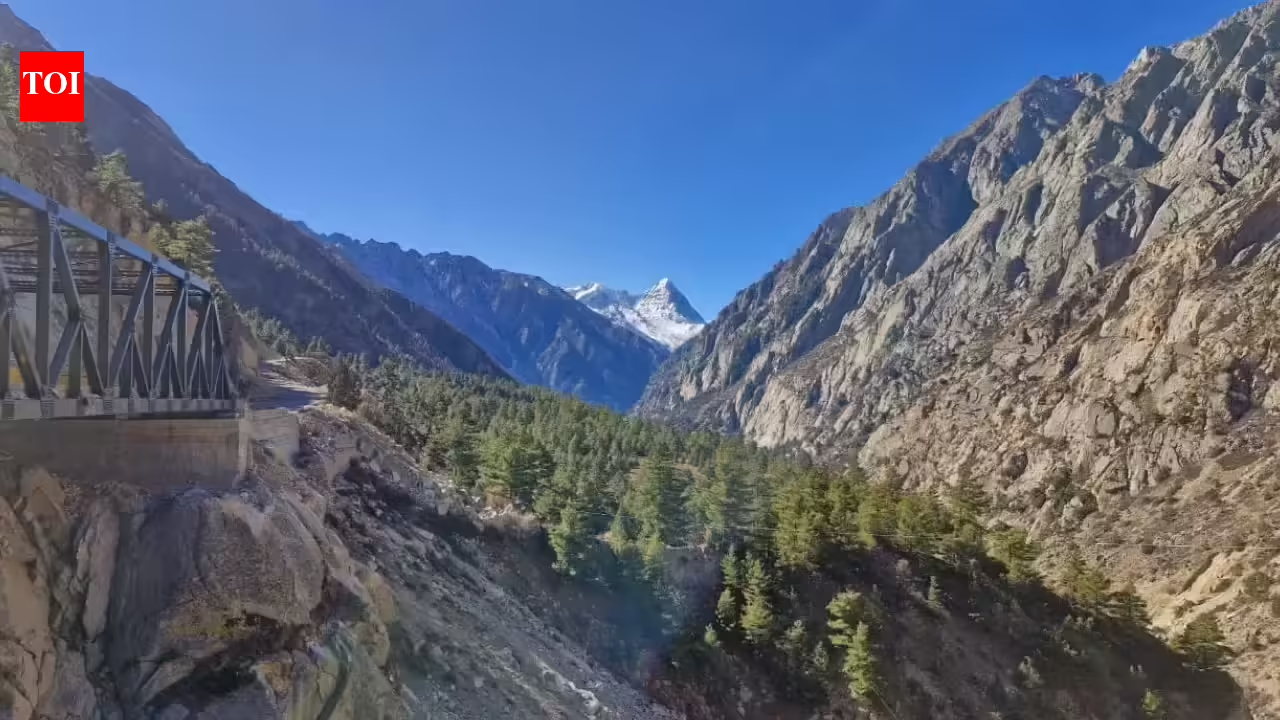
UTTARKASHI: In news which may be of interest to nature lovers seeking to explore the natural beauty of Garhwal Himalayas in winter months, Nelong valley, popularly called ‘Ladakh of Uttarakhand’ due to its unique arid, rocky terrain, will allow tourists’ entry even during the winters. Till now, the area was off-limits between Nov and March due to severe winter.Acting upon directives from state administration, the forest department has formulated a plan to promote winter tourism in the area. Deputy director of Gangotri National Park, Harish Negi, said on Saturday, “A decision has been taken to keep Nelong valley open during the winter season. All activities will be conducted in a safe and regulated manner as per standard operating procedures.”Winter entry limited to 100 tourists & 20 vehicles per daySituated along the China border, the valley is located within Gangotri National Park (GNP). In fact, the GNP is said to be India’s ‘third largest national park’. The region offers tourists not only stunning views of the Tibetan plateau, but also a chance to spot the rare snow leopard, and visit the 150-year-old Gartang Gali — a wooden cliff-hanging bridge built by Pathans from Peshawar during the colonial era to facilitate trade with Tibet.Officials said that a total stretch of 30 km – comprising the 23 km route from Bhaironghati to Nelong and the 7 km route from Nelong to Naga – will remain accessible to tourists round the year. Till now, the gates here used to close annually on Nov 30.As part of the plan, winter entry will be limited to a “maximum of 100 tourists and 20 vehicles per day”; tourists will be granted entry time between 8am and 11am and will be required to exit the premises by 5pm.To ensure cleanliness within the area, a ‘carry in-carry out’ mechanism will be strictly enforced, the officials added. According to this arrangement, “each visiting group will be required to deposit a security amount of Rs 100, which will be refunded only upon their return with the waste they generate”.To facilitate this process, a dedicated ‘waste log book’ will be maintained at the entry barrier.Also, for day visits, an entry fee of Rs 300 will be taken from Indian tourists while foreign nationals will be charged Rs 1,200. Separate fees will be in place based on vehicle categories, and an additional fee will be levied for photography. The use of drones for photography or videography will be strictly prohibited, officials added.