
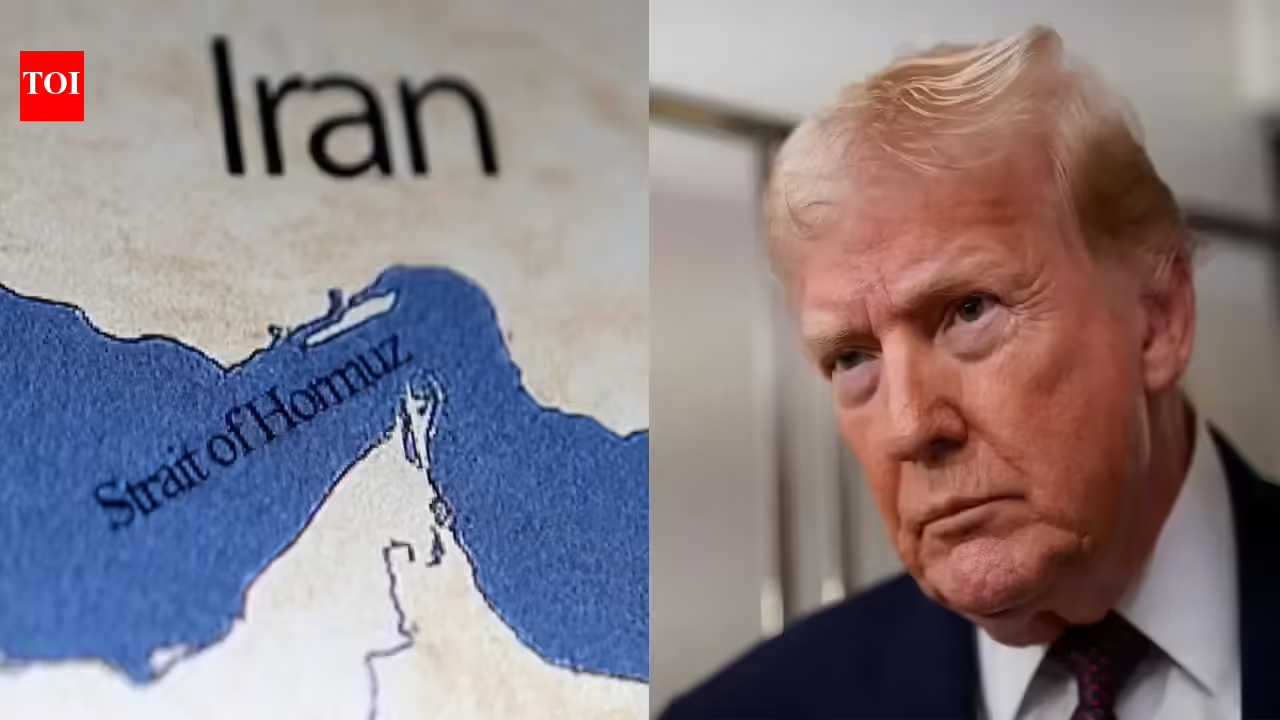
The Islamabad peace talks have collapsed, dashing hopes of a near-term end to the Iran war. Buoyed, no doubt, by January’s near-flawless operation in Venezuela that resulted in the capture of Nicolás Maduro, Donald Trump authorized Operation Epic Fury, launching joint strikes with Israel on Iran on February 28 — expecting similarly swift and decisive results.However, the conflict shows no sign of abating — and even the current 14-day ceasefire is beginning to look increasingly fragile. Trump has maintained a combative posture toward Iran, his rhetoric hardening as the war drags on. What was intended as a display of overwhelming force has instead drawn Washington deeper into a confrontation with no clear end in sight.
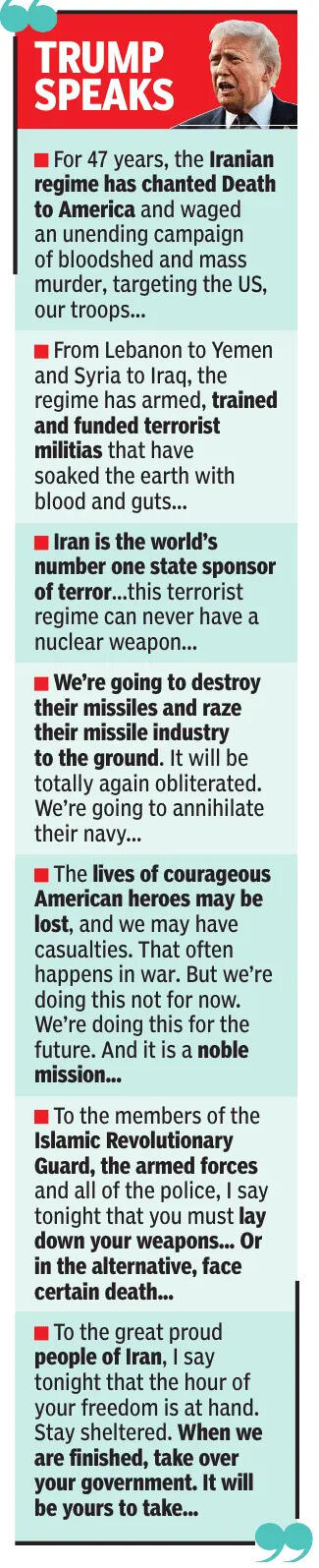
Trump comments on Iran
It fell to Vice President JD Vance, who had been against a military offensive from the outset, to travel to Islamabad for talks with an Iranian delegation. The outcome was unsurprising: amid deep mistrust, sharply opposed demands, and both sides digging in their heels, diplomacy failed to produce a breakthrough.
How Iran war came about
The United States and Israel, staunch allies, have long maintained adversarial ties with Iran. Even before the current conflict, tensions had already escalated into confrontation: Tel Aviv and Tehran exchanged strikes in early 2024, before a far more intense 12-day war in June 2025, which drew American military intervention and marked the most significant military clash between them in decades.
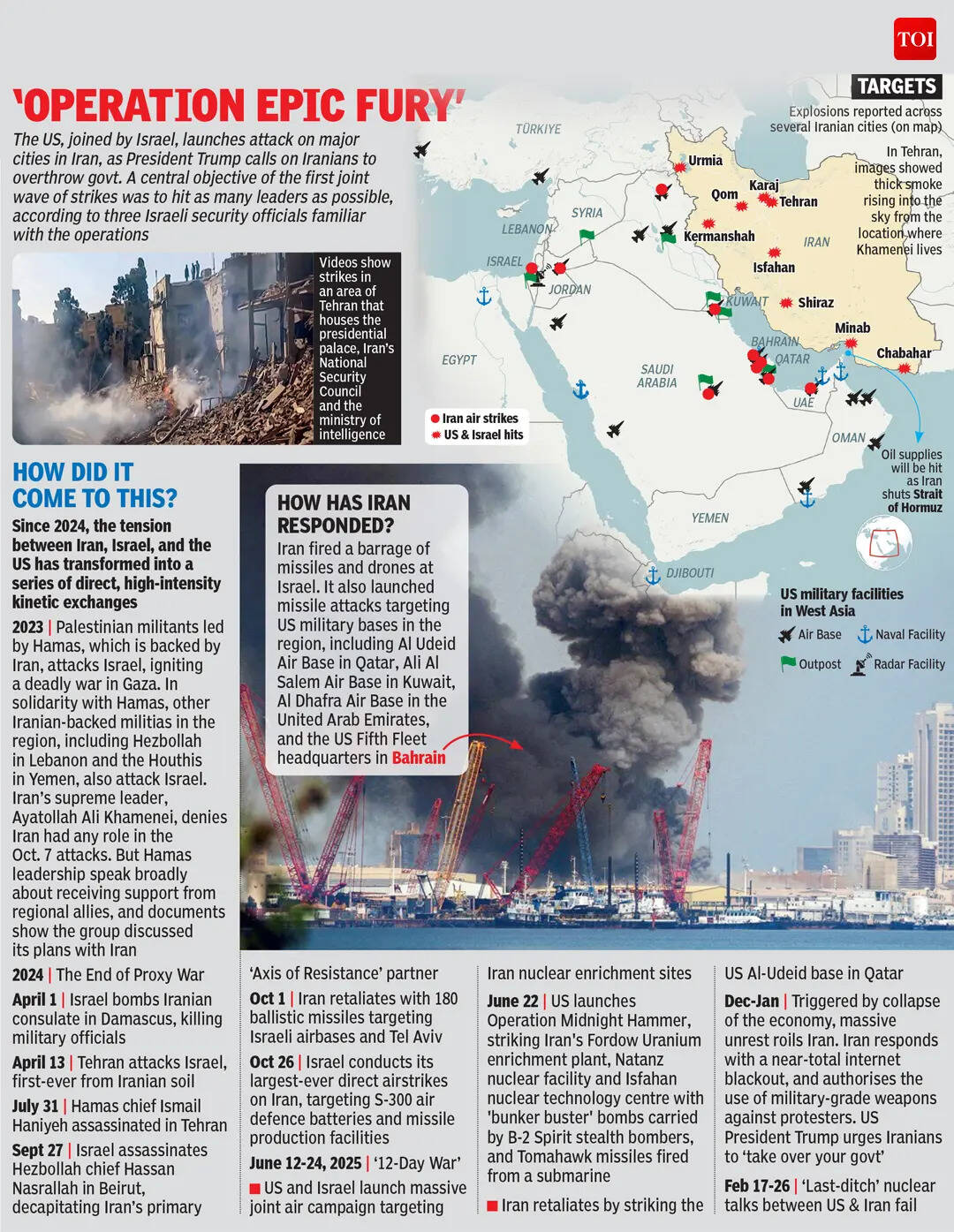
What preceded Iran war
Then, in December last year, Iran witnessed mass public protests over a deepening economic crisis. However, the demonstrations were met with a brutal crackdown by the Iranian authorities, with human rights groups reporting that thousands of protesters were killed in the ensuing crackdown.
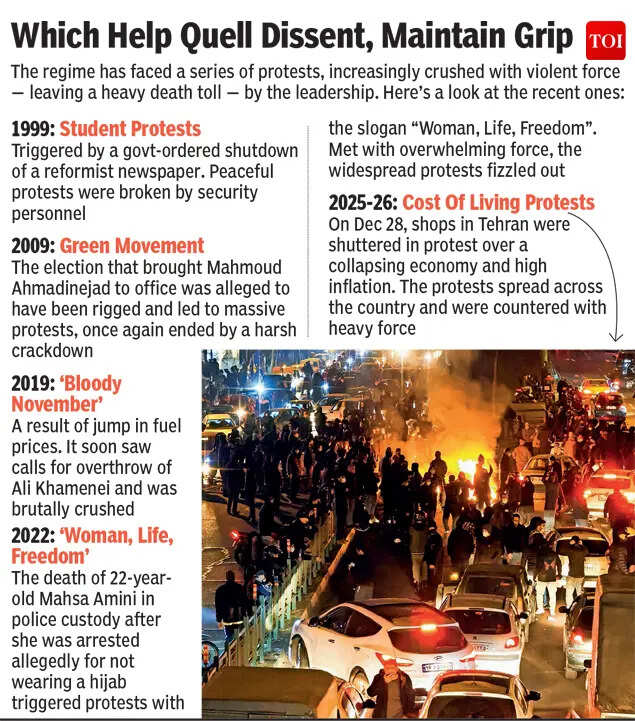
Iran protests history
Throughout the protests, Trump had repeatedly spoken of the need to intervene to “save” Iranian protesters. That “intervention” ultimately came in the form of Operation Epic Fury, with objectives including preventing the Islamic Republic from developing a nuclear weapon and pursuing regime change, among others. Iran, however, has consistently denied any intention of developing nuclear weapons.
How Iran has resisted US-Israeli attacks
Although the United States is the world’s most powerful nation, and Israel adds further firepower to that equation, Iran has been able to absorb their attacks. Militarily battered, Tehran has retaliated by striking Israeli territory and US military bases in Gulf states, with its strikes also expanding to include civilian infrastructure and energy facilities in the Middle East.Iranian drones and ballistic missiles have repeatedly breached Israel’s famed Iron Dome air defense system, while targeting energy facilities has sparked concerns of a disruption to global oil markets.Also, despite losing several key leadership figures, Iran has swiftly appointed successors, preventing a leadership vacuum. Another key miscalculation was the expectation — or belief — that killing the Iranian Supreme Leader, Ayatollah Ali Khamenei, on the first day of strikes would trigger a public uprising against the Islamic regime itself.
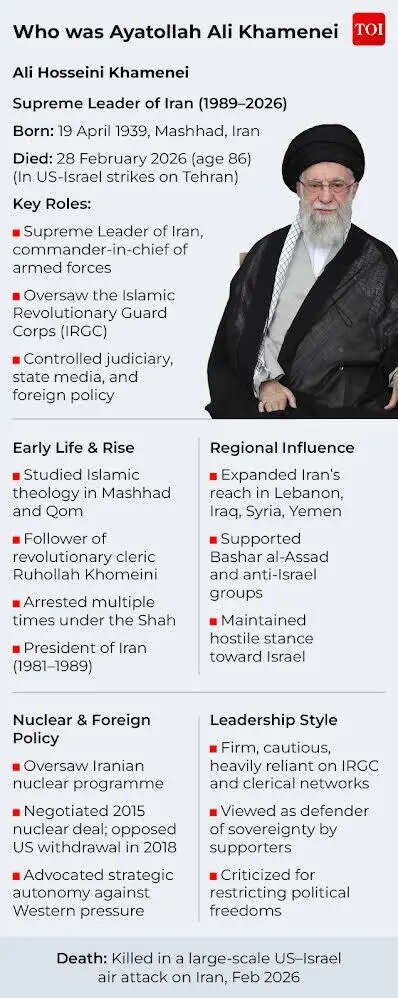
Who was Ayatollah Ali Khamenei
However, more than any other factor, Iran has leveraged an ace up its sleeve that has upended all US-Israeli calculations: the Strait of Hormuz.
Strait of Hormuz blockade
Iran has virtually blockaded the Strait of Hormuz in retaliation for its adversaries’ aggression, a move that has escalated fears of a broader global economic disruption.The critical sea route carries nearly 20% of the global oil supply, which makes it one of the world’s most critical energy chokepoints. Therefore, even limited disruptions in this narrow maritime corridor can have severe implications.
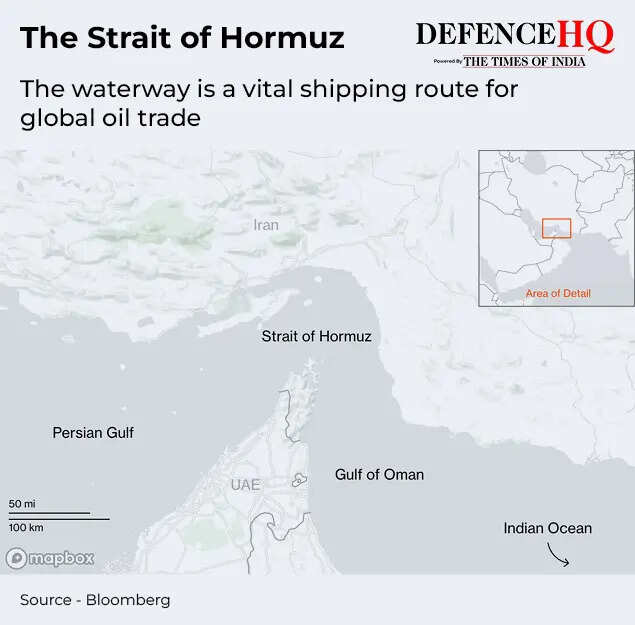
Strait of Hormuz
Since the disruption in the Strait of Hormuz, Trump’s threats have increasingly centered on forcing Tehran to reopen the waterway. His calls for European and other allies to deploy naval forces to escort commercial vessels through the strait have largely been rebuffed, prompting him to berate Nato and warn that he could consider walking out of the intergovernmental alliance.Iran, meanwhile, has maintained that the Strait of Hormuz remains open “except for its enemies”—a pointed reference to the United States and Israel, and by extension, their allies.
US public support for Iran war wanes – and the financial strain
For Trump, the war is beginning to exact a growing cost on the domestic front — both financially and in terms of public support, including within his MAGA base, as several right-wing commentators turn against the president.Among the American public, survey agencies have found relatively low support for the war. For instance, a new Ipsos poll conducted between March 27 and 29 found that 66% of Americans would prefer the United States to end the conflict early, even if it means not all objectives are met, compared to 27% who believe Washington should continue the conflict until all objectives are achieved.The potential deployment of ground troops in Iran was also deeply unpopular, with 76% opposing any such move.Separately, a Pew Research Center survey found that 59% of respondents believed the use of force in Iran was the wrong decision, while 38% approved. On the financial side, the war cost Washington a staggering $11.3 billion in just the first six days, Pentagon officials told lawmakers in a closed-door briefing in March; more than six weeks into Operation Epic Fury, the total has surpassed $28 billion—and continues to rise, according to tracker MilitarySpend.Yet, even as pressures mount in Washington, the role of an Israeli decision-maker remains central in the conflict.
Benjamin Netanyahu factors
One leader who has been a frequent visitor to Washington since Trump’s return is Benjamin Netanyahu. The Israeli prime minister, who was the first foreign leader to visit the White House during Trump’s current second and final term, has made at least six such visits since February 2025.As per The New York Times, it was Netanyahu’s “highly classified presentation” on February 11 that ultimately convinced Trump to authorize the operation. The decision came despite CIA director John Ratcliffe dismissing the proposal as “farcical,” Secretary of State Marco Rubio calling it “bull****,” and Chairman of the Joint Chiefs of Staff General Dan Caine describing it as an “oversell.” Only Defense Secretary Pete Hegseth backed the plan.Subsequently, Israel’s decision to continue hitting Lebanon despite the ceasefire prompted Iran to briefly put the truce on hold before ultimately attending talks with Vance. Lebanon was drawn into the conflict after Hezbollah — the Tehran-backed Lebanese militant group — entered the war to avenge Khamenei’s assassination, triggering Israeli retaliation.Critics accuse Netanyahu of deliberately prolonging the conflict, as it allows him to further delay a long-pending corruption trial. If convicted, he would be removed from office, face up to 10 years in prison, and be permanently disqualified from holding public office.
What next? Escalation, extension, or permanent truce
The Vance-led team has already returned home, and his sharp remarks at the post-talk press conference in Islamabad were particularly telling. While the ceasefire does not end before April 22, unless violated or extended, Trump’s increasingly combative tone has led many to speculate about what may come next.America’s commander-in-chief has already signaled escalation, ordering the US Navy to prevent ships from entering or leaving the Strait of Hormuz.The Iran war shows that things haven’t gone as planned. Instead of ending quickly, it has become longer and more complicated, with no clear solution yet, leaving the situation uncertain.