
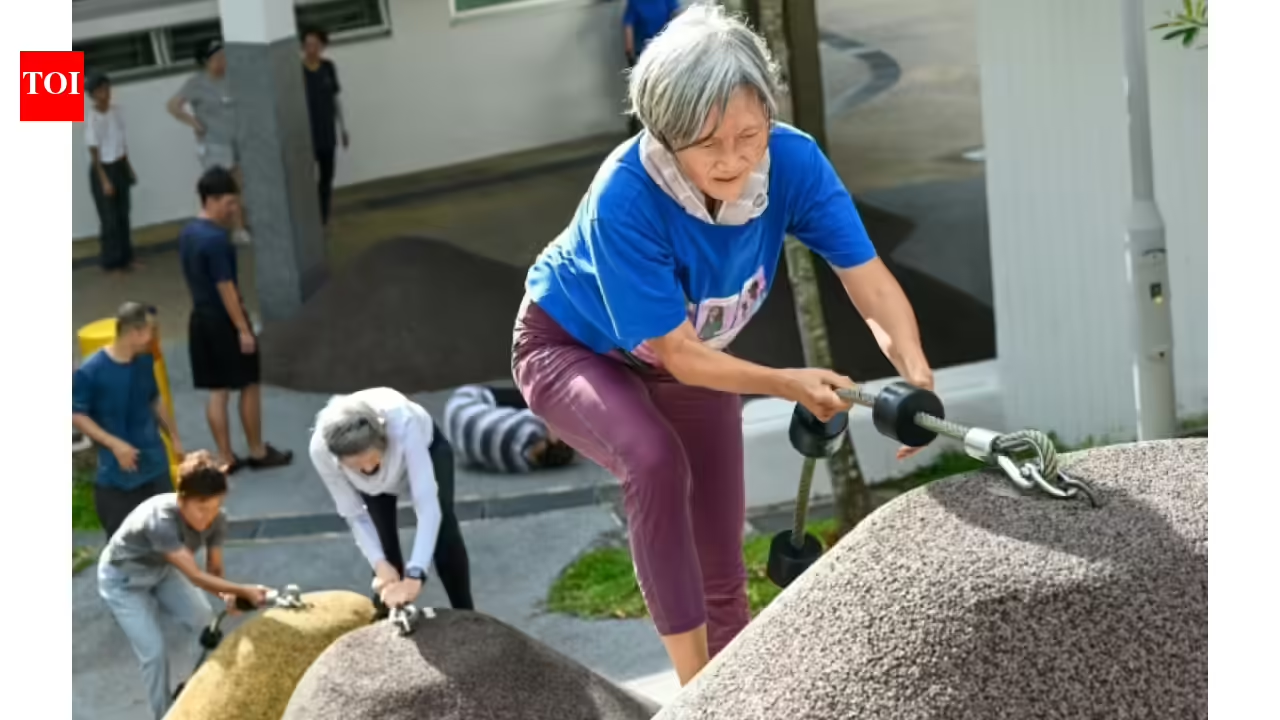
In Singapore, an unconventional fitness trend is reshaping how older adults stay active. According to reports by Agence France-Presse, groups of retirees, some in their 50s through their 80s, are taking part in adapted “geriatric parkour” sessions designed to improve strength, balance and confidence. Rather than extreme stunts, these classes focus on controlled, functional movements using everyday urban spaces like parks and playgrounds. For participants, the sessions offer not just physical benefits but also a renewed sense of independence and energy, showing that aging does not have to mean slowing down.
Parkour adapted for seniors boosts fitness and mobility
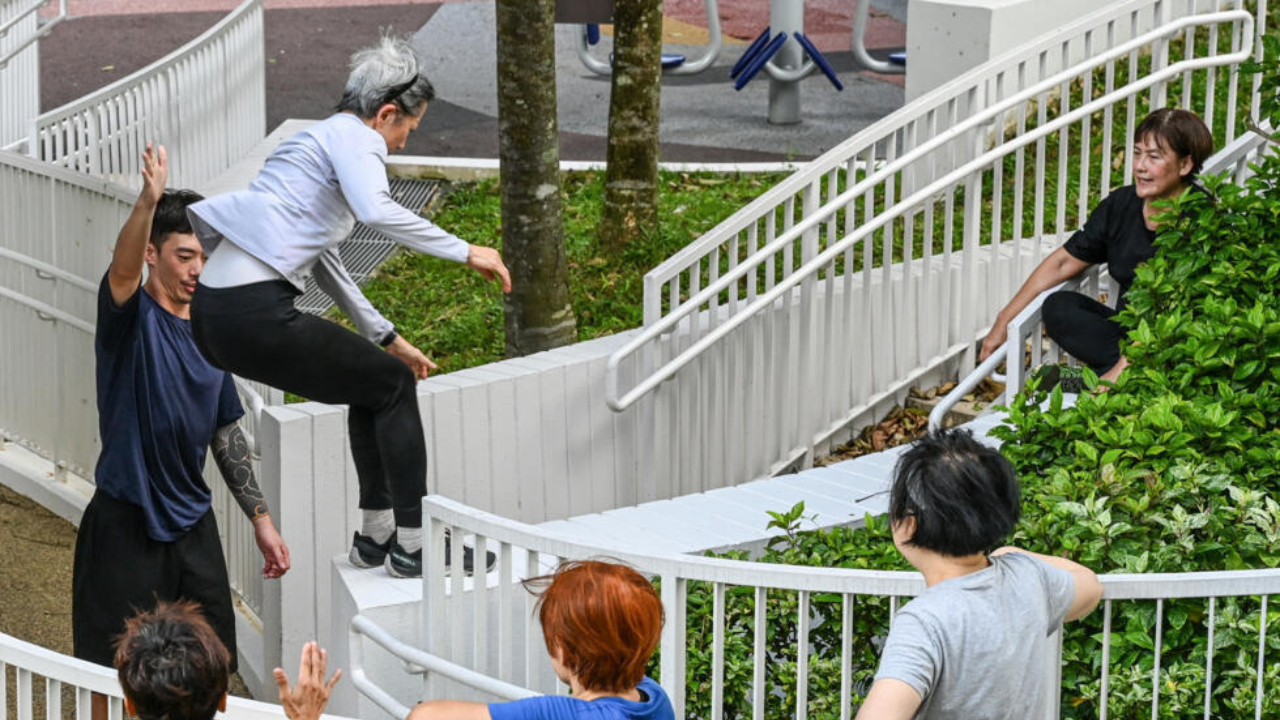
Unlike traditional parkour, which often involves high-risk jumps and rapid movement, the version practiced by seniors is carefully modified. Participants learn how to step over obstacles, climb low structures, balance on narrow surfaces and perform controlled rolls. Each movement is adjusted to suit individual ability levels, with instructors ensuring safety at every stage.The goal is not performance or speed, but improving how the body handles real-world situations. By practicing these movements in a structured way, seniors build confidence in navigating everyday environments.The popularity of such programs reflects the demographic reality of Singapore, which has one of the fastest-aging populations globally. As the number of older adults rises, there is increasing focus on keeping people active, independent and socially engaged.Fitness initiatives like this align with broader efforts to promote active aging. They aim to reduce the risk of falls, improve mobility and help seniors maintain a higher quality of life without relying heavily on medical intervention.
Why it works for senior fitness
The effectiveness of adapted parkour lies in its practicality. Instead of isolated exercises, it trains the body for movements people actually use in daily life. Stepping over obstacles, maintaining balance and reacting quickly to changes in terrain are all essential skills, especially for older adults.These exercises help strengthen muscles, improve coordination and enhance reaction time. Over time, this can significantly reduce the likelihood of injuries caused by falls, which are a major concern for aging populations worldwide.Beyond the physical benefits, the program also offers strong social value. Participants train together, encourage each other and share progress, creating a sense of belonging. This is particularly important for older adults, who may otherwise face isolation.Many participants described feeling more confident and energized. The group dynamic turns exercise into an enjoyable activity rather than a routine obligation, making it easier to stay consistent.
Changing perceptions of aging
The idea of seniors practicing parkour challenges long-held assumptions about aging and physical limitations. It shows that with the right guidance and adaptation, older adults can engage in activities that might once have seemed out of reach.This shift in perception is important not only for individuals but also for society, as it redefines what healthy aging can look like.The rise of “geriatric parkour” in Singapore highlights a growing movement toward functional, engaging fitness for older adults. By combining physical training with social interaction and real-world movement, the program offers a practical and effective approach to staying active. It is a reminder that fitness does not have to follow traditional paths, and that even unexpected ideas can deliver meaningful results when adapted thoughtfully.