
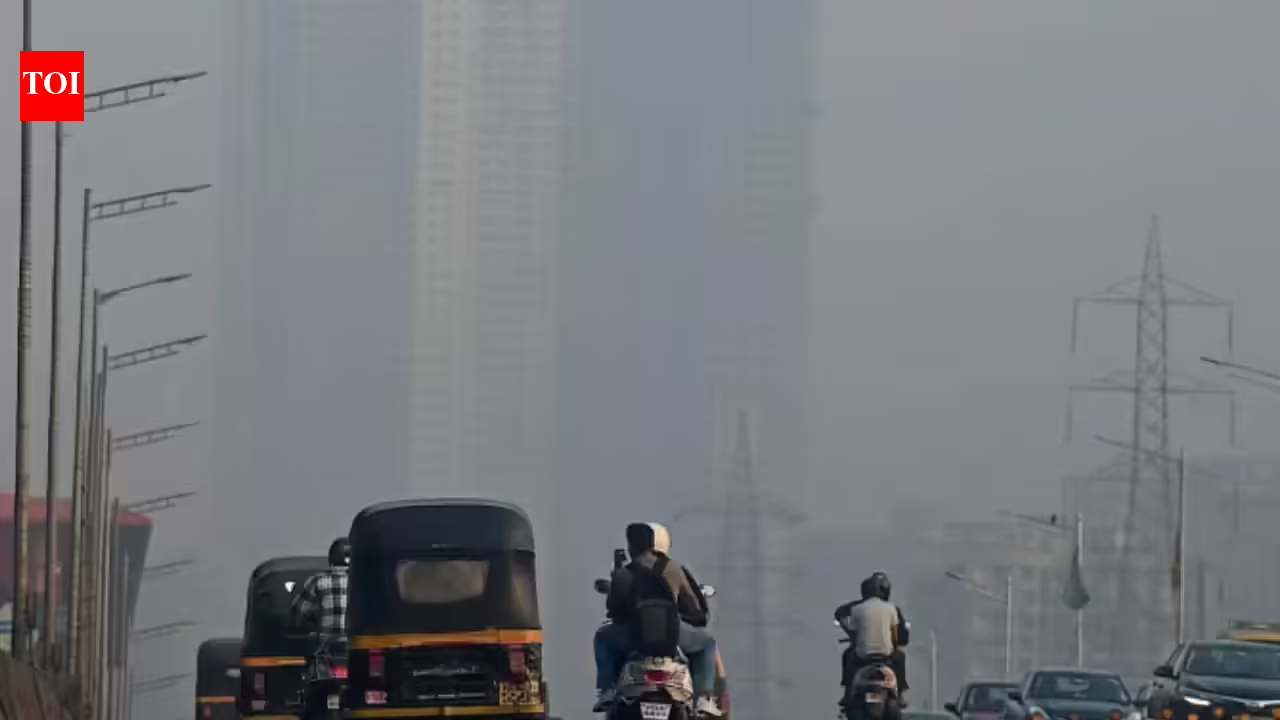
MUMBAI: Even as India recorded a marginal improvement in air quality in 2025, cities across the country—including Mumbai—continue to grapple with pollution levels far exceeding global safety norms, according to the latest World Air Quality Report released on Tuesday.India’s annual average PM2.5 concentration dipped by 3% to 48.9 µg/m³ in 2025, still nearly ten times higher than the WHO guideline. The country now ranks as the sixth most polluted globally, behind Pakistan, Bangladesh, Tajikistan, Chad and the Democratic Republic of the Congo, underlining the scale of the challenge despite incremental gains.The report is based entirely on ground-level PM2.5 measurements collected from a mix of government-run monitoring stations and low-cost sensors operated by academic institutions, non-profits and citizen scientists, ensuring real-time and locally representative data. It classifies urban and semi-urban habitats as “cities” for analysis and uses population-weighted averages to assess national exposure levels.PM2.5—fine particulate matter smaller than 2.5 microns—remains the key pollutant tracked due to its severe impact on human health, originating from sources such as vehicular emissions, industrial activity, crop burning, dust storms and residential fuel use.Across Central and South Asia, the crisis is far more acute: 17 of the world’s 20 most polluted cities are located in the region. The world’s 25 most polluted cities are concentrated in India, Pakistan and China, with India home to three of the four worst-hit. Six Indian cities, including Delhi and Ghaziabad, feature among the 11 most polluted globally. Cities such as Dhaka, Delhi and Dushanbe also recorded at least two months with PM2.5 levels exceeding 100 µg/m³, underscoring the scale of exposure in densely populated urban centres.Within India, Loni in Uttar Pradesh emerged as the most polluted city, with an annual average of 112.5 µg/m³—over 22 times the WHO limit and a sharp rise of nearly 23% from 2024 following extreme pollution episodes. Though Mumbai did not feature among the worst, episodic spikes linked to road dust, infrastructure works and vehicular emissions remain a concern, particularly during winter inversion periods.The report highlights that India has the region’s most extensive air quality monitoring network, yet large gaps persist, especially in rural areas. Nearly half the monitoring stations in South Asia are government-operated, with the rest relying on community and low-cost sensors.Globally, BRICS nations present a mixed picture. While China has seen sustained improvements in urban air quality over the past decade, India continues to battle structural issues such as construction dust and vehicular emissions. Brazil and South Africa fare relatively better on annual averages but face localized industrial pollution hotspots.Policy gaps remain a key concern. Despite the National Clean Air Programme’s target of reducing pollution by up to 40% by 2026, nearly two-thirds of funds have been channeled into road dust control, with limited focus on industrial emissions and biomass burning—the major contributors to fine particulate pollution.The health fallout is increasingly visible. The report cites a surge in respiratory and cardiac cases during extreme pollution episodes, echoing scenes seen in Delhi in November 2025, when hazardous air triggered public protests and emergency curbs.Urban planners and environmentalists warn that without sharper interventions—especially targeting PM2.5 sources—cities like Mumbai risk slipping into the same severe pollution trajectory as their northern counterparts.