
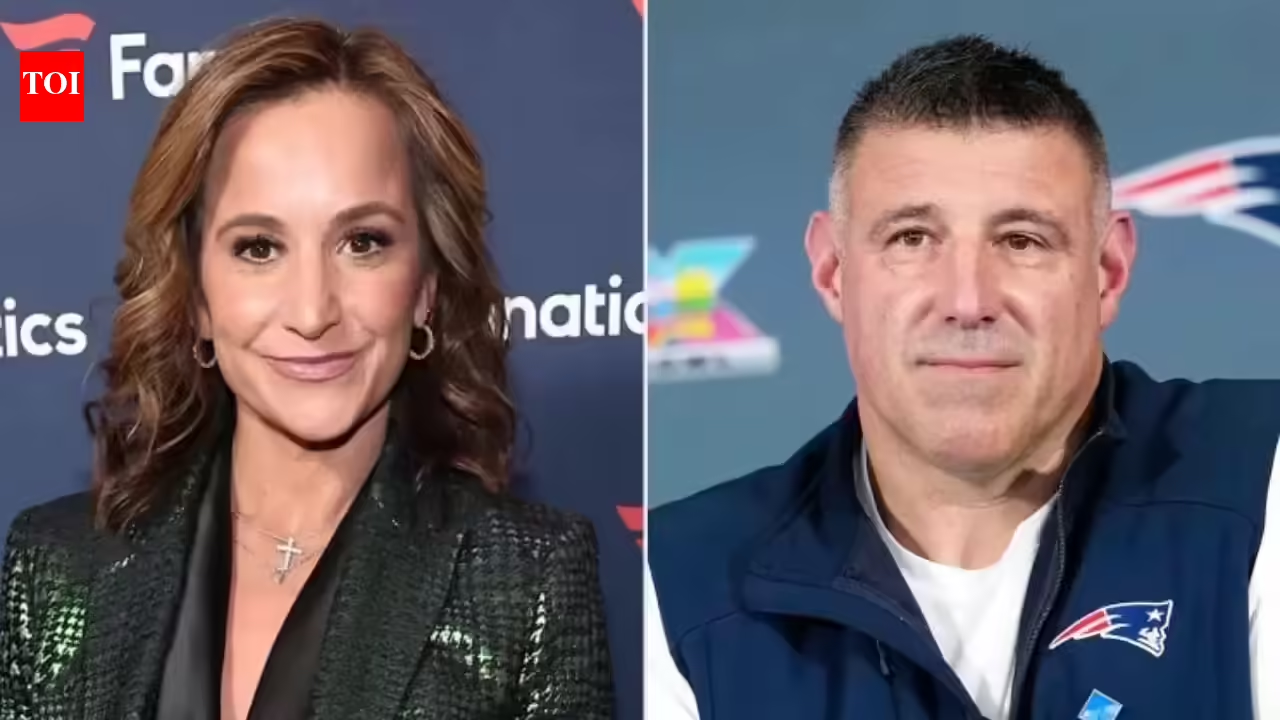
Dianna Russini’s sudden exit from The Athletic has left the NFL media circuit grappling with more than just optics. What began as a tabloid-style photo leak involving Dianna Russini and Mike Vrabel quickly evolved into a newsroom issue about ethics, perception, and accountability. The images, published by New York Post, triggered an internal review that ended with Russini stepping away before the process concluded. The timing, just ahead of the NFL Draft, has only sharpened the focus on how this unfolded behind the scenes.
Why did Dianna Russini resign from The Athletic amid the Mike Vrabel controversy?
Dianna Russini’s resignation was not framed as an admission but as a decision to step out of what she described as a spiraling situation. In her letter to executive editor Steven Ginsberg, she acknowledged the outlet’s early backing, writing: “When the Page Six item first appeared, The Athletic supported me unequivocally, expressed confidence in my work and pride in my journalism. For that I am grateful.”That support, however, came under strain as scrutiny intensified. Photos showing Russini and Vrabel together at an Arizona resort raised questions about proximity between a reporter and a high-profile NFL figure she covered. Both maintained the interactions were harmless and taken out of context. Vrabel himself dismissed the narrative, saying, “These photos show a completely innocent interaction and any suggestion otherwise is laughable.”Still, the issue was no longer about what the photos showed, but what they suggested. The Athletic’s own editorial standards, aligned with The New York Times, stress that even the appearance of partiality can erode trust. That distinction became central as the story gained traction beyond sports pages and into broader media discourse.
What questions did The Athletic’s investigation raise about journalistic ethics?
Internally, the tone shifted as more details surfaced. Ginsberg told staff that while the initial instinct was to stand by Russini, “new questions were raised” as the review progressed. Those questions were never publicly detailed, but they were significant enough to extend the investigation and bench Russini from NFL coverage in the interim.The scrutiny reflects a deeper tension in modern sports journalism, where access often overlaps with personal familiarity. League insiders and reporters operate in tight circles, especially around marquee events. But newsroom policies remain clear. The Times’ handbook states, “Relationships with sources require sound judgment and self discipline to prevent the fact or appearance of partiality.” It goes further, warning that “romantic involvement with a news source would foster an appearance of partiality.“Russini’s case now sits at that intersection of policy and perception. While she rejected what she called “self-feeding speculation that is simply unmoored from the facts,” the broader issue had already taken hold. The investigation into her work is set to continue, even after her departure.Meanwhile, Vrabel has kept a low profile, with the New England Patriots maintaining a business-as-usual stance. With the draft approaching, his focus appears unchanged, even as the media storm around him lingers.