




VIJAYAWADA: Though higher studies abroad and the ‘American Dream’ look rosy for Indians, the change of circumstances is now giving nightmares to Telugu students in the US.Students, who took education loans to study abroad, are facing tough times due to a not-so-conductive US job market. Additionally, the changes to the visa rules brought in by the Trump administration have only made things worse for them.
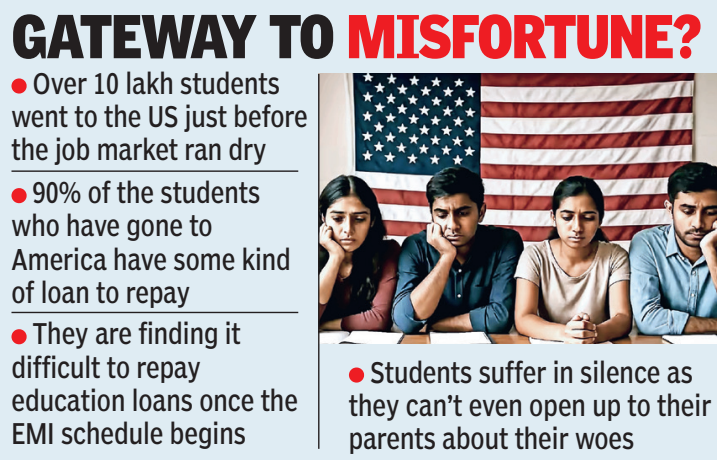
The Telugu diaspora feels the suicide of Kurnool student Chandu Iraganaboyina earlier this week in Chicago stands as a harsh reality of the student community in the US, especially those who are bearing the debt burden. According to an unofficial estimate, 90% of the students who went to America have some kind of loan to repay. “It could be an education loan from a bank or other financial institution, or debt from known sources. Very few move to the US debt-free and with their own resources,” says G Sharath Chandra, who is struggling to repay a Rs 40 lakh loan.Although education loans come in handy with delayed repayment schedules, debt servicing turns tough once the EMI schedule begins. Most education loans come with a two-year disbursement schedule and one-year cool-off period. The repayment schedule starts in the third year. One has to find a job by the time the EMI schedule begins to manage expenses and service the debt, says B Sankeerthana, a student in the US from Nellore.According to Akhil Gurutej, a student from Dallas, 30% of the students who moved to the US post-2021 are struggling without a job. Some are doing part-time jobs to make ends meet, but are under financial stress to pay off their loans, he says.Most of these students often suffer in silence as they cannot even open up to their parents about their grim financial situation, says another student G Sumanth from California. “It is a general norm in our society that those in the US should send money home. Even otherwise, people feel guilty depending on their parents who have already spent huge amounts of money on their education. It is this guilt that holds them back from talking about their plight,” he says.