

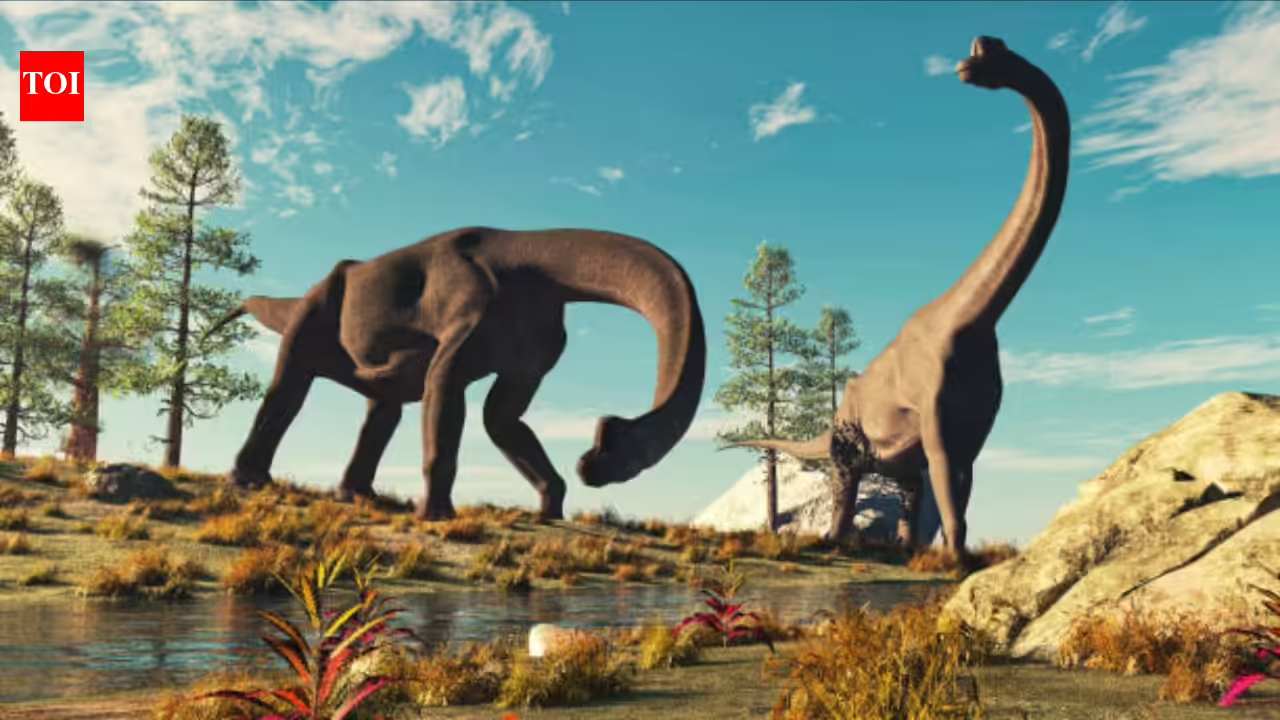
For the longest time, we had no idea what color dinosaurs were. We could see their bones. We could study their size, their movement, and how they lived. But their actual appearance—what they looked like when they walked around millions of years ago—was basically a mystery wrapped in speculation.Now, researchers have figured out something remarkable. They found actual color information preserved in 150-million-year-old dinosaur skin. And what they discovered completely changes how we think about one of the largest animals that ever lived: the sauropod.
Finding tiny clues in ancient skin
The whole story starts with something called melanosomes. These are incredibly tiny structures—we’re talking nanometers here, basically invisible to the naked eye—that produce pigment in skin and feathers. Over the past couple of decades, scientists realized that sometimes these structures get fossilized. When they do, they leave impressions behind that tell us what color an animal actually was.For birds and other feathered dinosaurs, this technique has worked pretty well. Researchers could look at the shape and size of preserved melanosomes and figure out the color. Did the dinosaur have dark brown feathers? Light brown? Black? The shape of the melanosome could tell you. But here’s the problem: this technique has barely been used on sauropods—those massive, long-necked dinosaurs that are basically the giants of the dinosaur world.“Only three dinosaurs with near full body scale covering have been reported to have preservation of melanin, with only one preserving melanosome impressions,” the researchers note in their study. And all three of those were ornithischians—a completely different type of dinosaur. There was basically zero information about what color sauropods actually were.
The exceptional discovery site
Then came the Mother’s Day Quarry. This site is one of the few places on Earth that has preserved juvenile sauropods with their skin still intact. Not just fossilized bones. Actual skin impressions. The site is about 150 million years old, from the Late Jurassic period. The scientists think the baby dinosaurs died during a drought, probably as a group, at a drying water source. Their bodies dried out in the sun for weeks or months before being buried by a debris flow. That kind of slow drying and sudden burial is exactly the kind of condition that preserves skin details.The researchers took samples from several juvenile Diplodocus specimens from this site and started looking for melanosomes using advanced microscopy techniques.The findings of study have been published in the Royal Society Open Science journal.
What they actually found
When they looked at the skin under the microscope, they found two different types of tiny structures. One type was oblong—elongated, like a grain of rice. The other type was disc-shaped—flat and round, like a tiny coin. Both types were clustered together in groups scattered across the skin. And both showed the chemical signature of melanin.The oblong structures are pretty straightforward. They’re similar to melanosomes found in modern brown-colored animals. So the Diplodocus probably had brown coloring, or at least some brown coloring. But the disc-shaped structures? That’s the surprising part.Disc-shaped melanosomes have been found before, but only in birds and in one ancient bird-like dinosaur. In modern birds, these flat melanosomes produce iridescent colors—the shimmering, color-changing effect you see on a raven’s feathers or a pigeon’s neck. They work by reflecting light in specific ways. Finding them in a sauropod was completely unexpected.
This changes everything about sauropod color
Finding two different types of melanosomes in juvenile Diplodocus suggests that sauropods might have evolved the kind of complex color patterns you’d expect from high-metabolism animals. Maybe they had iridescent patches on their skin. Maybe they had complex color patterns for camouflage or communication. Maybe they looked completely different from what we’ve been imagining.“The presence of two distinct microbody morphotypes suggests the potential for complex color patterning in the epidermis of juvenile Diplodocus,” the researchers write. In other words, these dinosaurs probably weren’t just one solid color. They probably had patterns. They probably looked more interesting than we ever realized.This discovery opens the door. For the first time, we have direct evidence that sauropods had color.