



“Travel is fatal to prejudice, bigotry, and narrow-mindedness.” –Mark Twain“Don’t go to Bihar.” These are the kinds of phrases one may hear from people when traveling, which sometimes are based on exaggeration, and in most cases, perception, not on first-hand experience. This was advice that Caleb Friesen, a Canadian tourist received very early in his first visit to India back in 2017. He was at this point in time backpacking through various places in India such as Goa, Mumbai, Agra, Varanasi, and finally, Kolkata, after which, he was going to hitchhike his way to Delhi.The cautioning remarks about Bihar were clear and demoralizing. He was advised that the state was dangerous, backward and not recommended for any traveler coming from another country. To many, Bihar was a destination best avoided. However, despite all the precautions raised, Friesen decided not to change his travel plans. On the contrary, what he saw when he arrived in Bihar was far from the information he received prior to visiting the place. In his encounters, the people there proved to be curious, friendly and at times, worried for him. These encounters may seem mundane yet very significant to everyday life.What made the experience more unique was the fact that it happened quite fast. As Friesen went ahead with his travels, he talked about his plan to visit Uttar Pradesh, and once again, he was cautioned against it. However, there was a slight change in the nature of caution, the people he spoke to warned him not to go to Uttar Pradesh because that is where all the real danger lies. But again, much like the previous case, his experience on the ground proved otherwise. Traveling through Uttar Pradesh did not pose any threat to him; He encountered the same warmth and hospitality as before.
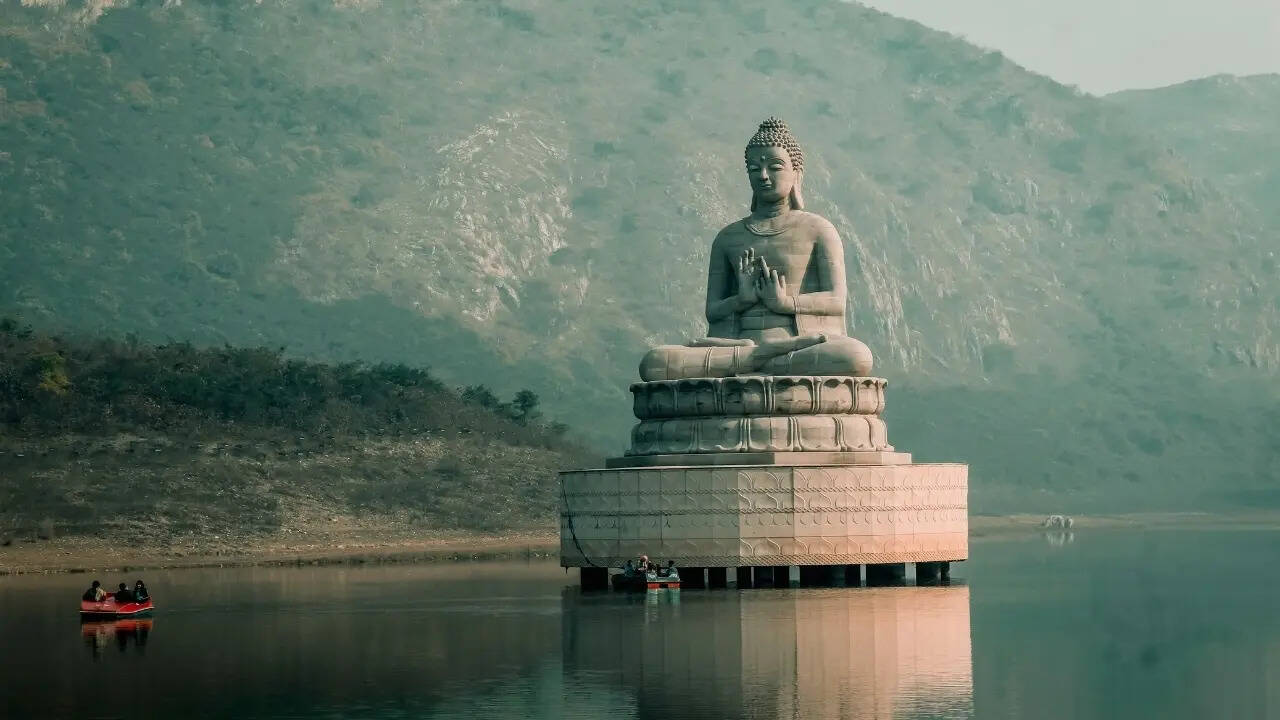
Ghora Katora in Bihar
With time, he realized that this experience was not just a one-off thing for a tourist visiting the country. With several years in the country already behind him, he understood that this experience is universal. In most cases, people are wary of regions they have never visited personally and only know what they have heard from others. While these narratives may not be entirely baseless, they tend to exaggerate the situations.Interestingly, Friesen observed the same behavior back home in Canada. During a hitchhiking journey across provinces, from British Columbia to Ontario, he encountered similar warnings at every stage. Residents of one region would caution him about the next, often describing it in negative terms. Despite all these warnings, the experience turned out to be quite enjoyable, thus emphasizing the point that such perceptions exist not only in India but are a general tendency in humans towards fear of what is not familiar to them.In essence, this is how this story is related to the theme of perception versus reality. Being in the age of continuous influx of news that often tend to be somewhat exaggerated, it becomes easy for tourists to develop preconceived notions about places they have never been to. Negative news travels fast, but good news even faster. Hence, places like Bihar or Uttar Pradesh may turn out to have a bad reputation simply due to preconceived notions rather than real experiences.For modern travellers, especially in a country as diverse as India, the takeaway is both simple and relevant. Awareness and caution are essential, but they should not be confused with assumption. He ends the video by saying that Indians should travel more, should see more of India…fall in love again with the country.