


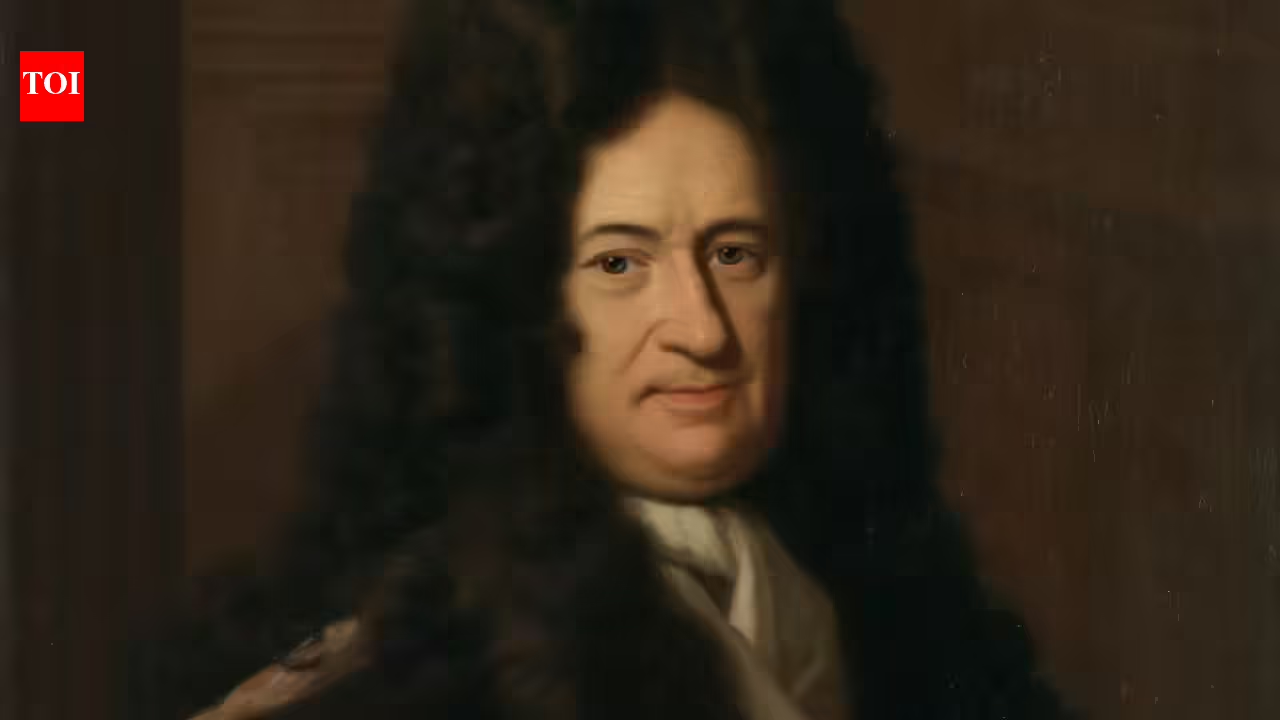

The quote “Perceptions which are at present insensible may grow some day: nothing is useless, and eternity provides great scope for change,” by Gottfried Wilhelm Leibniz, may seem complicated at first, but it has a simple and strong idea about how change works in life. Leibniz, a prominent 17th-century philosopher, frequently examined the influence of inconspicuous details on significant results over time. His quote is about how things we don’t notice today might be important in the future. This quote reminds us that growth isn’t always quick or easy to see, which is something people often look for in life. Things that don’t seem important today can slowly become important. People can be more patient and thoughtful about learning, working hard, and life in general if they understand this idea.
Quote of the day by Gottfried Wilhelm Leibniz
“Perceptions which are at present insensible may grow some day: nothing is useless, and eternity provides great scope for change.”
Understanding the meaning of the quote by Gottfried Wilhelm Leibniz
This quote is mostly about growth that isn’t obvious and change that lasts. Leibniz says that not everything important is easy to see right away. “Insensible” here means things we can’t easily see or feel right now. These could be little things, habits, or efforts that don’t seem useful right away.He then says that “nothing is useless,” which shows a key belief: every action, thought, or experience has value, even if that value isn’t clear right now. The last part of the quote, “eternity provides great scope for change,” shows how important time is. With enough time, even the tiniest or least noticeable things can grow, change, and become important.This idea is very similar to how knowledge, skills, and even personal growth happen over time.
Who was Gottfried Wilhelm Leibniz
From 1646 to 1716, Leibniz was a German philosopher, mathematician, and scientist. He is well-known for his work in mathematics, especially for coming up with calculus on his own around the same time as Isaac Newton.But Leibniz did a lot more than just maths. He wrote a lot about philosophy, logic, and science. He believed that the universe consists of fundamental entities known as “monads,” each of which uniquely mirrors the world.This idea might sound strange, but it shows how much he thought about how people see things and what is real.He wrote a lot about how small parts fit into bigger systems, which is very similar to what we’re talking about here.
Why small and unseen things matter
People often care about results that are easy to see in their daily lives. For instance, it’s easy to see how well someone did on a test, got a promotion, or achieved something. But a lot of important things happen in the background that no one sees.Learning is one example. It’s not always easy or quick to learn something new. You might not be able to see changes right away. But over time, knowledge grows a little bit at a time. Things that used to be hard to understand are now easier.Leibniz’s idea reminds us that these first, “insensible” stages are not a waste of time. They are important for growth. Later success would not be possible without them.The same goes for skills. You get better at things like writing, playing an instrument, or learning a language over time. Small things that don’t seem like much at first can lead to big changes later.
The role of time in change
Time is one of the most important parts of this quote. Leibniz uses the word “eternity” to show that change can happen over long periods of time. It can, however, happen over long periods of time.People today often want quick results. Because of technology and quick communication, instant results are now more common. But a lot of natural processes still go at their own pace.For example, it can take years of research to make a scientific discovery. A lot of new ideas are based on work that didn’t seem important at the time. Personal growth doesn’t happen all at once, either. It grows with time and hard work.Leibniz’s quote shows that you need to be patient to see how change can be good. Things that seem useless now might be useful later.
How this idea applies to everyday life
- Education: Some students may think that some topics are not useful. But these subjects often teach you things that are important later.
- career growth: Even though early jobs or tasks may seem small, they help you build skills and experience that will be useful in the long run.
- Relationships: Little things like being nice or talking to someone may not seem like a big deal, but they help relationships get stronger over time.
- personal habits: Reading or exercising every day may not show results right away. But they do have long-term benefits.
The main point in all of these cases is still the same: small, unnoticed efforts are not wasted.
The scientific perspective on gradual change
Leibniz’s idea is also in line with modern scientific ideas. Psychology and neuroscience researchers have shown that learning and changing behavior happen gradually.For example, when you do something over and over again, your brain makes new connections. You won’t notice these changes right away, but over time, they will help you get better at things and learn more.In biology, growth happens in stages as well. Plants, animals, and ecosystems undergo evolution through gradual, incremental modifications rather than sudden changes.This shows that Leibniz’s idea, even though it was written a long time ago, is still true today.
Why “nothing is useless” is an important idea
People can change how they think about failure or setbacks by saying, “Nothing is useless.” People often feel discouraged when their hard work doesn’t pay off right away.This quote, on the other hand, suggests a different way of looking at things. Even failures can teach you something and give you experience. At first, these lessons may not be clear, but they will help you get better in the future.A project that doesn’t work out can teach you important skills, for example. Going through something hard can make you stronger. These “hidden” benefits become clear over time.This idea makes you want to be more patient and balanced in your life.
Relevance of the quote in today’s fast-paced world
In today’s world, where people often care more about getting things done quickly, this quote is still very important. People often share success stories on social media and other digital platforms, but they don’t usually show how long it took to get there.We can’t always see progress, as Leibniz said. There are probably a lot of little things that happen that people don’t notice that lead to every success.If people understand this, they can set realistic goals and stay motivated even when they don’t see results right away.
A broader philosophical insight
Leibniz’s quote also shows a bigger philosophical idea: that everything in the universe has a purpose and that it is always changing. Even the tiniest parts are important to the whole.This way of thinking makes people think about what will happen in the long run instead of just what will happen right away. It also shows how important it is to be patient and pay close attention to what is going on in the world.