


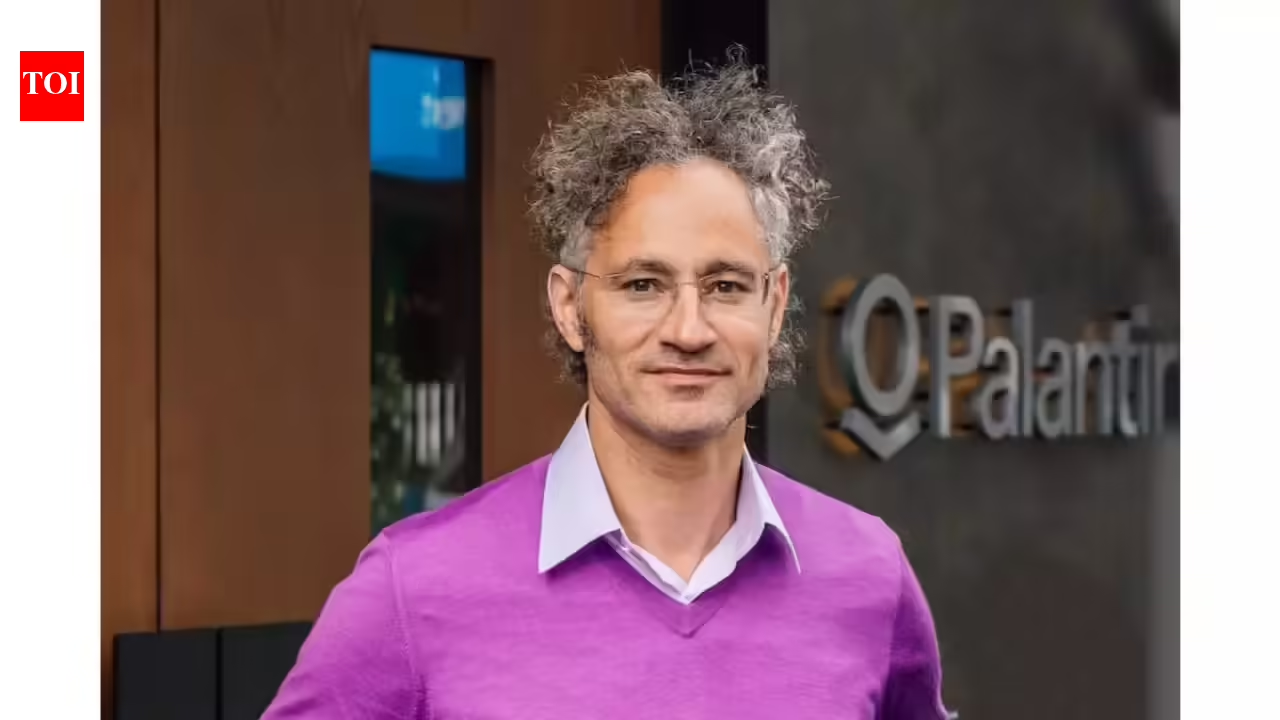
At a time of polished social media feeds and corporate messaging, Alex Karp, the CEO and co-founder of Palantir Technologies, is offering a reminder that serious human connection cannot be faked. His insight in the book, “The Technological Republic: Hard Power, Soft Belief, and the Future of the West” serves as a central theme. Karp’s quote highlights a common struggle: many people try to inspire others but find their words sound hollow. It highlights that the challenge often is not the phrasing of the message but the intention, and whether its reflects the speaker’s conviction.
Quote of the day by Alex Karp
“You will never touch the hearts of others, if it does not emerge from your own.”In a world where audiences are constantly exposed to carefully managed narratives, it has become increasingly difficult to distinguish genuine intent from a scripted performance. Through his quote, Karp argues that emotional impact is only possible when words are backed by true belief. According to the principles laid out by the Palantir CEO, sincerity is a critical tool for both personal and professional success. When you’re leading a team or building a brand, audiences can quickly sense when communication isn’t sincere’, he says. Loyalty is often higher among leaders who lead from their own values, rather than clever phrases.When it comes to creativity, creators who share their authentic experiences tend to build stronger connections with their audiences because their work feels “real” rather than performed. If seen in terms of relationships and everyday life, honest and emotional communication creates trust. Sincere expressions of care or concern resonate much more deeply than scripted responses.
Who is Alex Karp?
Alexander C. Karp brings a unique perspective to the world of big tech. Born in New York City in 1967 to a Jewish pediatrician and an African American artist, his background is as diverse as his education.He holds a law degree from Stanford and a Ph.D. in philosophy from Goethe University Frankfurt, which he completed in 2002. This deep academic roots in philosophy heavily influence his approach to technology, ethics, and leadership at Palantir, a company known for its high-stakes work with government and defense agencies.