


New Delhi: After months of negotiations, government and auto industry on Thursday reached a consensus on the proposed CAFE-3 fuel efficiency norms, with companies agreeing to most of the draft circulated last week, even as concerns remain over meeting stricter emission targets by FY32.TOI has learned that officials told industry representatives that the thrust of CAFE-3 is to facilitate and nudge carmakers to manufacture energy-efficient and less-polluting vehicles as it referred to the West Asia crisis, which has disrupted energy supply chains. Top officials told the industry that penalty is not the prime focus of the norm as it expects carmakers to meet the target. There was also a consensus that the next phase of CAFE (Corporate Average Fuel Economy) should be implemented from April 2027.CAFE norms are government-regulated standards, requiring automakers to meet a minimum average fuel efficiency and maximum emission level (CO2) across their entire fleet of vehicles.
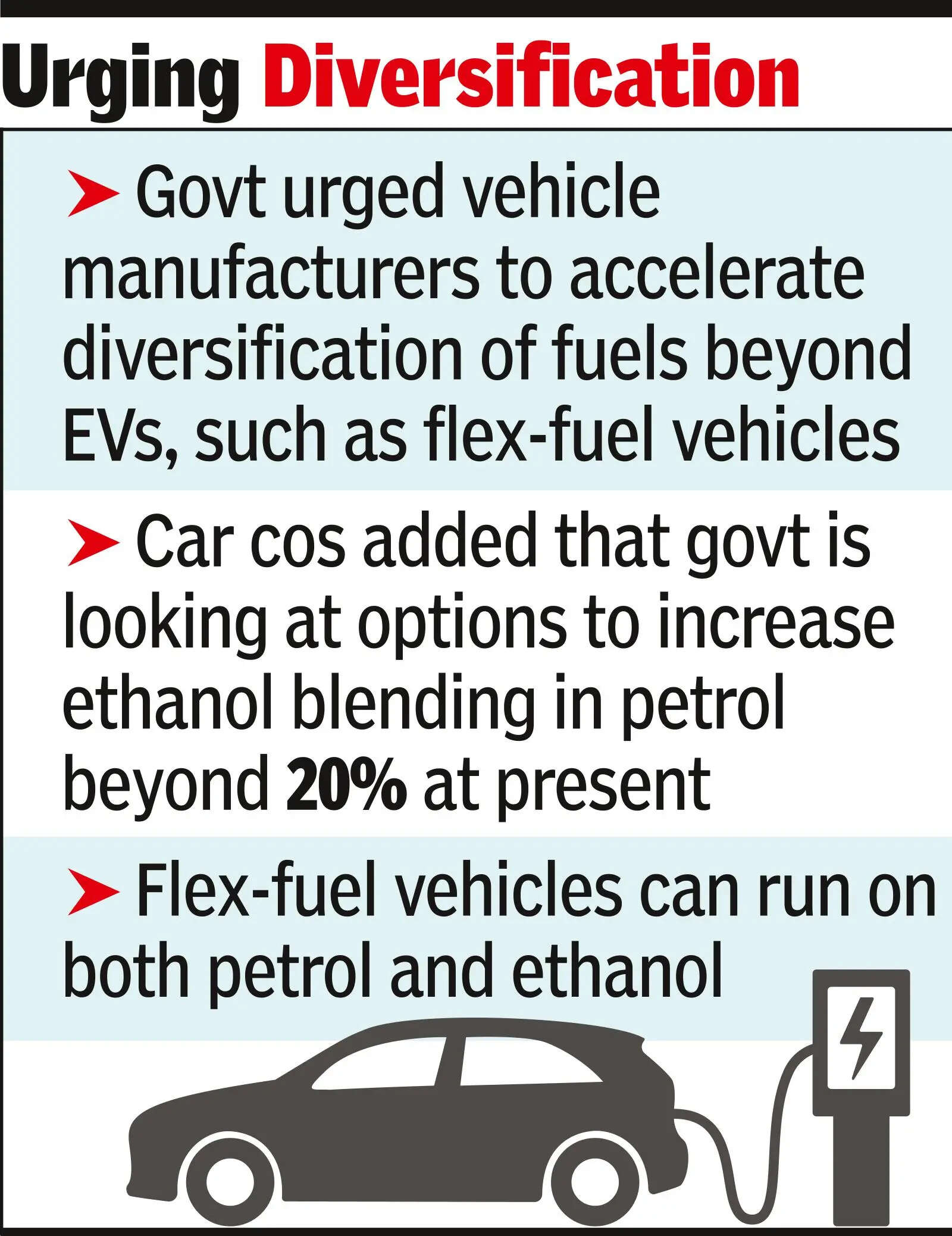
People aware of the meeting chaired by power secretary Pankaj Agarwal said that vehicle manufacturers were also urged to accelerate diversification of fuels beyond EVs, such as flex-fuel vehicles. They added that govt is looking at options to increase the ethanol blending in petrol beyond the current 20%. Flex-fuel vehicles can run on both petrol and ethanol.The meeting saw automakers and industry body Siam back the government’s approach, describing the draft as balanced and consultative. Industry executives said the framework supports multiple technologies, including electric vehicles (EVs), hybrids and flex-fuel vehicles, while aligning with the government’s aim to reduce crude oil imports.However, some companies flagged challenges in achieving the final emission targets. A section of automakers also reiterated their demand for higher “super credits”, instead seeking an increase in EV credit weightage to 4 from 3 and flex-fuel vehicle credits to 1.5 from 1.1.The revised CAFE-3 norms provide a balanced way by decreasing average fleet emission level of a carmaker from 113 gCO2/km in FY27 to 78.9 gCO2/km by FY32 while allowing credit trading, carry-forward of compliance, and lower penalties to encourage adoption of cleaner technologies.