

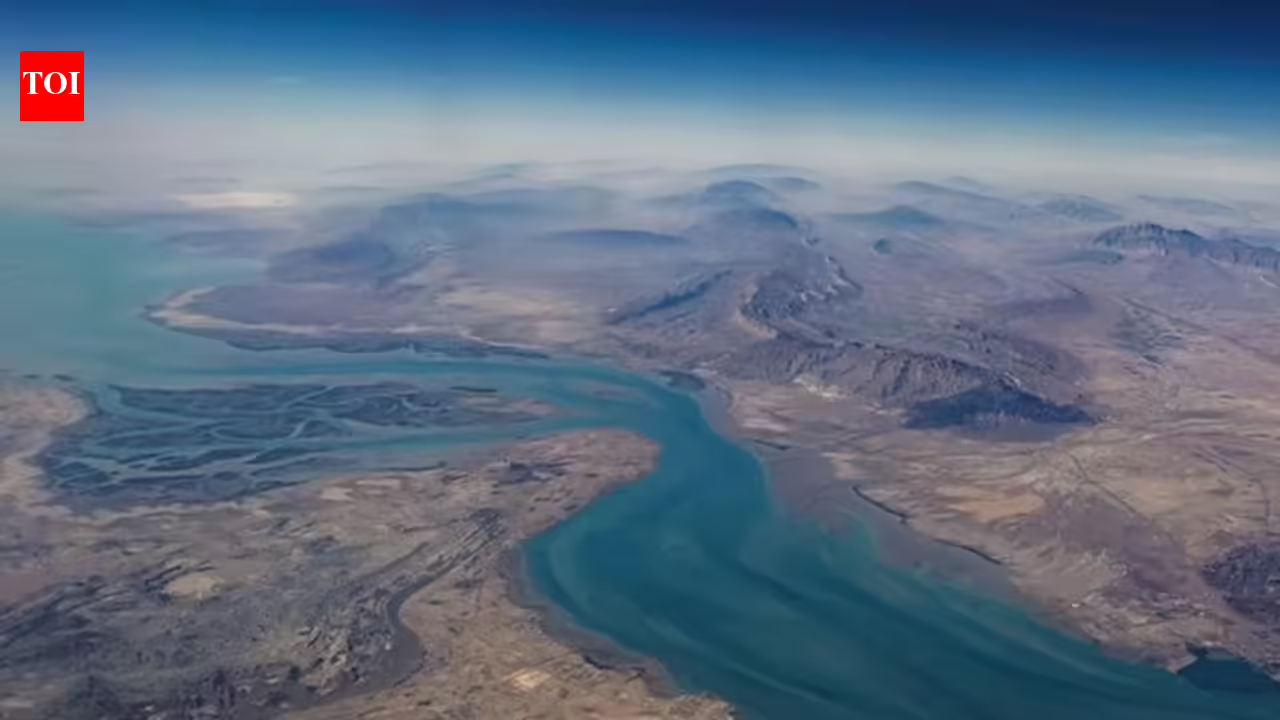
Iran has announced that all commercial vessels will be allowed to pass through the Strait of Hormuz in line with the ceasefire in Lebanon. The route is declared fully open for the duration of the truce, foreign minister Abbas Araghchi said.“In line with the ceasefire in Lebanon, the passage for all commercial vessels through Strait of Hormuz is declared completely open for the remaining period of ceasefire, on the coordinated route as already announced by Ports and Maritime Organization of the Islamic Rep. of Iran,” Araghchi said through a post on X.
This follows an agreement between Israel and Lebanon to implement a “cessation of hostilities” from April 16 for an initial period of 10 days, aimed at creating space for peace negotiations, according to the text of the deal released by the US state department.The agreement states that Lebanon’s government, with international support, will take “meaningful steps” to prevent Hezbollah and other groups from carrying out attacks against Israeli targets.It also notes that both sides recognize Lebanon’s security forces “as having exclusive responsibility for Lebanon’s sovereignty and national defense”, reflecting ongoing efforts since 2025 to disarm Hezbollah.While the deal allows Israel to take “all necessary measures in self-defense”, it specifies that “Israel will not carry out any offensive military operations against Lebanese targets, including civilian, military, and other state targets, in the territory of Lebanon by land, air, and sea.”France and United Kingdom are set to co-chair a meeting on Friday involving around 40 countries, aimed at signaling to the United States that key allies are prepared to help restore freedom of navigation in the Strait of Hormuz, but only after hostilities cease.The move comes after US president Donald Trump urged other nations to take a more active role in the conflict and criticized Nato allies for not doing enough.The US-Israeli attack on Iran, launched on February 28, has killed thousands and triggered widespread instability across the Middle East. The conflict had also led to an effective shutdown of the Strait of Hormuz—a critical maritime route through which nearly a fifth of the world’s oil and liquefied natural gas flows, raising fears of a potentially unprecedented global oil shock.