


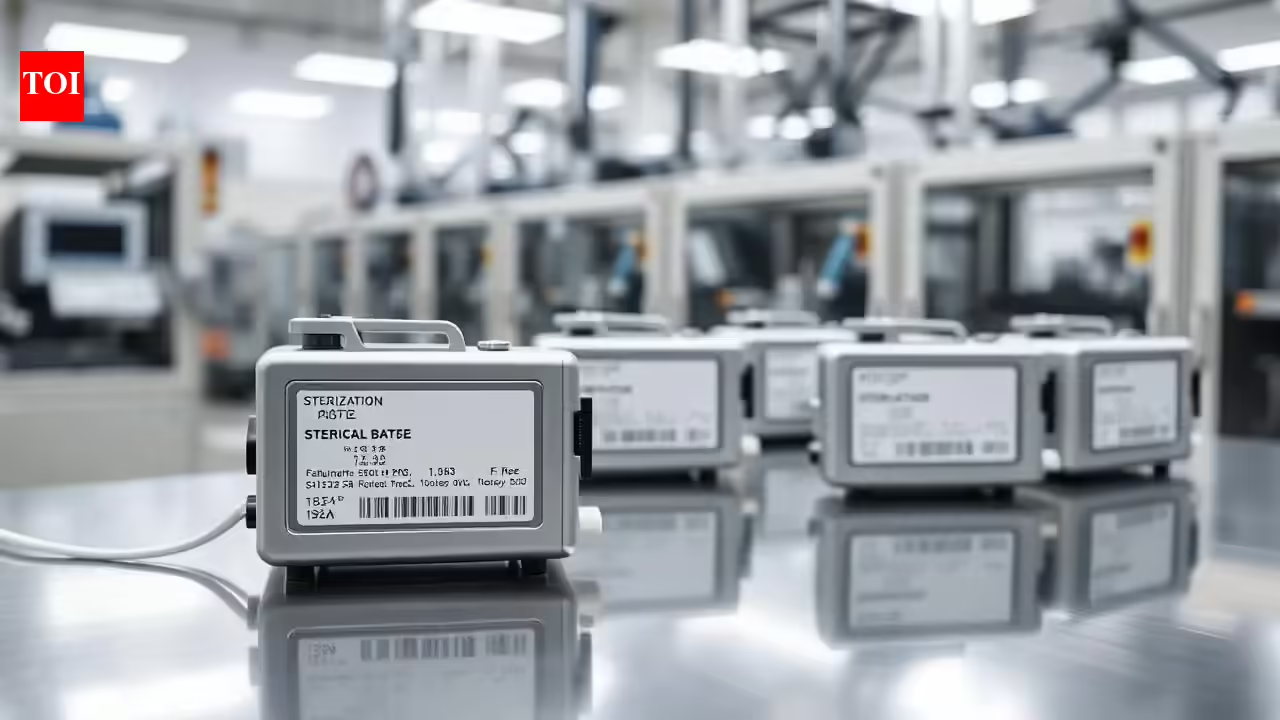
NEW DELHI: Medical devices used every day—from syringes and surgical sutures to implants—may soon face tighter regulation, with the Center proposing stricter labeling rules and a standardized testing fee system aimed at improving safety and accountability. Under a draft amendment to Medical Devices Rules, 2017, manufacturers may be required to clearly disclose on product labels where devices are sterilized, including license number of the facility. The move is intended to improve traceability so that authorities can quickly identify the source in case of infection or device failure. Govt has also proposed fixing testing charges across categories. As per the draft, implantation tests could cost Rs 5,000, sterility tests, Rs 2,000 and surgical sutures, Rs 3,000. These charges will rise by 5% annually, while fees for tests not listed will be decided by authorized laboratories. Officials say the changes are aimed at bringing uniformity in testing and strengthening oversight in the fastgrowing medical devices sector, where regulation has often been flagged as uneven. The industry, however, has raised concerns over feasibility and cost implications. Rajiv Nath, forum coordinator, Association of Indian Medical Device Industry, said that while the proposals are a step towards strengthening quality systems, they may need to be fine-tuned for smooth implementation. “The testing fees may not fully reflect actual lab costs, and if fixed without consulting NABL-accredited labs, it could make testing difficult to sustain, leading to delays. This may increase compliance costs and put some pressure on supply and prices, especially for high-volume items like syringes and consumables,” he said. “A riskbased approach, with stricter checks for high-risk devices, would be more effective. The sterilization labeling requirement also needs review as it may delay exports by 3-4 weeks…,” the forum coordinator added.