

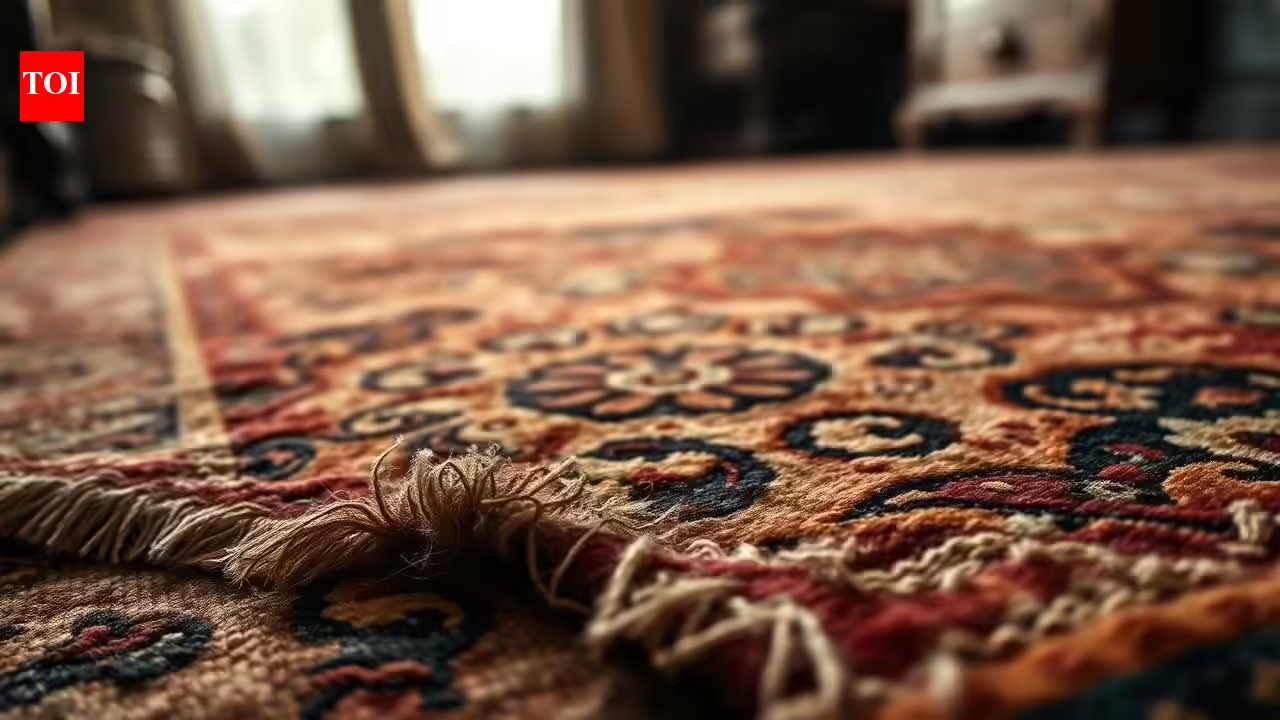
You have probably noticed it: that one sad, flat patch right in front of the couch, or the worn strip from the front door to the kitchen. Your rug didn’t just give up; it got walked into its end. Rugs flatten over time because of something completely unavoidable: foot traffic. Every step compresses the fibres; every pair of sneakers, boots, or bare feet leaves a little mark. In the spots where you walk most often, that flattening happens faster than you would think.The good news? There is a genuinely simple fix that most people never bother with, but before we get there, let us talk about what is actually happening under your feet.The science of a worn-out rugMost people do not realize that walking does more damage to their floor covering than they think. The research in the journal Tribology International found that foot traffic wears down flooring over time, which directly lowers the slip resistance, which is the friction that keeps you from sliding. Over time, tiny bits of wear from shoe soles get ground into the fibres, which breaks them down.It is not just the fibers themselves, either. A separate study, Association of size-resolved airborne particles with foot traffic inside a carpeted hallwaypublished in Atmospheric Environment on indoor air quality, found that airborne particle levels in carpeted hallways varied by up to 90% with foot traffic. Every time someone walks on a rug, they disturb settled dust and debris. The debris acts like sandpaper on the carpet fibers, wearing them down from the inside.Why do some spots get hit harder than others?Not all rug wear is the same. The places that get the worst damage are the ones where you naturally walk every day. You probably walk the same path from the couch to the TV cabinet in your living room. Everyone walks on the same strip of floor in a hallway, and that repetition is what causes wear to build up.The kind of shoes you wear is also important. Heavier, less flexible shoes put more pressure on each step, which means that your hiking boots or chunky sneakers are harder on your rugs than a pair of soft slippers. The result? Uneven flattening. The middle of your rug might look brand new, while the spots that are most walked on are barely alive.
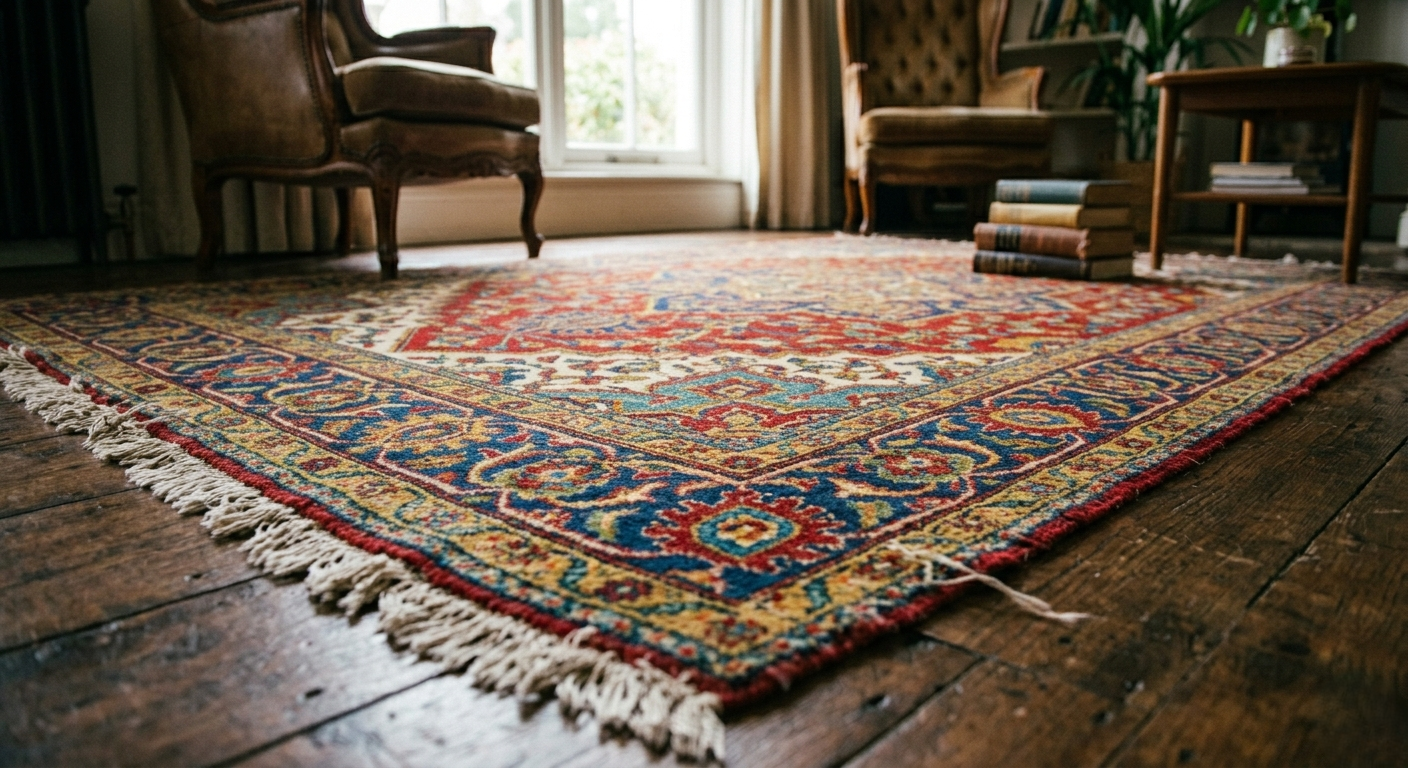
Every step compresses those fibers a little more than you would think.
The simple habit that actually works: Rotate your rugThis is where you get your easy fix. Rotating your rug, flipping it, and swapping its position redistributes foot traffic. The worn strip gets a break, a fresh section steps up, and the wear evens out.The frequency of the rotation depends on the foot traffic in the particular room where your rug is placed. Those that see higher traffic, such as an entryway or a living room, need to be rotated every three months, and those with less traffic, such as a bedroom or a reading corner, every six months.Do not just rotate, maintainRotation works best when paired with a few other habits. You need to vacuum your rugs regularly, not just to keep them clean, but also because the dirt and grit trapped in the fibers are wearing them down from the inside. Removing that debris slows down the wear cycle. Consider getting a rug pad. A good underpad cushions each step, which lessens the pressure that flattens the fibres. Suppose you can, try to get people to wear soft shoes inside. This one is harder to enforce with guests, but it really does help your rug keep its texture longer.The bottom lineYour rug is going to age, and that is just how physics works, but the difference between a rug that looks great after five years and one that looks tired at year two is just one simple habit: rotating it. Rotating your rug will take just 10 minutes, cost nothing, and the science backs it up. So next time you are doing a deep clean, flip that rug around. Your floors and your future self will thank you.