


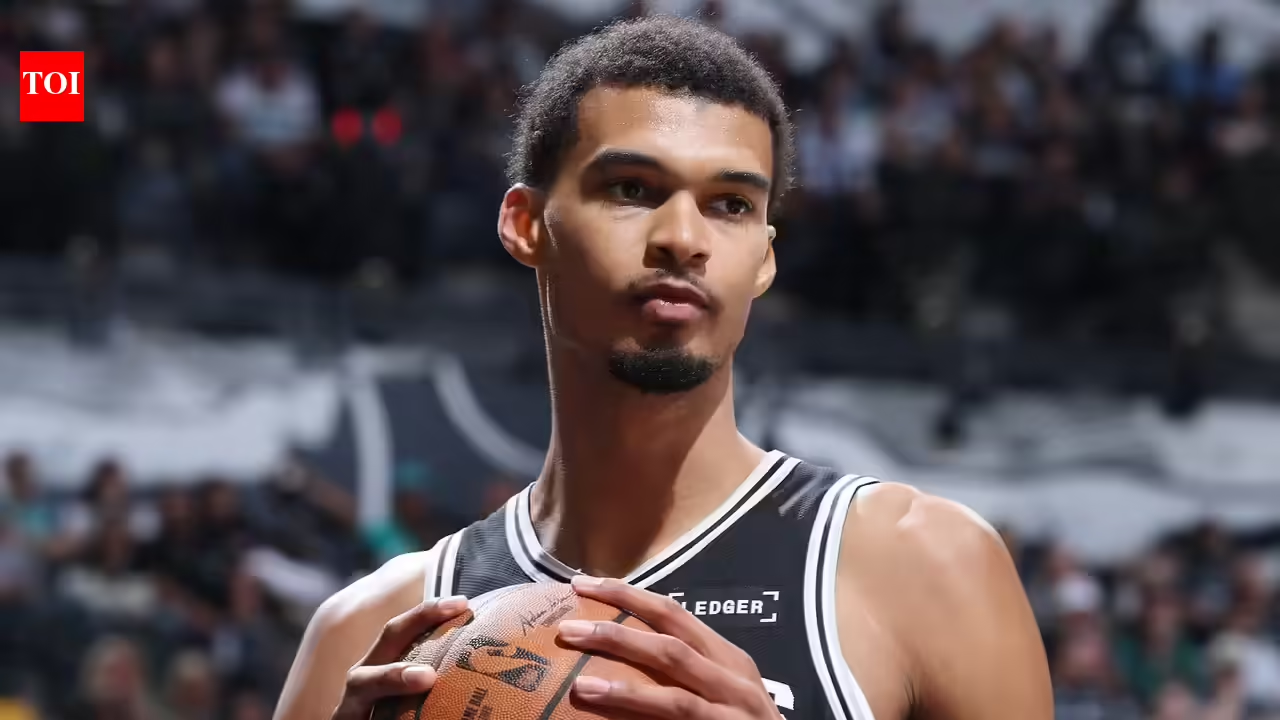

The NBA world collectively held its breath on Tuesday night. San Antonio Spurs star Victor Wembanyama was forced out of Game 2 of the first-round playoff series against the Portland Trail Blazers after hitting his face on the floor at near-full speed. It happened fast, and it looked bad.He remained on the court for a few seconds before rising to a seated position and speaking to teammate Stephon Castle. Then he jogged straight to the locker room. That detail alone told you everything. Wembanyama has since been officially diagnosed with a concussion and will undergo further testing Wednesday.
What actually is a concussion?
People throw the word around casually, but it’s worth understanding what’s actually happening inside the skull. A concussion is a traumatic brain injury, no bleeding, no visible damage on a scan most of the time, but a real injury to how the brain functions. When your head takes a sudden jolt or impact, the brain shifts inside the skull and that rapid movement disrupts normal neural activity. The brain essentially gets temporarily scrambled. Symptoms can range from headaches, dizziness, and light sensitivity to confusion, memory gaps, and nausea. In Wembanyama’s case, he appeared motionless for a moment with his eyes closed before getting up and heading to the locker room.
Why athletes are so vulnerable
For professional athletes, concussions carry a weight beyond the immediate symptoms. The brain needs genuine rest to heal — not just sitting out a practice or two, but actual neurological recovery. And here’s the part that makes sports leagues increasingly cautious: returning too soon, or suffering repeated concussions, can cause lasting damage. The NBA has strict guidelines in place for a reason. Under the league’s concussion protocol, a player must have at least 48 hours of inactivity and then hit several benchmarks while being symptom-free before being cleared to play, requiring sign-off from both a team doctor and a league protocol director.The return-to-play process includes light cardio, jogging, agility work, and non-contact drills and any recurrence of symptoms resets the entire process, making recovery timelines unpredictable.Physical therapist Dr. Evan Jeffries noted that concussion recoveries typically take 7–10 days, putting Wembanyama’s availability in serious doubt.