


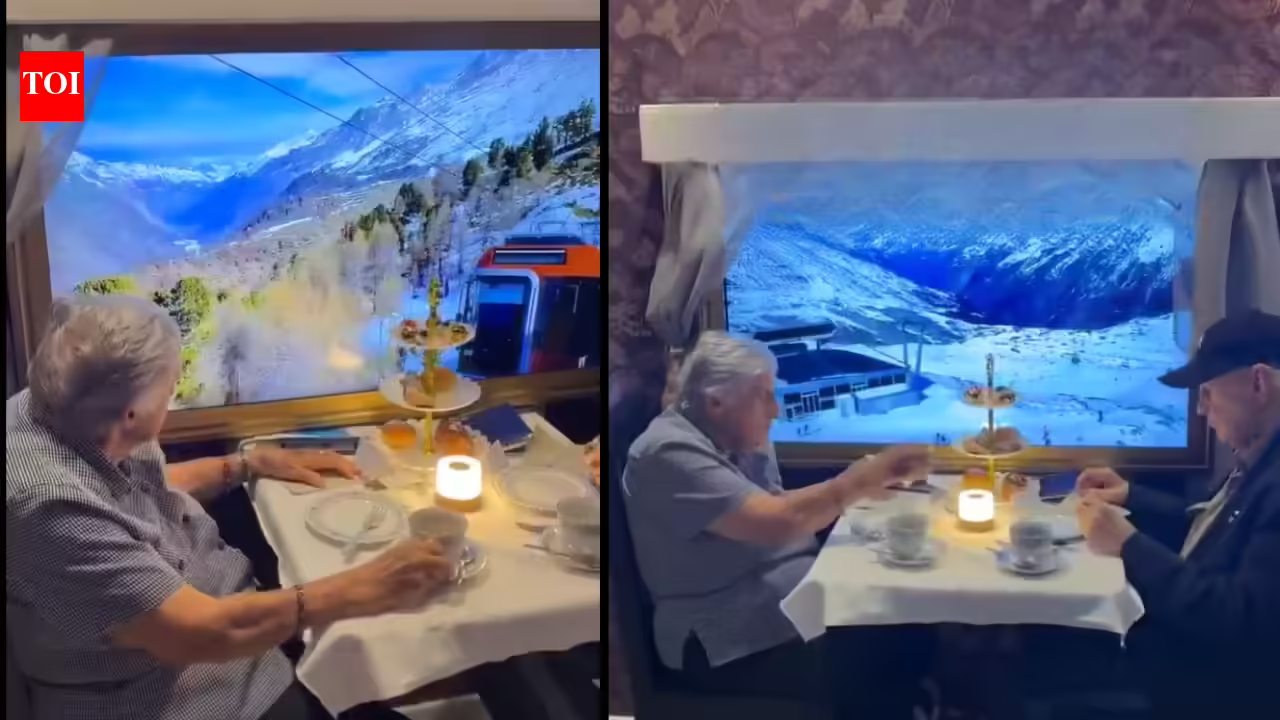
At St Vincent’s Care Toowoomba in Toowoomba, residents are boarding a train that never actually moves, yet still takes them across continents. Launched in March 2026, the “St Vincent’s Express” recreates a luxury rail journey using large high-definition screens, immersive surround sound, and an AI-powered travel guide. Designed for elderly residents who can no longer travel due to age or health limitations, the experience simulates journeys through 10 countries while they remain comfortably seated. With printed tickets, mock passports, and region-inspired refreshments, the project blends technology, storytelling, and care to deliver a rich, multi-sensory travel experience.
How this virtual train lets elderly residents explore the world
The St Vincent’s Express is not a simple screen-based setup but a carefully designed physical space that mirrors a fine-dining train carriage. Interiors include arranged seating, table settings, ambient lighting, and sound effects that replicate the rhythm and atmosphere of a real train journey.Instead of windows, wall-mounted panoramic screens display continuous moving landscapes, creating the illusion of motion. Surround sound systems replicate announcements, track sounds, and environmental audio, enhancing realism. The goal is to reduce the gap between simulation and reality, making the experience intuitive even for residents unfamiliar with digital technology.Residents are taken through pre-programmed journeys covering multiple countries, featuring a mix of natural landscapes, urban settings, and cultural landmarks. These routes are not random but curated to provide visual variety and emotional engagement.An AI-powered guide narrates the journey, offering context about locations, culture, and history. In some cases, narration is available in multiple languages, which helps residents from diverse backgrounds connect more deeply with the experience.Food plays a key role in immersion. Afternoon tea is paired with region-specific snacks, linking taste with visual and auditory cues. This multi-sensory approach strengthens engagement and helps make the journey feel more authentic.
Designed for accessibility and inclusivity
One of the most important aspects of the project is its accessibility. Traditional virtual reality often relies on headsets, which can be disorienting or uncomfortable for elderly users. In contrast, this shared environment removes the need for wearable devices.Residents can participate simply by sitting comfortably, making it suitable for individuals with mobility limitations, frailty, or limited technological familiarity. The group setting also encourages participation without pressure, allowing residents to engage at their own pace.
Supporting dementia care and cognitive health
The initiative has strong relevance for residents living with Dementia and other cognitive conditions. Immersive environments are increasingly used in dementia care as part of reminiscence therapy.Visual cues such as landscapes, cities, or transport settings can trigger memories of past experiences, encouraging storytelling and conversation. This helps stimulate cognitive function and maintain a sense of identity.Additionally, shared experiences like these promote social interaction, which is crucial in reducing loneliness and improving emotional well-being among elderly residents.
Combining technology with person-centred care
The St Vincent’s Express reflects a broader shift in aged care towards person-centred, experience-driven models. Instead of focusing only on medical needs, care providers are increasingly prioritizing emotional well-being, engagement, and quality of life.By integrating AI narration, immersive visuals, and hospitality elements, the project demonstrates how technology can be adapted to serve human needs rather than overwhelm users.
Scaling innovation in aged care
Globally, aged care providers are experimenting with new ways to engage residents, including VR headsets, sensory rooms, and digital therapy tools. However, many of these solutions remain individual-focused.What makes this initiative distinctive is its scale and shared design. It transforms a passive activity into a collective experience, encouraging group interaction and shared enjoyment.This model has the potential to be replicated in other care homes, offering a scalable way to enhance resident engagement without requiring complex personal devices.While the St Vincent’s Express is built on technology, its impact goes beyond novelty. For many residents, it restores a sense of movement, curiosity, and participation that may have been lost due to physical limitations.