

Having a blood pressure monitor at home is supposed to help you worry less. But, instead, it often ends up leaving people confused. One day your numbers look fine, the next day they’re way up, and you don’t even feel different. So what are you supposed to do: panic, call your doctor, or just blame the device?This problem is a lot more common than you might think. According to a Harvard Health The article, which is based on a major review published in JAMA, found many popular home monitors simply haven’t been validated for clinical accuracy. In other words, they might not actually be telling you the truth.And that’s a big deal. If your monitor reads too high, you could end up taking medicine you don’t really need. If it reads too low, you might miss signs of a real problem like high blood pressure, a silent threat that often goes unnoticed.However, here’s the upside: there are straightforward ways to make sure your monitor is reliable. A few tweaks in how you use it can boost its accuracy, too.Here’s what you need to know to make home blood pressure monitoring work the way it’s supposed to, along with some expert advice on what to do if things look out of whack.
Is your home blood pressure monitor accurate? How to check
Let’s start with the basics. Home blood pressure checks have become a regular part of taking care of your heart, and not just for people already diagnosed with high blood pressure. Readings at home can be more accurate than those in the doctor’s office, where stress (the “white coat hypertension”) can shoot your numbers up. Some research even shows that home monitoring does a better job of predicting heart risk than occasional office checks.But too often, the problem isn’t you; it’s your device.That Harvard Health article highlights a JAMA review that looked at top-selling monitors on Amazon in 10 different countries, including the US. Shockingly, almost 80% of upper-arm cuff monitors, and over 80% of wrist models, hadn’t been validated for accuracy. Other research suggests it could be as many as 85–94% of all available blood pressure devices.So, lots of people are making health choices based on numbers that might not be reliable.Sounds quite unnerving.But what exactly are the risks, if any?Using an inaccurate home monitor can mean unnecessary doctor appointments, medication changes you don’t need, or missing early warning signs altogether. Per Harvard Health, Dr. Christopher Cannon, a cardiologist, warns that inaccurate readings can push doctors to increase or decrease medications when there’s no reason to.
How do you know if your home monitor can be trusted?
First of all, look up your device on a trusted validation list. The US Blood Pressure Validated Device Listing (VDL) and STRIDE BP are two reputable sources. Just search by brand or model number. If your device isn’t there, that’s a red flag.However, don’t give in to despair yet. If your model isn’t on the list, it doesn’t always mean it’s wrong, but you should not rely on it blindly, either.Next, take your monitor with you to your next doctor’s visit. Nurses or clinicians can check your blood pressure with both your device and the clinic’s own equipment. If there’s a big difference, you’ll know it’s probably time for a new monitor.As per experts, it’s actually better to get an upper-arm monitor instead of one that goes on your wrist or finger. Those are generally less reliable, plain and simple.A good monitor doesn’t have to be fancy or super expensive; it should have an automatic upper-arm cuff, a clear display, and cost somewhere between USD 50 and USD 100. More money doesn’t always mean better quality.Then, watch out for the cuff size. People often overlook this, but if the cuff is too tight or too loose, your readings won’t be right. The cuff should cover about 80% of your upper arm and fit comfortably, not squeezing too hard or hanging loose. Cuffs come in all sizes, so it’s worth measuring your arm before you buy.
How to check your blood pressure properly at home?
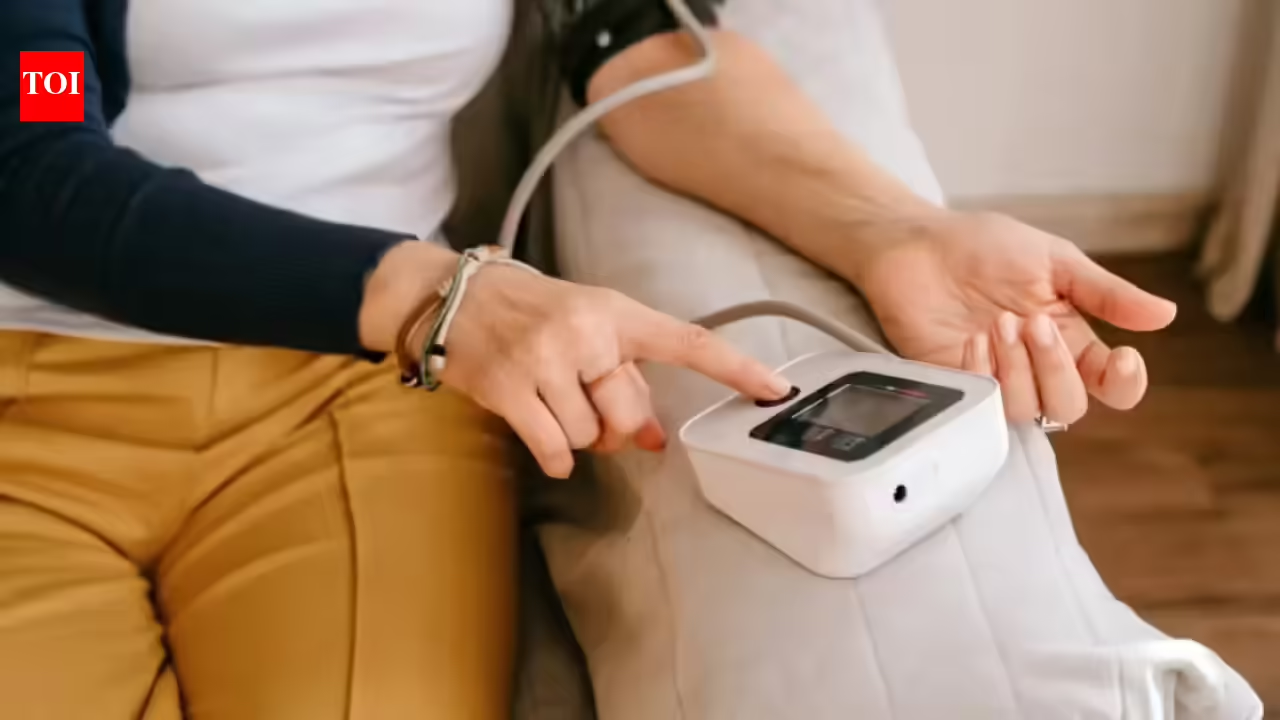
Even if your home monitor passes all the aforementioned checks smoothly, it’s important to note that even the best device can only do so much if you don’t use it the right way. So, sit quietly for at least five minutes before you start. Keep your feet flat on the floor, back straight, arm resting at heart level, and make sure the cuff goes on your bare skin. Don’t talk while the reading’s happening. Take two readings, about a minute apart, and write them both down.Next, timing makes a difference, too. Don’t check your pressure right after a workout, when you’re stressed, or right after coffee or a cigarette. Those things can all push your numbers higher for a while. When you start home monitoring, check twice a day: once in the morning, once in the evening. Do it for a week or so. If everything seems steady, your doctor may tell you to cut back to a few checks a week or even just once a month.Furthermore, don’t obsess over one weird number; everyone’s blood pressure bounces up and down a bit. Keep track, look for patterns, and bring your log to the doctor. That’s what really helps guide treatment.The bottom line? Your home monitor should be a tool, not a stress machine.The best machine, per medical science, fits you, is validated, and you use it the right way without any added stress. If the numbers look strange, don’t panic. Start by making sure your monitor is telling the truth, then talk to your doctor, and take it from there.