

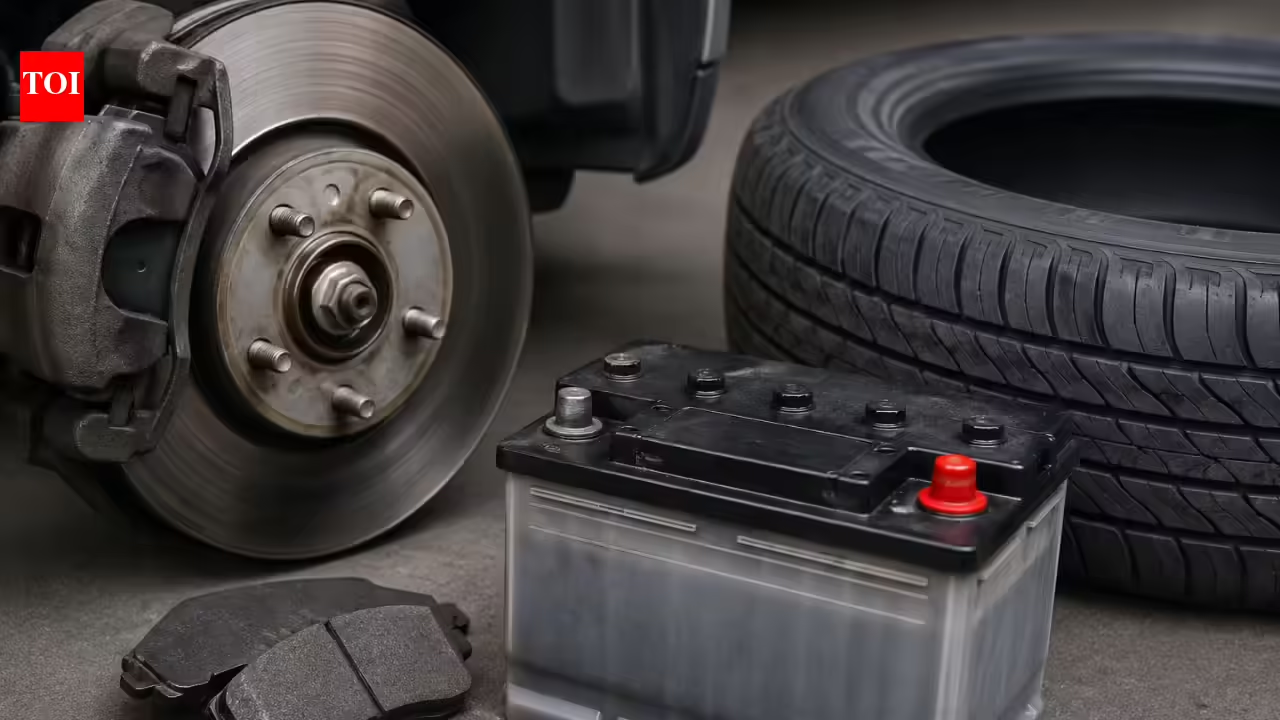
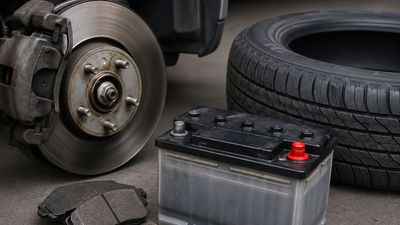
Early warning signs in components such as brake pads, tires and the battery are often overlooked, even though they can indicate potential safety risks or costly repairs. In Indian driving conditions, including heavy traffic, poor roads and extreme weather, these parts tend to wear faster. Signs such as reduced braking performance, uneven tire wear and slow engine cranking point to the need for timely attention, helping prevent breakdowns and maintain safety and reliability. In this article, let’s take a look at warning signs your brake pads, tires or battery need replacement.Brake pads show early signs such as squealing noises, reduced braking response, vibrations under braking and visible thinning below 3mm. Some vehicles also provide dashboard alerts. Continued use in this condition can damage brake discs and reduce stopping efficiency. Typical replacement intervals are 25,000-40,000 km for brake pads, 40,000-60,000 km or 4-5 years for tyres, and 3-5 years for batteries, depending on usage and driving conditions.
Tires indicate wear through low tread depth below 1.6mm, uneven wear patterns, visible cracks or bulges, frequent pressure loss and increased noise or vibration. Worn tires reduce grip, especially in wet conditions, and affect braking and efficiency. Regular maintenance practices such as avoiding harsh driving, maintaining tire pressure, periodic tire rotation, alignment checks, battery care and consistent vehicle usage can help extend component life.Battery issues often appear as slow engine cranking, dim lighting, electrical irregularities, warning lights or corrosion on terminals. Most batteries have a lifespan of 3–5 years, after which performance declines. Failure can lead to sudden breakdowns and affect electrical systems. Indian conditions, including heavy traffic, poor roads, high temperatures and monsoon exposure, contribute to faster wear of these components, often shortening replacement cycles. Monitoring early warning signs and addressing them promptly helps prevent breakdowns, reduces repair costs and ensures continued safety and reliability.