


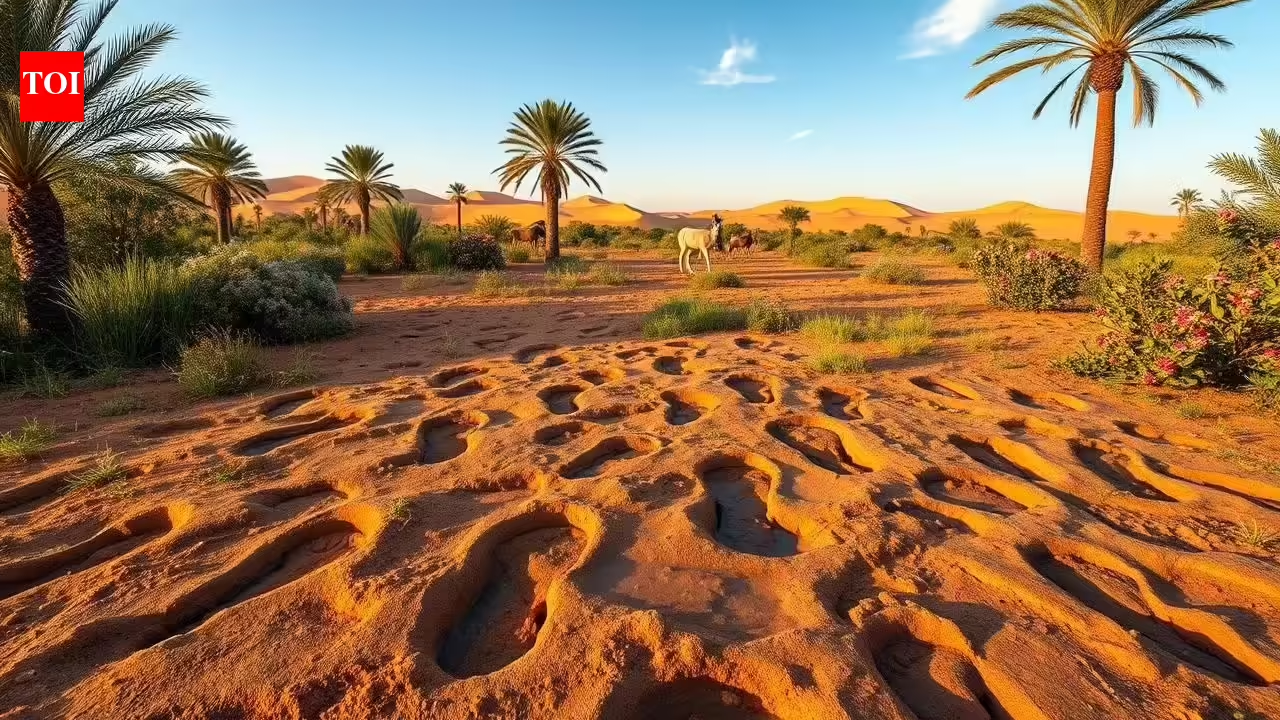
The Arabian Peninsula is typically depicted as a sprawling area marked by shifting seas of golden sand and dry areas devoid of any moisture whatsoever. Over time, we have come to think of this part of the world as a tough barrier that the early people would try their best to stay away from. However, recent findings by a group of archaeologists who conducted surveys at Alathar in northern Saudi Arabia tell us otherwise. The discovery made during this study includes a very personal imprint – human footprints left behind by our ancestors in the mud of what was then a lakebed.However, these footprints were no accident. They mark a brief stopover of a group of people for a drink at an abundantly watered lake, tens of thousands of years ago. For a long time, the accepted belief was that humans only started venturing deep into the Arabian interior much later. However, seven unique sets of footprints found recently have challenged the widely held notion about human migration history.Wading into an Arabian paradiseThis remarkable find was made possible because of years of erosion in the Arabian desert, revealing a treasure hidden under the layers of sediment for hundreds of thousands of years. According to Smithsonian Magazinethese footprints in Saudi Arabia could be up to 120,000 years old, dating back to a time when the area was a freshwater oasis. Rather than sand dunes, the footprints reveal a scene teeming with life and lush vegetation.The researchers were able to date the sediment using a technique that measures when the minerals were last exposed to sunlight. As per researchers, the footprints date back to a period known as the last interglacial. During this time, the climate was much wetter and more hospitable. The footprints belong to at least two or three individuals who were traveling together, possibly following the migration patterns of large animals.
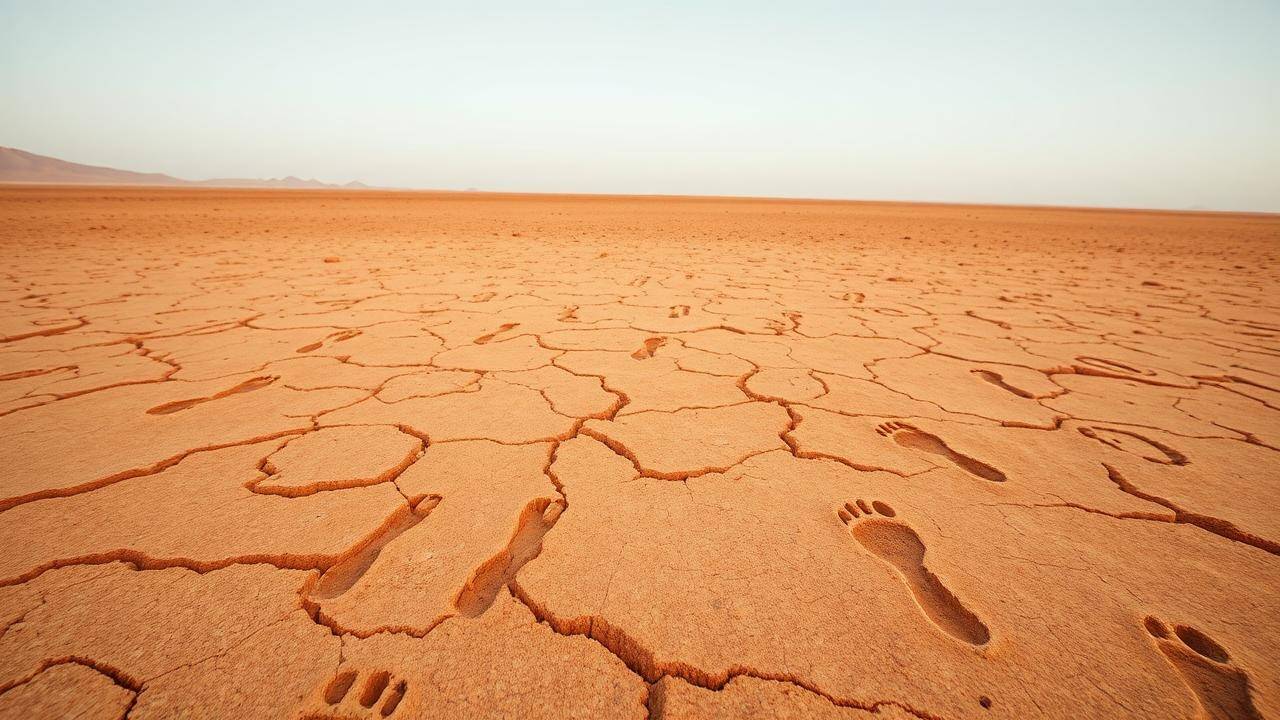
This find challenges existing migration theories and offers tangible proof of our ancestors’ extensive journeys.
What is so compelling about this discovery is that it captures an afternoon in the life of a Stone Age family. In addition to these prints, scientists found thousands of others belonging to elephants, giant wild cattle, and camels at this location. The ancient people may not have stayed around the lake but were simply passing through the so-called “Green Arabia” corridor that brought them from Africa to Eurasia. It is an enchanting moment captured in time as a clan stops for a drink at a watering hole without knowing that their descendants would later study their brief stopover.Why do these footprints make all the difference?Prior to the discovery of these prints, the narrative of the human diaspora was largely incomplete. The most prevalent theory suggests that when early humans left Africa, they did so by sticking close to coastal regions. However, the footprints at Alathar reveal a much more daring side of our ancestors. It demonstrates how comfortable our forefathers were exploring the interior of the peninsula by following the natural waterways.According to a report on Science Advancesthese prints represent the earliest evidence of our species found within this geographical location. They suggest that human populations resided in Arabia around the time when Neanderthals roamed Europe. The discovery offers an image of how early human populations traveled extensively, driven by climatic changes and resource needs. Footprints provide biological proof of existence that cannot be offered by stone tools alone.The discovery at Alathar is being preserved as one of the world’s great heritages. Given the vulnerability of the desert environment, once the prints are revealed, they begin to deteriorate rapidly. The archaeologists are racing against time, trying to document every last bit of evidence of the lakebed to find out if there was anything else hidden under the next layer of sand. As for the archaeologists behind this discovery, it served to remind them of something quite fundamental: we’ve been on this journey together since time immemorial. The footprints left in the desert sands are tangible evidence of our history and our perseverance.