


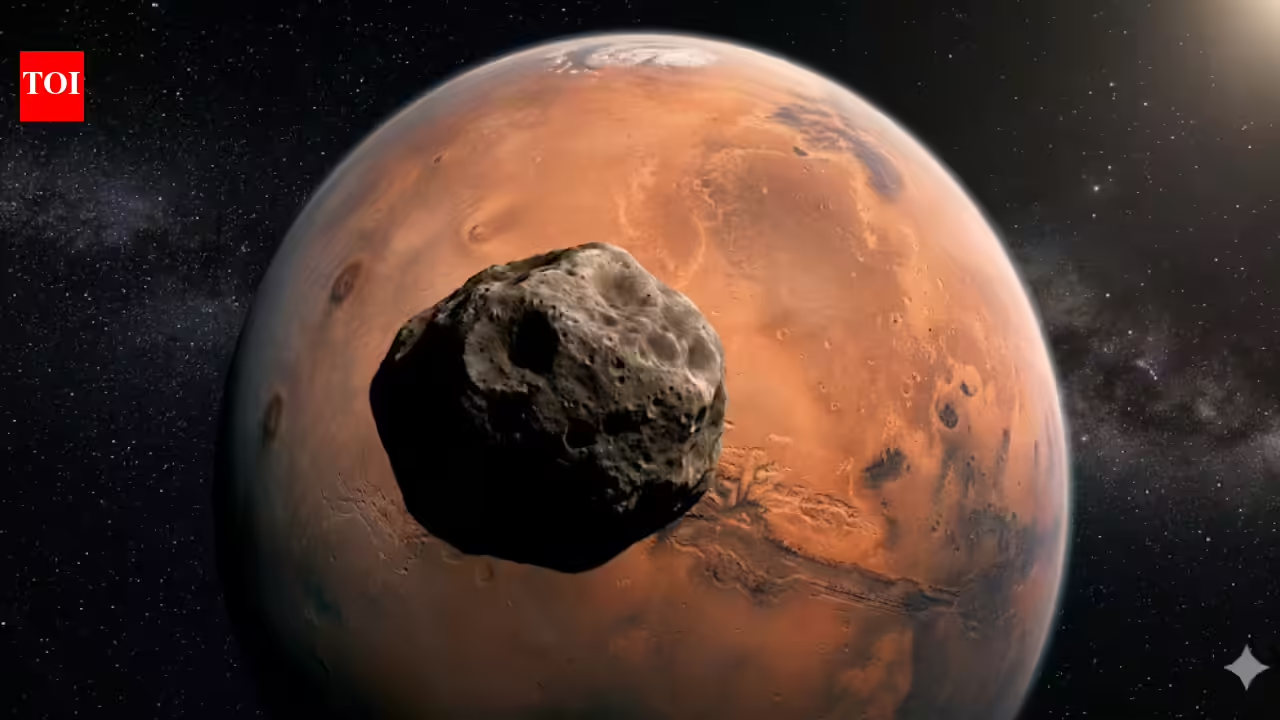
Asteroid study, trip duration to Mars, spacecraft propulsion in space, use of asteroids, and NASA’s approach to exploring space are coming together in a way that may change the face of interplanetary travel. It has been discovered that some asteroids can be used to enable advanced propulsion systems that will cut down the duration of trips from six to nine months to much shorter periods. This new system of space travel integrates concepts related to astrophysics and space engineering, using asteroids and their properties to make the process efficient and economical.
How asteroids could reduce mars travel time
Duration is one of the biggest problems that come with traveling to Mars. Traditionally, chemical rockets take many months before arriving at their destination, primarily because of the limited supply of fuel and also because of the science of orbits. But scientists are considering the use of asteroids in space as stepping stones.Astronomical studies indicate that some of the Near-Earth asteroids are on a trajectory where they meet those of Earth and Mars. By having such asteroids as stepping stones for space shuttles, the craft can make use of what is known as gravitational assists – where spacecraft change speed and direction without consuming any fuel.As per the Jet Propulsion Laboratory of NASA“Gravity assist maneuvers provide a substantial boost to spacecraft velocities without additional propellant expenditure.”
Asteroid resources and in-space refueling
Another exciting possibility is to utilize resources available within the asteroids themselves. many asteroids have water ice present that could be separated into hydrogen and oxygen, basic elements required for rocket fuel.The idea of using local resources as an alternative to launching everything from the earth is known as in-situ resource utilization (ISRU). According to a publication by NASA, “asteroid water could provide both the life support and propellant required for extended human presence beyond Earth orbit.”By setting up depots at or near asteroids, trips to mars will be possible much more quickly than otherwise allowed.
Advanced propulsion and asteroid-assisted missions
There is also a possibility that asteroids will help develop more efficient propulsion methods. For example, ion engines provide more efficient power than chemical rocket engines but have less thrust. By integrating them with an asteroid-fuel system, new possibilities will emerge.Another technology currently under research is nuclear thermal propulsion, which can cut the journey to Mars in half. By integrating it with asteroid-based fuel or gravitational boosts, even better results can be achieved.According to the report published by NASA, it is stated that “Nuclear thermal propulsion could reduce transit time to mars to as little as three to four months.”
The future of Mars exploration
Even though the idea is still in its infancy, the application of asteroid science to space mission planning is a revolution in our approach to traveling through space.A new perspective on asteroids, which can now be viewed as resources to be used, can allow for missions to Mars to become quick and common endeavors. This would not only help astronauts in their work but would also open the way for additional missions and research that could lead to the permanent colonization of the planet.Asteroids might turn out to be what will make missions to Mars quick and efficient enough for humanity to start exploring life beyond Earth.