

If you’ve got a British kitchen, you know the feeling. You’ve got roughly the space of a large cupboard to fit a cooker, sink, fridge, and somehow still prepare an actual meal. Most UK kitchens were designed when people ate toast and jam for lunch and didn’t own seventeen kitchen gadgets. Now we’re trying to squeeze air fryers, coffee machines, and food processors into spaces that were never meant for any of it.The secret isn’t buying expensive organizers or ripping out your kitchen for a fancy renovation. It’s about being brutal with what you keep and then figuring out where everything actually goes so you’re not moving the same three things out of the way every time you want to cook pasta.
Stop keeping things you don’t use
This is the bit nobody wants to hear, but it’s the truth. Half the clutter in British kitchens is stuff people don’t actually use. That fondue set from 2003. The bread maker your mum gave you. The pasta maker attachment for the stand mixer you were going to use but never did. Those fancy serving platters. Gone. Donate them, sell them, bin them. Once you’ve done that brutal clear-out, you’ll be shocked at how much space you’ve suddenly got. It’s not magic. You’ve just removed objects that were taking up room and adding visual noise. Your kitchen instantly feels bigger because you’ve actually given yourself breathing room. And here’s the thing, you won’t miss any of it. If you haven’t used something in a year, you’re not going to start now.
Vertical space is everything
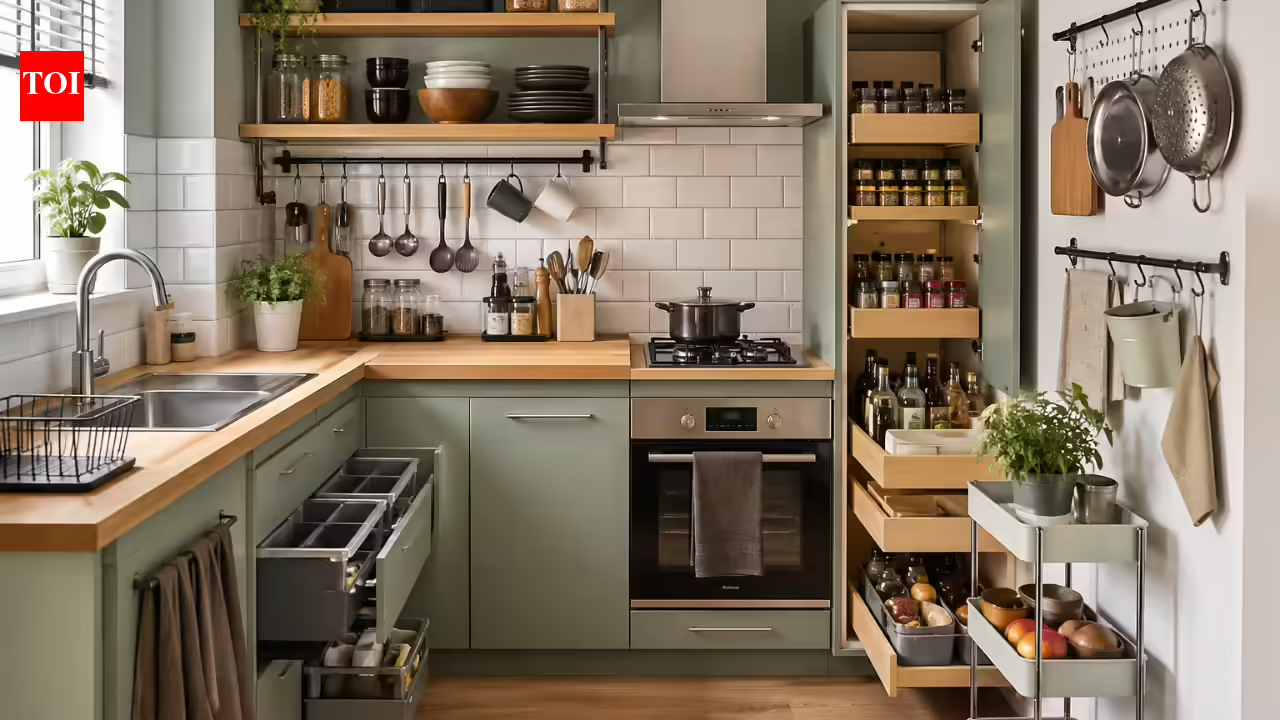
British kitchens are typically narrow and cramped horizontally, but they’ve usually got decent height. Use it. Wall-mounted shelves, hooks, magnetic strips for knives, hanging racks for mugs—anything that takes things off your worktop and puts them on your walls makes a difference. A magnetic strip for knives alone frees up drawer space that you need for something actually important.The trick is not going mad with it. You want organized vertical storage, not a Pinterest explosion where every inch of wall is covered with cute little baskets. Keep it functional. Mugs on hooks near the kettle. Spices on a shelf near the cooker. Knives on a magnetic strip by the chopping board. Everything has a reason for being where it is.
Drawer dividers are your best friend
Your kitchen drawers are a disaster because everything just gets shoved in together. Cutlery, kitchen roll, batteries, pens, random screws, it’s chaos. Proper drawer dividers actually solve this. You can buy them cheap online, and they transform the whole situation. Suddenly your cutlery drawer has sections, your utensil drawer makes sense, and you stop spending three minutes searching for a spatula.You don’t need a different divider for every single item. Just enough structure so that similar things stay together and you can actually find what you’re looking for without excavating.
The fridge is wasted space if you don’t organize it
Your fridge is probably a science experiment in there. Stuff pushed to the back, things you forgot about, mystery containers. Spend twenty minutes actually organizing it. Clear shelves so you can see what’s there. Dedicate zones, dairy on one shelf, vegetables in the drawer, leftovers in a specific area. Sounds simple, but most people never do it. They just cram things in and wonder why they’re constantly buying duplicate milk.Clear containers help. You can see what’s in them without opening them. Label things with dates if you’re the type who forgets when you made something. It takes ten minutes and stops you from playing food waste roulette every week.
Your worktop isn’t storage
This is the hardest one for people to accept. Your worktop should have maybe three things on it: the kettle, the toaster, and whatever you’re actively using. Everything else goes away. That pile of cookbooks, the fruit bowl, the utensil holder, the coffee machine, it’s taking up space you need for actual cooking. Find homes for these things in cupboards or on shelves. Your worktop isn’t a general storage area. It’s your workspace.When you clear your worktop, your kitchen looks bigger, feels calmer, and you’ve actually got room to chop vegetables without playing Tetris with kitchen appliances.
The real problem
Most British kitchen organizations fail because people try to organize stuff they should never have kept. You can’t organize your way out of having too much. You have to actually get rid of things first. Then the organization becomes simple, you’re just creating homes for the stuff you actually use, and that’s genuinely easy.