


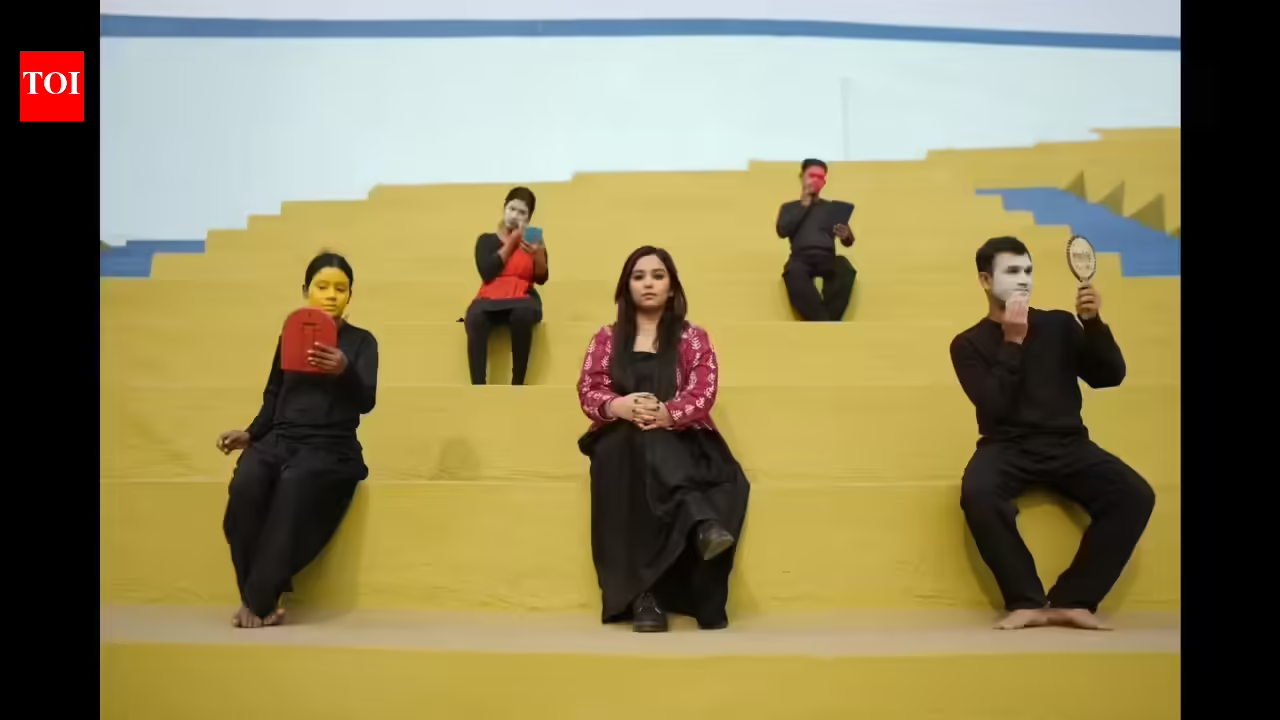
Barnini Chakraborty in the music video of Opekkhay
There are songs that tell stories, and then there are those that linger like a thought you cannot quite place. Opekkhaywritten and composed by Ayan Mukherjee and voiced by Barnini Chakraborty, belongs to the latter – unfolding less as a narrative and more as a slow meditation on waiting.Here, waiting is not framed as absence or delay. Instead, it takes on the texture of something lived and inhabited, stretching across moments, memories, and unnamed presences. The song resists the idea of a singular voice; it gestures toward a collective condition, where individual experiences blur into something shared and difficult to define.Fragments recur throughout its landscape – fallen leaves counted and recounted, conversations drifting through time, silhouettes that seem to exist both within and beyond the self. These images do not resolve into clarity. Rather, they accumulate, suggesting a quiet endurance that continues without spectacle.Barnini’s voice moves through this space with restraint, holding back as much as it reveals. There is an intimacy to the delivery, but it is never overt; instead, it carries a sense of distance, as though the voice itself is suspended within the act it describes. The composition mirrors this mood, allowing repetition and stillness to shape its rhythm.Visually, the song leans into a stark interplay of red and black – embers beneath darkness, a glow that refuses to fade. It is an image that recurs without explanation, evoking both exhaustion and persistence. Within this frame, waiting becomes less about anticipation and more about survival, a state that breathes quietly alongside the self.The lyrics trace a cyclical movement where beginnings collapse into endings and return again, echoing the futility of trying to measure time through progress alone. Ideas of identity, resistance, and belonging surface briefly, only to dissolve into a shared, indistinct space shaped by compromise and repetition.Opekkhay does not seek resolution. It remains suspended, choosing instead to inhabit the threshold where something is always about to happen, yet never quite arrives. In doing so, it reflects a condition that feels both deeply personal and unsettlingly universal – the quiet, persistent act of waiting.
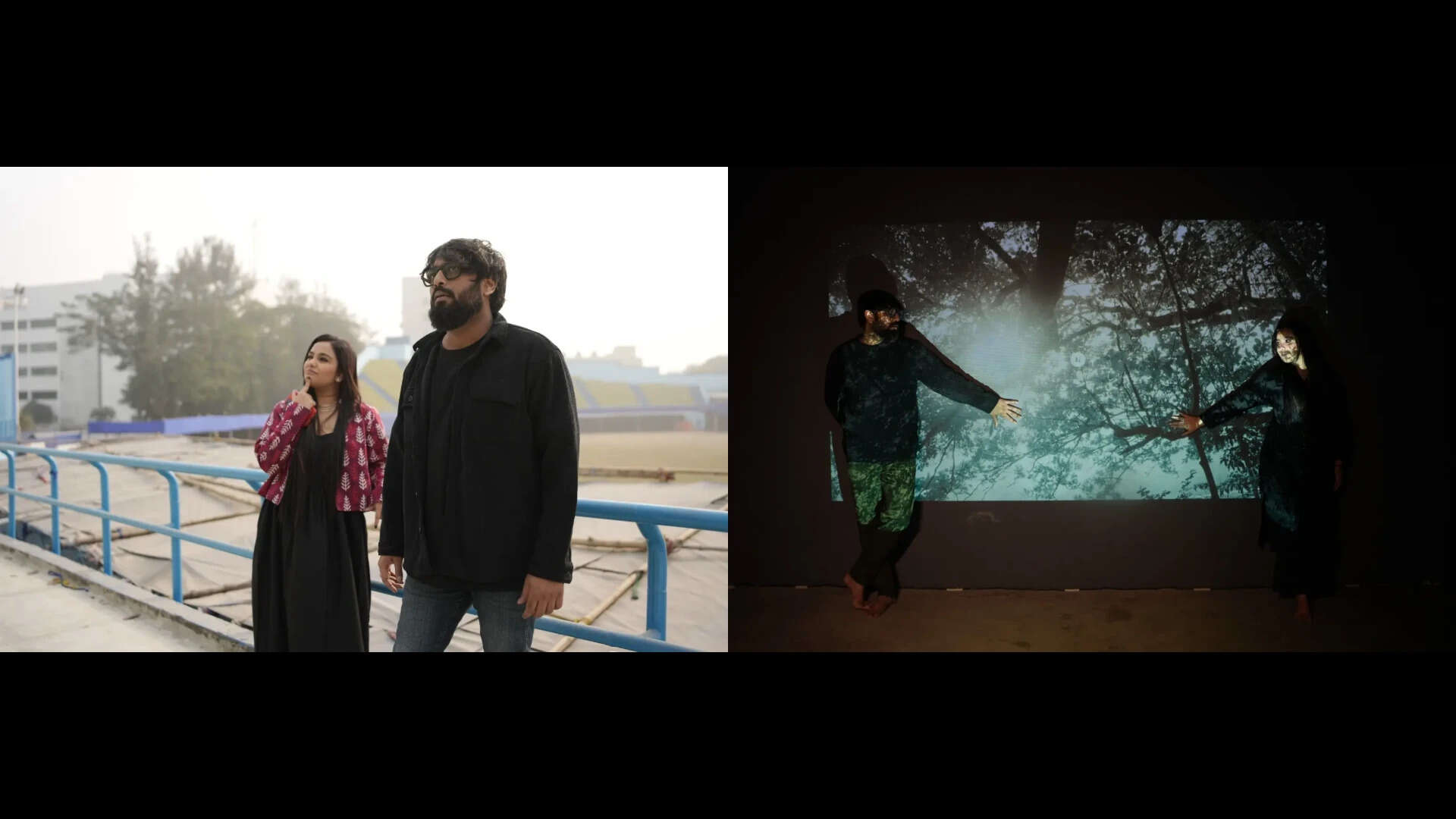
Barnini Chakraborty and Ayan Mukherjee
About the Author

Previous Post
Next Post