



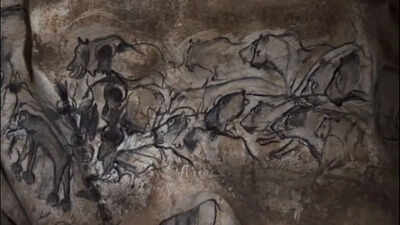
December 18, 1994, was late when three men entered the daylight and embarked upon a journey that was to change our view of human history forever. Jean-Marie Chauvet, Eliette Brunel-Deschamps, and Christian Hillaire had entered the limestone corridors along the Ardèche River in southeastern France. The three were experienced cavers who knew all too well the chill and the silence of cave exploration, but their mission was not one of seeking out miracles. It was a simple pursuit of a breeze.When spelunking, a fresh breath becomes a sign of something wonderful about to happen. It is not necessarily an endpoint when a crack appears, for behind that little opening lies a vast and mysterious space. They discovered a narrow opening in the rocky wall, and after a lot of difficult work to make their way through, they slipped into this mystery. With their flashlights cutting through the darkness of the subterranean room, they knew that they were the only ones who had breathed that air since the Stone Age, at least twenty thousand years ago.A masterpiece in stoneThis discovery brought much more than just a cave. Upon illuminating its dark and musty corners, the adventurers were faced with the stony gaze of hundreds of animals staring right back at them. From lions to rhinos, mammoths, and horses, their figures emerged in amazing clarity and freshness as if depicted a moment ago. It seems that even the smudges of the finger marks have been kept intact.This discovery caused quite a stir in scientific circles. The artwork, described in an article by the French Ministry of Culture titled Chauvet Cave: Reflections on the Discovery of Man’s First Masterpiecewas one of the oldest figurative art pieces found to date. Prior to this discovery, there were assumptions that the only activity of our ancient ancestors was the drawing of simple sketches. However, the shading and movement captured in these drawings proved otherwise.
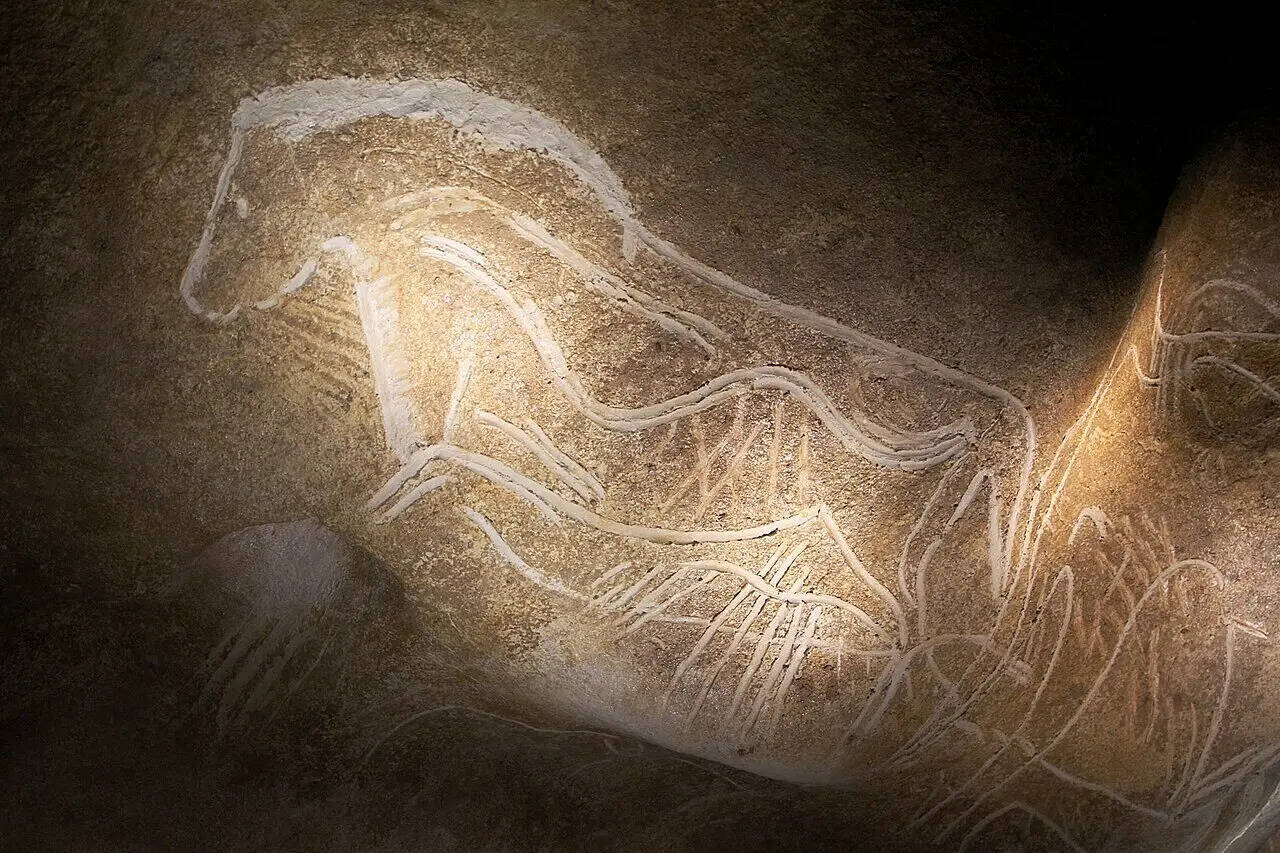
The discovery changed views on early human history. The cave is now protected, with a replica for visitors. It highlights creativity as an inherent human trait. Image Credits: Claude Valette, via Wikimedia Commons
This is a result of a random phenomenon of nature. Some 20,000 years ago, a massive boulder collapsed over the opening, creating a sealed enclosure. The natural closure shielded the cave from any source of illumination, the elements, and humidity changes, which normally erode prehistoric art. According to UNESCO’s Decorated Cave of Pont d’Arc report, this site is important as an archaeological site since it preserves the oldest and most preserved representations of humanity.Preserving the spirit of our ancestorsAs soon as the three spelunkers entered the main cave, they were well aware that they had set foot into sacred territory. They trod carefully, taking care not to step on any fossilized animal remains or the prints made in the soft earth beneath their feet. There were traces of the hibernating bear cave species, whose claw marks could be seen alongside the artistic renderings created by early humans.Today, the original Chauvet Cave is one of the most strictly protected sites on the planet. To prevent the growth of mold and the decay caused by human breath, the cave is closed to the general public. Only a handful of scientists are allowed inside each year, wearing protective suits and following narrow metal walkways. For the rest of the world, a stunning, full-scale replica was built nearby, allowing visitors to experience the awe of the discovery without damaging the original.The findings at Chauvet Cave serve as a subtle hint that creativity is not an invention of the modern era but an inherent human characteristic. The people who discovered this place 30,000 years ago were not simply looking for food and shelter. They were artists and dreamers who managed to transform the wall into a source of their imagination by making it flicker under torchlight and giving shape to shadows and ochres that connect with us thousands of years later.Jean-Marie Chauvet and his team started exploring a rock formation on a regular December day. They finished it by uncovering one more lost piece of our common history. It proves once again that despite the frosty conditions, which characterized that period of time, the desire to be creative was alive. In fact, this discovery reminds us that although history cannot be erased, it often goes deep into the ground, waiting to be revealed.