


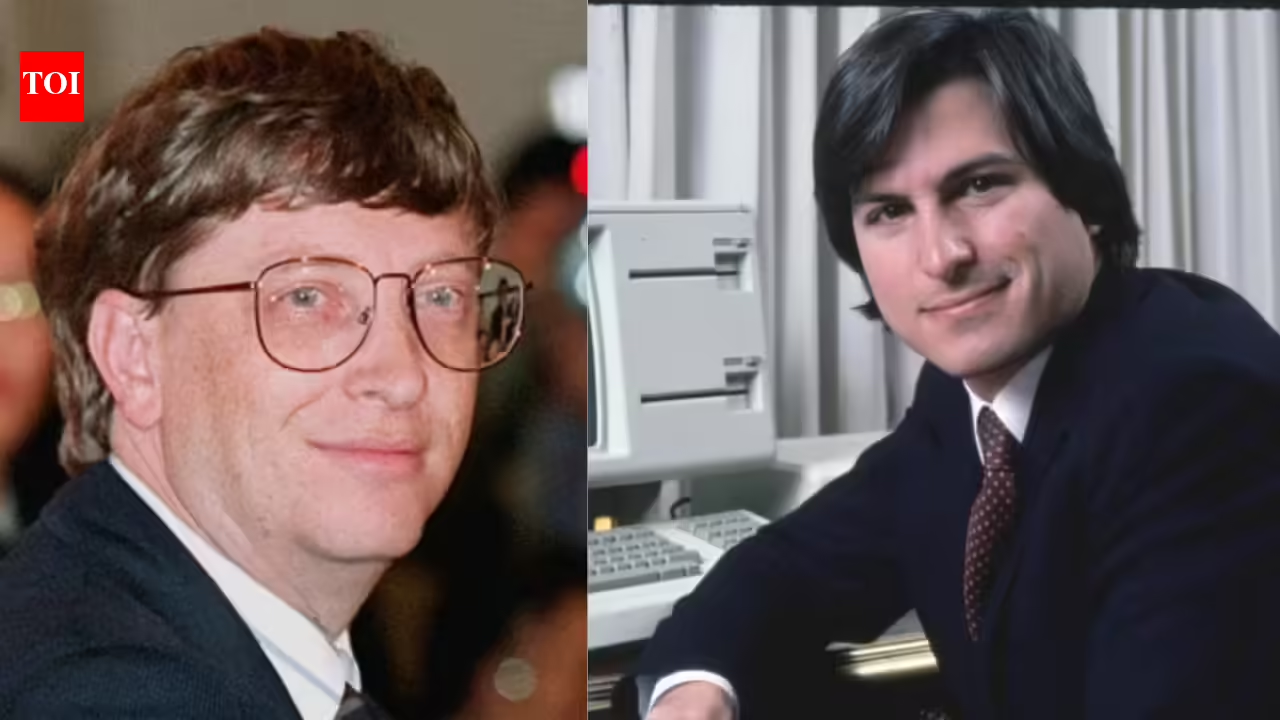
At a time when Apple was teetering on the edge of collapse, a surprising move from its biggest rival altered the course of the company’s future. The return of Steve Jobs had begun a critical restructuring effort, yet the company still faced serious financial pressure, declining market share and weakening developer support. In this fragile moment, Microsoft, led by Bill Gates, stepped in with a $150 million investment and a broader strategic agreement. The decision shocked the industry, given the long-standing rivalry between the two firms, but it restored confidence, ensured continued software support and gave Apple the time it needed to stabilize and rebuild.
Apple’s crisis and the $150M rescue by Bill Gates
By the mid-1990s, Apple was struggling to remain competitive in a market increasingly dominated by Windows-based PCs. A confusing array of products, high pricing and leadership instability had weakened its position. The company reported significant losses, and analysts openly speculated about bankruptcy or acquisition.When Apple acquired NeXT, Steve Jobs returned to the company he co-founded. Within months, he began streamlining operations, cutting unnecessary products and refocusing Apple’s strategy. However, these internal changes needed time to take effect, and Apple’s immediate financial and strategic situation remained fragile.At the Macworld Expo in Boston on 6 August 1997, Steve Jobs announced a partnership with Microsoft that would become one of the most significant moments in tech history.The agreement included several key components. Microsoft invested $150 million in Apple through non-voting shares, ensuring financial support without taking control. The company also committed to continuing development of Microsoft Office for Mac for at least five years, which was crucial for business and professional users. Apple, in turn, agreed to make Internet Explorer the default browser on Mac devices. Both companies also entered into a broad patent cross-licensing agreement, bringing an end to ongoing legal disputes.During the keynote, Bill Gates appeared via satellite on a large screen, a moment that drew mixed reactions from the audience but symbolized a rare alignment between the two rivals.
Why Microsoft supported Apple
Microsoft’s decision was driven by strategic considerations rather than goodwill. At the time, the company faced increasing scrutiny over its dominance in the software market, and the potential collapse of Apple could have intensified antitrust concerns in the United States.Maintaining Apple as a viable competitor helped preserve the perception of market competition. Additionally, Microsoft had a strong interest in continuing to sell its Office software to Mac users, making Apple’s survival beneficial to its own business.
What Apple gained from the deal
While the $150 million investment provided financial support, the broader impact of the agreement was more significant. The deal reassured developers and customers that Apple would continue to operate and receive essential software updates.This renewed confidence stabilized Apple’s position in the market and gave Steve Jobs the opportunity to execute his long-term vision. It also ensured that key productivity tools remained available on the Mac platform, which was crucial for retaining users.Following the agreement, Apple began a steady recovery. In 1998, the company launched the iMac, a product that signaled a renewed focus on design and user experience. This was followed by a series of successful innovations, including the iPod in 2001 and later the iPhone in 2007.These products transformed Apple from a struggling computer manufacturer into a leading consumer technology company. The groundwork for this turnaround was laid during the critical period when the Microsoft deal provided stability.
A rivalry that shaped the industry
The relationship between Apple and Microsoft has long been defined by competition and occasional cooperation. While the two companies competed fiercely in systems operating and software, moments like the 1997 agreement highlight how strategic decisions can transcend rivalry.Over time, the dynamics shifted. Apple grew into one of the most valuable companies in the world, while Microsoft expanded its focus into cloud computing and enterprise services. Despite their differences, both companies played central roles in shaping modern computing.The 1997 agreement is often remembered as a pivotal moment that helped prevent Apple’s collapse. While the investment alone did not guarantee success, it provided the stability and confidence needed for a turnaround.Ultimately, it was the combination of strategic support from Microsoft and leadership under Steve Jobs that enabled Apple to recover. The deal remains a powerful example of how calculated cooperation between rivals can influence the course of technological history.