


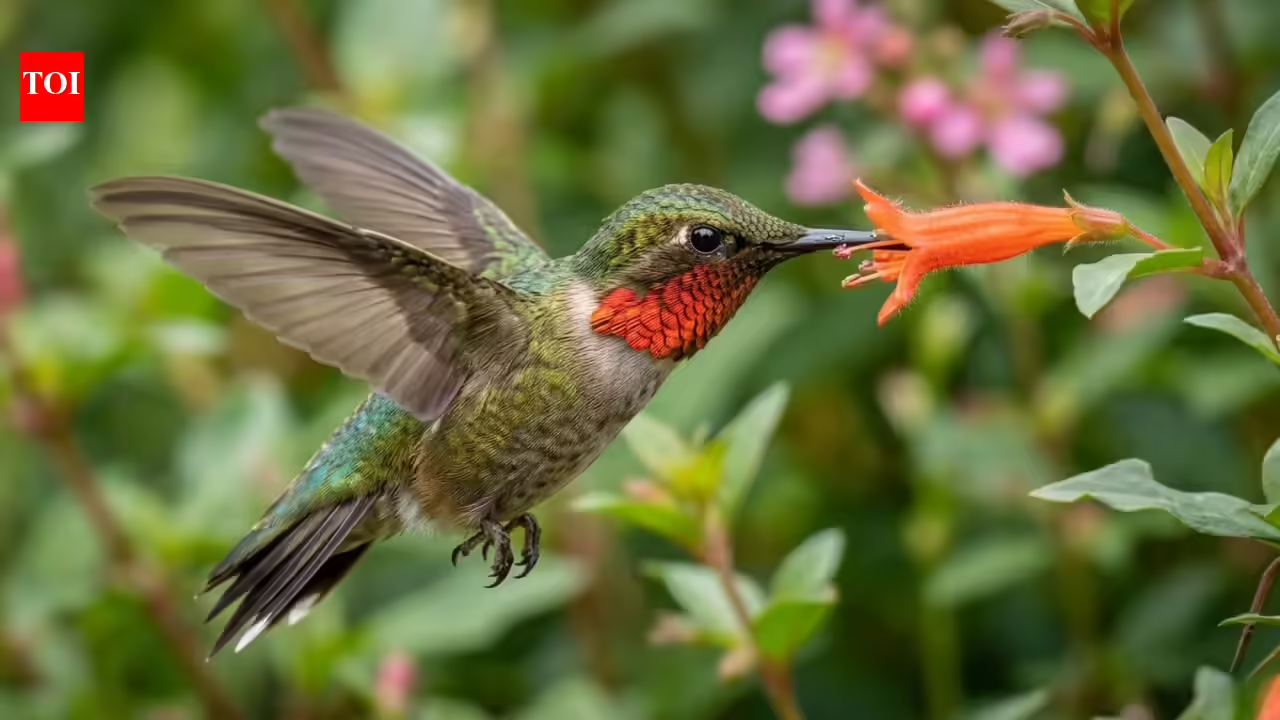
Every spring, something remarkable quietly happens in the skies over America. Using only memory and instinct, millions of hummingbirds, some less than a nickel in weight, leave winter grounds in Mexico and Central America and fly thousands of miles north. For decades, most people just missed this spectacle. Now, for the first time, anyone with five minutes to spare and a browser can watch it happening live.The tool that makes that possible is the Hummingbird Central Map, and if you haven’t seen it yet, it just might become your most-visited tab this spring.The map that’s turning ordinary Americans into migration trackersThe Hummingbird Central Map is free and completely crowdsourced, collecting real-time sightings of hummingbirds from everyday people across the United States and displaying them on a live, constantly updated visual database. No registration barrier. No premium tier. Only a map, and a growing constellation of colored dots. Thousands of citizens, with their many eyes, are doing what people do best: seeing things and reporting them.The tracker runs each year from late January through May, covering the entire spring migration season. Species are marked with different colored icons. The red icon is for the Ruby-throated hummingbird, king of the eastern half of the country. The orange icon represents the Rufous, and the path drawn on it shows its route up the western corridor. For privacy reasons, each icon is pinned to the nearest city centre, with multiple close sightings merged into a single marker. Reports are usually processed and published within a few days of receipt.Properly used, zoomed in on your region, with dates checked carefully, the map does not act like a novelty but as a truly reliable scientific instrument. A study in Biological Conservation found that the world’s most-studied citizen science bird platform, eBird, produces data from crowdsourced observation networks that hold up to rigorous comparisons with professionally collected datasets. Same basic logic behind Hummingbird Central Map.Where the birds are right nowThe migration is in full swing and accelerating as of mid-April 2026.The ruby-throated hummingbirds have made it past the Gulf Coast and are appearing more and more throughout the Mid-Atlantic states and the Midwest. Even now, the most venturesome travelers have gone as far as the Great Lakes country and the south of New England. If you live in any of these areas, you need to act now, not next week.
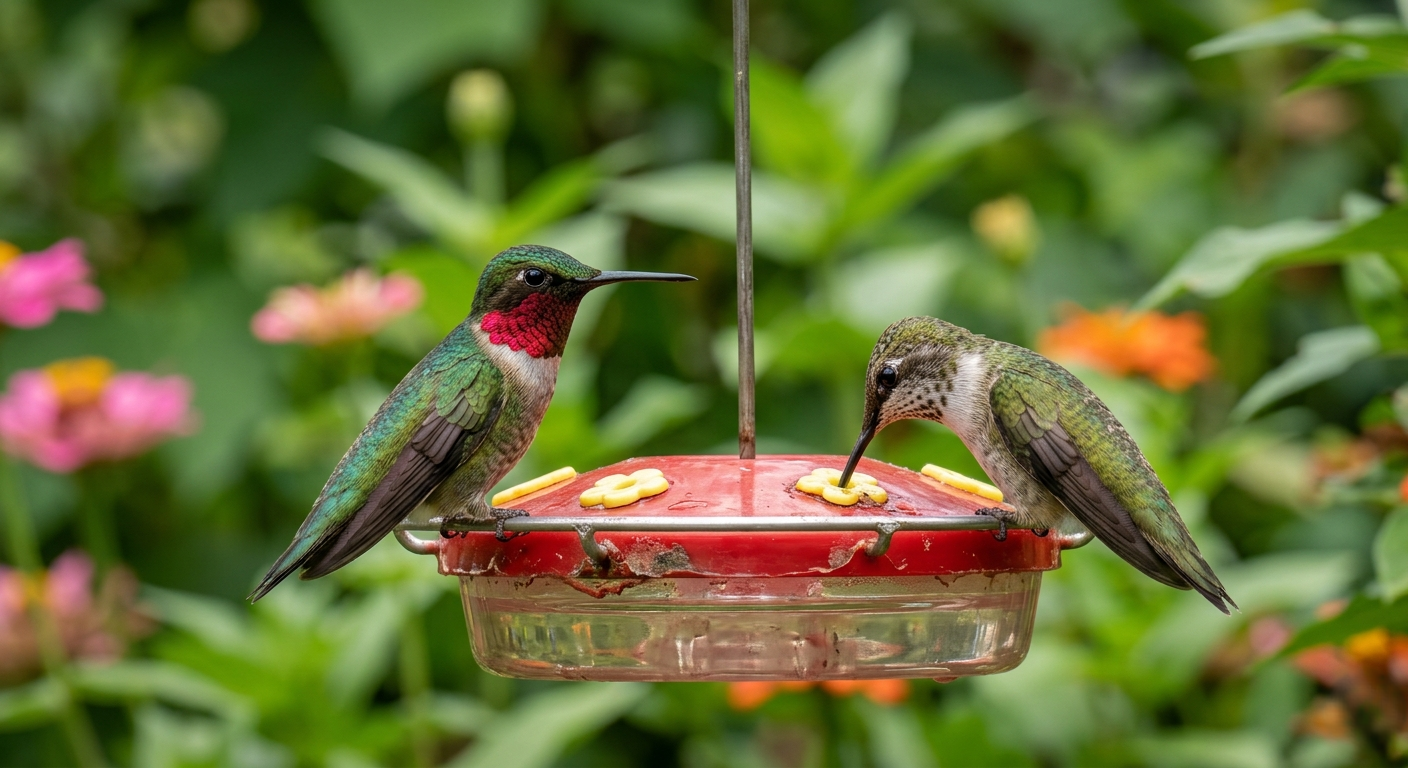
Hummingbirds remember reliable food sources across seasons. Get your feeder up before they arrive.Image Credits: Google Gemini
Anna’s hummingbirds are found year-round on the West Coast, from the north into British Columbia to the east into Arizona, across California and the Pacific Northwest, but now the map displays something a little stranger: an early push northward by rufous and black-chinned hummingbirds, ahead of their usual late-April schedule. Climate researchers have increasingly documented this kind of phenological shift. So, the map is not just a fun tracking exercise, but a front-row seat to a climate story unfolding in real time.Why the map works, and why your sighting mattersThe Hummingbird Central Map is best viewed on a desktop or iPad. On a phone, the workaround is landscape. Zoom in on your state, check the dates stamped next to each icon, and don’t try to read old sightings as current ones-the date stamps are everything.The important thing to understand about this map is that it only works because people are contributing to it. Every sighting reported by an ordinary person with an ordinary phone, the database gets a little more accurate, a little more granular, a little more useful to the next person who consults it.What to do before they reach your doorTiming is the most practical use of the map. Hummingbirds make pit stops to refuel along the way. Studies on Rufous hummingbirds’ spatial memory published in Animal Behavior have shown that they remember reliable food sources across seasons and return to the same places year after year. Put out a feeder before they arrive, and you won’t just get a passerby, but a yearly visitor.The first step is to set up a red feeder in an open, visible area. The nectar recipe is easy: one part plain white sugar dissolved in four parts water, cooled before use and changed every three to five days to prevent mold. The red dye is not essential and can be hazardous. If you have outdoor space, native tubular flowers, like bee balm or trumpet honeysuckle, are a more enduring invitation.Check the map a few days before the sightings begin to pile up around your area. Then hang the feeder and wait.It’s more than bird-watchingThis is the time to pay attention to the Hummingbird Central Map, when more and more people are looking for outdoor experiences, showing greater interest in local ecosystems, and finding a quiet cultural fatigue with purely digital modes of engagement.Not every worthwhile thing to track this spring lives on a financial ticker or a news feed. Sometimes it weighs less than a nickel, travels thousands of miles, and stops in your backyard. The map just helps you know when to look up.