

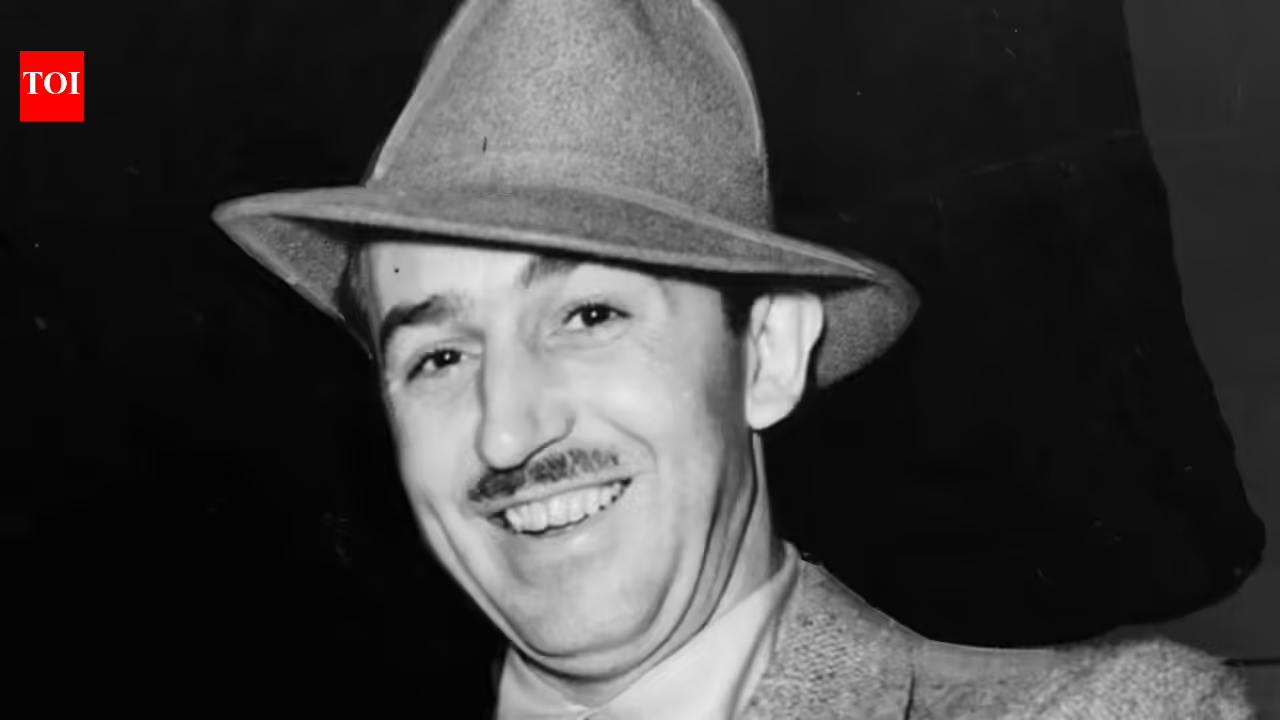
A 1948 factory visit by Walt Disney that changed the history of the theme parks forever. During his trip to the Ford River Rouge plant in Michigan, the pioneer of the American animation industry did not observe only a factory complex. Rather, he was moved by the well-planned system that involves moving people and materials in a definite order. Indeed, this visit significantly influenced Disneyland’s design in the years that followed.Walt Disney went on this trip with his colleague and animator Ward Kimball, who was astonished by what he saw while touring the Ford Motor Company’s River Rouge plant. Later, he noted in his diary, “Good god! What a sight! My mouth hung open!” leaving the world to know about his spellbound journey.Walt Disney was already thinking of constructing his family park at the time. Hence, the groundbreaking visit did not inspire him to build Disneyland. Instead, the trip considerably influenced his approach to design and management.River Rouge plant looked like a complete cityThe River Rouge plant was part of one of the largest industrial complexes in the country. The size of its territory exceeded 1,000 acres, and the whole process of car manufacturing occurred there.The Princeton University Art Museum states that iron ore and other raw materials were delivered to the plant and were processed according to a specific scheme until they were transformed into finished vehicles. This created an atmosphere where the entire factory felt like a self-contained industrial city by itself.Tourists were guided through the factory via organized tours, through which they went from one section to another in the factory. The organization in the factory meant that people could comprehend an entire system without getting confused.How a 1948 factory tour helped shape DisneylandDuring his visit to Ford River Rouge, Disney learned something other than how machines function in a manufacturing plant. He realized that design influences behaviour. People can be guided around a large area, moving from one point to the next, following a process, without having to issue commands all the time. However, the tour of the factory helped tourists understand how everything progressed logically within the plant.Additionally, Kimball was struck by the massive scale of industrial automation, including miles of conveyor belts and overhead tram rails that carried materials through the plant, according to accounts based on Ward Kimball’s diaries and The Henry Ford archives.Kimball noted that the assembly line was continuous and immersive. The conveyor belt, tools, and laborers were all part of a larger cohesive process, creating an impactful impression.
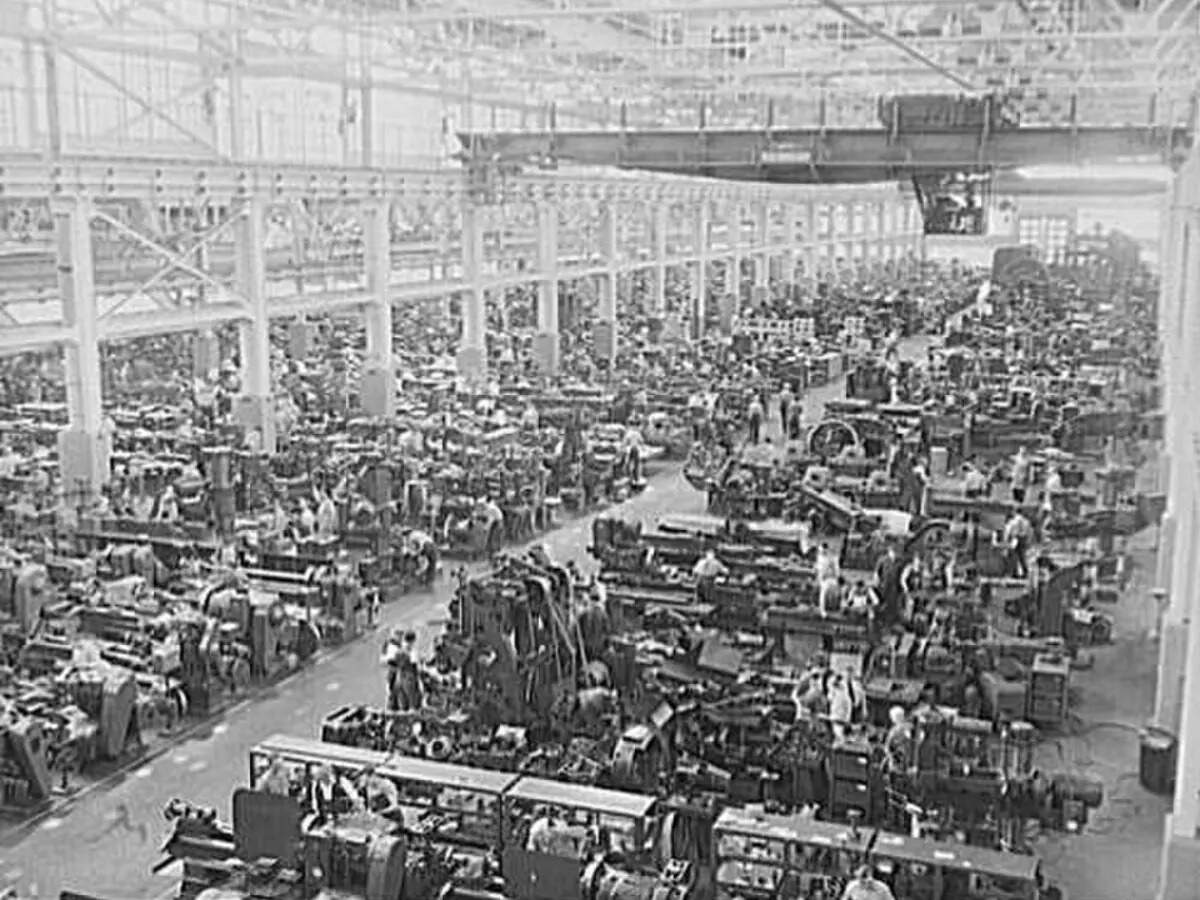
The real reason Disneyland feels so organized is that it started in a Ford plant. Images credit – Wikimedia
River Rouge plant’s influence on automationThe River Rouge plant was clearly a representation of a new trend in industry, which included the idea of automation. This idea was popularized in the late 1940s in America.According to historian Roland Betancourtautomation was the term used to describe processes in which machines operated without extensive human supervision. It gained widespread popularity after the 1952 publication of John Diebold’s book “Automation: The Advent of the Automatic Factory.”Even before Disneyland, early forms of automation had been employed at Ford. Materials were transported through conveyor systems. The various stages of production were also interconnected, with each stage leading to another.This principle would eventually inform ride systems at Disneyland. For instance, attractions such as Peter Pan’s Flight featured a track system installed above, similar to conveyor systems used in factories.Walt Disney used industrial flow in the guest experienceThe principles Walt Disney learned at the General Motors plant found application at Disneyland, although in a completely different field. Instead of materials, guests would be moved around to provide a smooth guest experience.Pathways, entrances, and attractions were intentionally arranged to help guests navigate the park effortlessly. The idea was referred to as “guest flow” because it ensures that the tourists visit attractions in a certain order. As urban planners point out, “designing movement means designing experience”, this idea has been taken into consideration during the development of the park.Why Disney’s Visit in 1948 remains importantDisneyland first opened its gates to the public in 1955 in Anaheim, California. Four years after the visit to Ford’s plant, all lessons learned have already been utilized in its creation. It included themed lands such as Main Street, Frontierland, and Tomorrowland. Each of them had a distinct character, but together they created a coherent story.The River Rouge Factory has affected the way visitors experience Disneyland because it is also an experience that unfolds gradually. The story about Walt Disney visiting the factory shows us something essential. It highlights that inspiration can come from surprising sources. In this case, an automobile factory inspired a creator to change the world of entertainment.River Rouge Factory revealed how design, movement, and order should be integrated into a space. Disney incorporated these principles to create an unprecedented experience. The design of modern theme parks is based on the same approach. It is applied when guiding visitors throughout the park.Ford’s Michigan plant was more than functional. This site had coherence and logic, which was also achieved by Disneyland.