



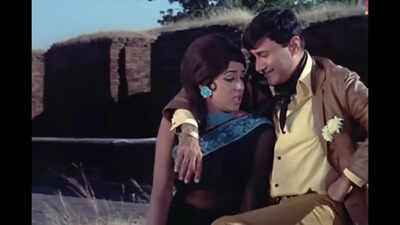
Gaya: Bihar is once again stepping into the cinematic spotlight, but long before policy frameworks and financial incentives, the state had already carved a presence in Indian cinema. Its roads, historic ruins and lived-in textures have, over decades, found their way into some of the most memorable moments on screen.The renewed push by the government to promote film shooting locations feels less like a beginning and more like a return. For many, Bihar’s association with cinema is deeply nostalgic.Take, for instance, the iconic Koilwar bridge sequence from ‘Gandhi’. In a moment lasting only a few seconds, Ben Kingsley’s Mahatma Gandhi tosses a piece of cloth to a poor woman portrayed by Bihar artist Noor Fatima. The scene was brief, almost incidental, but struck a chord that endures. “It lasted only a few seconds but remains etched in memory,” said Ashok Kumar, a film enthusiast from Gaya.Even earlier, ‘Teesri Qasam’ had brought Bihar’s rural heartland to life. Shot across the dusty roads, village fairs and rustic stretches of what is now Araria district, the film captured an earthy realism rarely seen at the time. With Raj Kapoor and Waheeda Rahman leading the narrative, the film blended simplicity with cinematic grace.Years later, Bihar’s historic landscapes once again became a backdrop for popular culture. A song from ‘Johny Mera Naam’ — “Khafa na hona, der se aai o mere raja — vada to nibhaya” — was filmed amid the ruins of Nalanda University and the hillocks of Rajgir. Dev Anand, then at the height of his charm, and Hema Malini, who would soon earn the title of the ‘dream girl’, brought romance to these ancient settings. The film unit remained in the region for over a week, drawing crowds of curious locals. Old residents still recall the frenzy, as young onlookers gathered in excitement, many of whom are now frail with age or no longer alive.Perhaps the most immersive cinematic engagement with Bihar came with ‘Patang’, the national award-winning film of 1993. Shot entirely in the state, the film explored life on the margins, unfolding across slums, railway tracks and industrial pockets on the outskirts of Gaya. Directed by Gautam Ghosh and produced by Sanjay Sahay, it featured a powerful ensemble cast including Shabana Azmi, Om Puri and Shatrughan Sinha.To prepare for her role, Shabana closely observed Bihari domestic workers in Mumbai, absorbing their speech and mannerisms to portray a character rooted in the region. During the shoot, Om Puri was once asked about entering politics. “Main apahij nahin hoon,” he replied curtly, a remark that reportedly created tension with Shatrughan Sinha.More recently, ‘Mountainman’, featuring Nawazuddin Siddiqui, was largely filmed in Gaya district. In an inventive move, the crew captured real footage from a rally addressed by Lalu Prasad in Guraru, later incorporating the crowd scenes into the film.Besides these, Bihar-centric films such as ‘Damul’, ‘Apharan’, ‘Rajniti’, ‘Super 30’ and ‘Half Girlfriend’ have continued to draw attention from audiences and critics alike. One attachment • Scanned by Gmail