

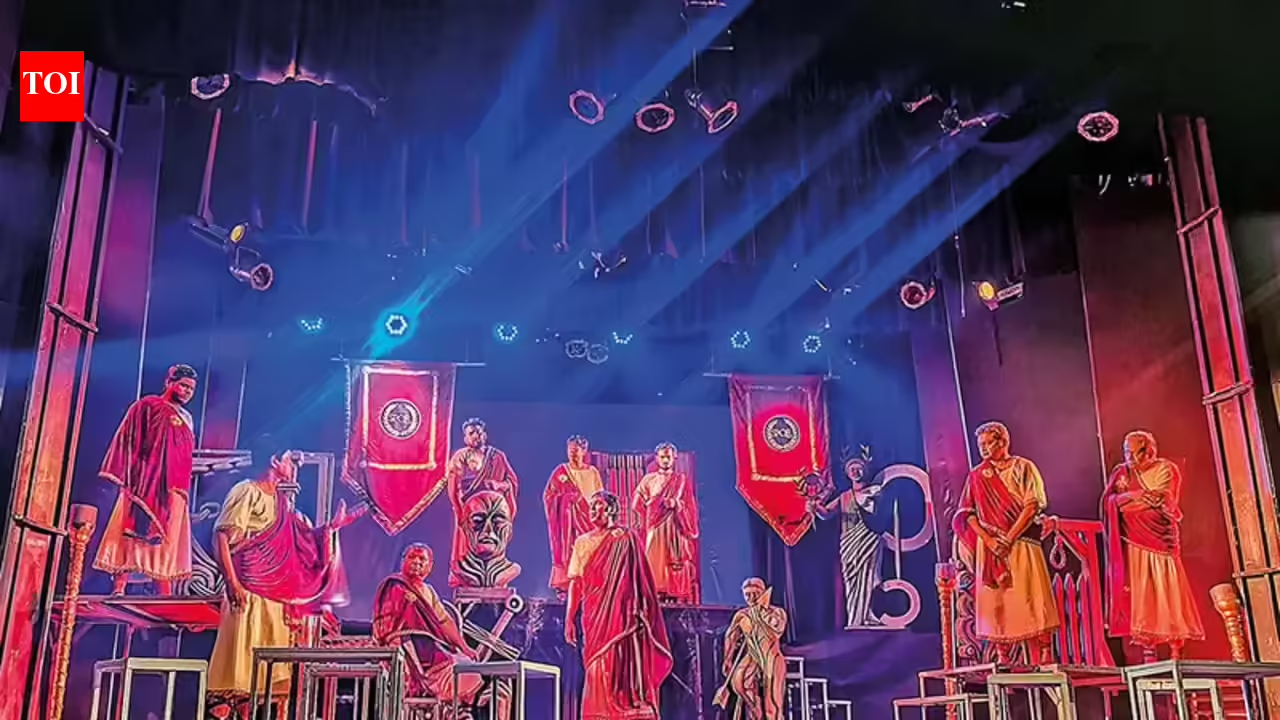
Cast: Shankar Debnath, Loknath Dey, Padmanabha Dasgupta, Subhajit Das, Anirban BhattacharyaDirector: Kamaleshwar MukherjeeDuration: 2hr 10minLanguage: BengaliRating: 3.5In his stage adaptation of Julius CaesarKamaleshwar Mukherjee resists a straightforward retelling of Shakespeare’s political tragedy. Instead, he extracts key moments leading up to Caesar’s assassination, reshaping them into a layered, self-aware narrative that interrogates its own place within the Shakespearean canon. At its core lies a decoding of Renaissance selfhood – the idea that identity is consciously constructed rather than inherited. The most striking device is the introduction of Shakespeare himself as a character, played by Anirban Bhattacharya, who reflects on his creation alongside an oracle-like figure portrayed by Shreya Sinha. In a bold meta-theatrical move, the playwright even questions whether Julius Caesar ranks among his greatest works, reframing the familiar into something introspective and questioning.Mukherjee’s direction places significant weight on performance, allowing actors to navigate both historical gravity and political immediacy. Loknath Dey’s Cassius is commanding – energetic, fluid, and sharply manipulative – making him one of the most compelling presences on stage. Shankar Debnath’s Caesar balances authoritarian cruelty with moments of vulnerability, ensuring his downfall feels both inevitable and tragic. Calpurnia is portrayed with quiet maturity, grounding the emotional stakes, while Subhajit Das as Brutus offers a softer, interpretive lens – almost bridging text and contemporary reflection, unpacking motives and consequence. Padmanava Dasgupta’s Mark Antony is precise and controlled, hinting at the storm ahead while presenting a version of Antony still tethered to Caesar, observing his descent into power-driven excess.As the narrative sharpens around conspiracy and moral conflict, it also gestures toward the suffering of the populace, the fractures within the senate, and the ignored warnings that foreshadow Caesar’s fall. His surrender to power – reckless, indulgent, and fatal – becomes central. Yet, as the Bard himself suggests, history here is shaped into drama, blurring the line between fact and tragic construction. While the meta-commentary adds intellectual depth, it occasionally distances the audience from visceral impact. Still, the production stands out for choosing reinterpretation over replication, engaging in a dialogue on authorship and legacy.