

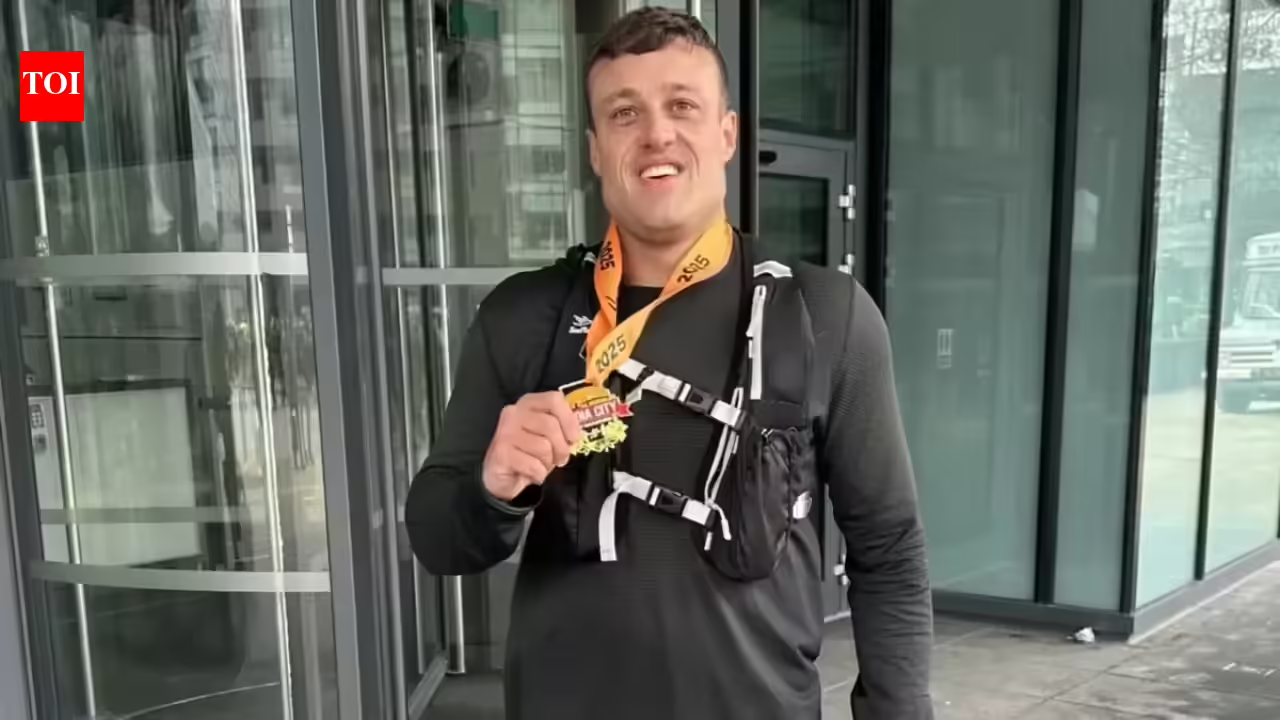
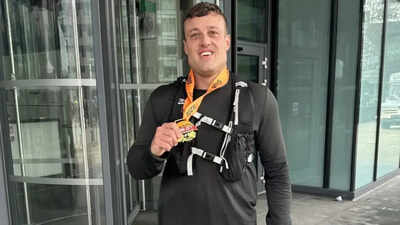
Imagine going about your life, hitting the gym, doing the usual chores, and one fine day… You wake up with acute palpitations.Ryan Mickleburgh was always in the gym, training for marathons and lifting heavy weights. At 32, he was a chef, fit, confident, and healthy, or so he thought. His friends saw him as the “fitness guy.”” But for months, his body was sending him warning signs, and he brushed them off.Then, during a gym class, Ryan suddenly collapsed. It was a double “widowmaker” heart attack, one of the most deadly types, with survival rates barely hitting 10 percent. Now, after beating the odds, Ryan’s sharing his story so others won’t make the same mistake he did.
Ryan’s Experience with the ‘Widowmaker ‘ Heart Attack
Per The Mirror, Ryan lives a life where he pushed hard — four marathons, tons of weightlifting. His diet was all protein, and he figured activity protected him. That confidence made it pretty easy for him to excuse the numbness and chest pain he started feeling a couple of months before his heart attack.As for the warning signs, there was persistent numbness on his left side and recurring chest pain. “It went on for two or three months,” Ryan said. But instead of seeing a doctor, he just assumed the discomfort was from his workouts or maybe a pinched nerve.He almost paid with his life for that mistake.Everything changed in March, mid-workout, when Ryan’s heart gave out. He was terrified, convinced he was dying. His mother rushed him to the hospital, where doctors fought to stabilize him when his heart rate shot up to 225 beats per minute. Turns out, he had a severe blockage in the left anterior descending artery — the so-called “widowmaker.” When this artery shuts down, survival depends on quick treatment.
Heart attack without prior ‘signs’?
What’s almost unbelievable and legitimately scary about Ryan’s story is that he didn’t look like someone who’d had a heart attack. Not even close.People still picture heart attacks as something that happens to older folks, smokers, or people with unhealthy lifestyles. But heart attacks can hit anyone, even younger, fit types, especially if you ignore the early signs.Doctors say it’s really easy to misinterpret heart attack symptoms. Chest pain feels like muscle soreness, indigestion, heaviness, or burning. There can be tingling in the arms, jaw pain, fatigue, shortness of breath, dizziness, nausea, or just feeling strangely tired for weeks.Ryan’s numbness on the left side should have been a huge red flag.Doctors warn that symptoms like pain or numbness in the left arm, chest, shoulder, or jaw should not be ignored, especially if they happen during exercise. The body usually warns you well ahead of time. Per physicians, it’s safest to treat recurring chest pain, numbness, breathlessness, or strange pressure as a medical emergency until you know for sure. Even if it turns out to be nothing, checking early can save your life.Studies show heart attack survivors often noticed warning signs days, weeks, or even months beforehand: chest pain, heaviness, breathlessness, bad sleep, fatigue.Another thing that experts always repeat: during a heart attack, every minute counts. The sooner you get help, the better your chance of surviving and avoiding permanent damage.But the problem is, these signs are subtle. Athletes blame overtraining. Young people call it anxiety or stress. Ryan did the same.Ryan’s story is a wake-up call from health experts: fitness doesn’t equal immunity. Genetics, hidden artery problems, stress, inflammation, and undiagnosed heart trouble can trip up anyone.Thankfully, Ryan survived after emergency treatment. Reports haven’t spelled out his entire recovery, but surviving a widowmaker is impressive, as most folks don’t make it to the hospital.Now that he’s recovering, Ryan talks about the importance of listening to your body instead of powering through pain. His story serves as a crucial reminder because it hits a dangerous myth — that being young and “fit” means you’re healthy.