


The movement of snakes within their environment is purely an instinctive activity, propelled by the fulfillment of three key necessities, namely food, water, and shelter. The creatures neither recognize humans’ environment as distinct from theirs nor seek to venture into buildings or urban constructions for any reason. They simply operate according to what facilitates their survival.Of all the necessities, food proves to be the strongest. Food comprises small creatures such as rats, frogs, and lizards. In urban settings, there is likely to be a surge in the number of rodents as a result of increasing amounts of waste and poor sanitation in the area, hence attracting snakes. Water, too, becomes a requirement, since snakes require both moisture and coolness, particularly in hot areas. As a result, they tend to seek moist surroundings such as drainage systems and underground piping.
understanding snake encounters in toilets and the underground pipe network
The snake’s actions are driven only by instincts. Three important things dictate how the snakes will act: hunger, thirst, and shelter. Unlike many other animals, they do not build associations with human dwellings; they do not differentiate between the building structure and the wild.First and foremost, food is crucial. Many species of snakes rely on rodents for food; thus, snakes can be found in places where these animals exist in plenty. In the cities, garbage, uncovered sewage and drains, and even food stores can attract rats and frogs to the place, which will, consequently, attract snakes. The food chain here starts with waste sites and continues into the sewers and caves underground.The second important thing that dictates where snakes go is water. These animals cannot live without water, especially if the climate is rather warm and dry. Sewage systems, leakages from bathroom pipes, drains, and all kinds of cavities can provide the required amount of moisture.Shelter completes the triangle. Snakes prefer dark, quiet, and protected environments where they are less likely to be disturbed. Natural shelters such as burrows or dense vegetation can be replaced in cities by pipes, cracks in foundations, construction debris, and sewer tunnels.
How urban drainage systems become hidden pathways for snakes
The present-day urban areas have an extensive plumbing system underneath that connects buildings, roads, and sewage disposal systems. While the plumbing system is supposed to act as the transportation system for water and waste materials, it is common that the plumbing pipes will meet with natural drainage paths at some point, especially when the infrastructure is old.Snakes will track the frogs and rats along these pathways because they are their natural prey. At this point, the snake stops responding to anything external and focuses on traveling through the confined passage way that is damp and ventilated.The snake may not be aware that these conditions may tempt it to go even further into the passageway. The passageway is directly linked from the drainage points outside to the building interiors by the pipeline. The snake will keep moving inside because it does not know the destination.
how snake movement in pipes leads to rare toilet sightings
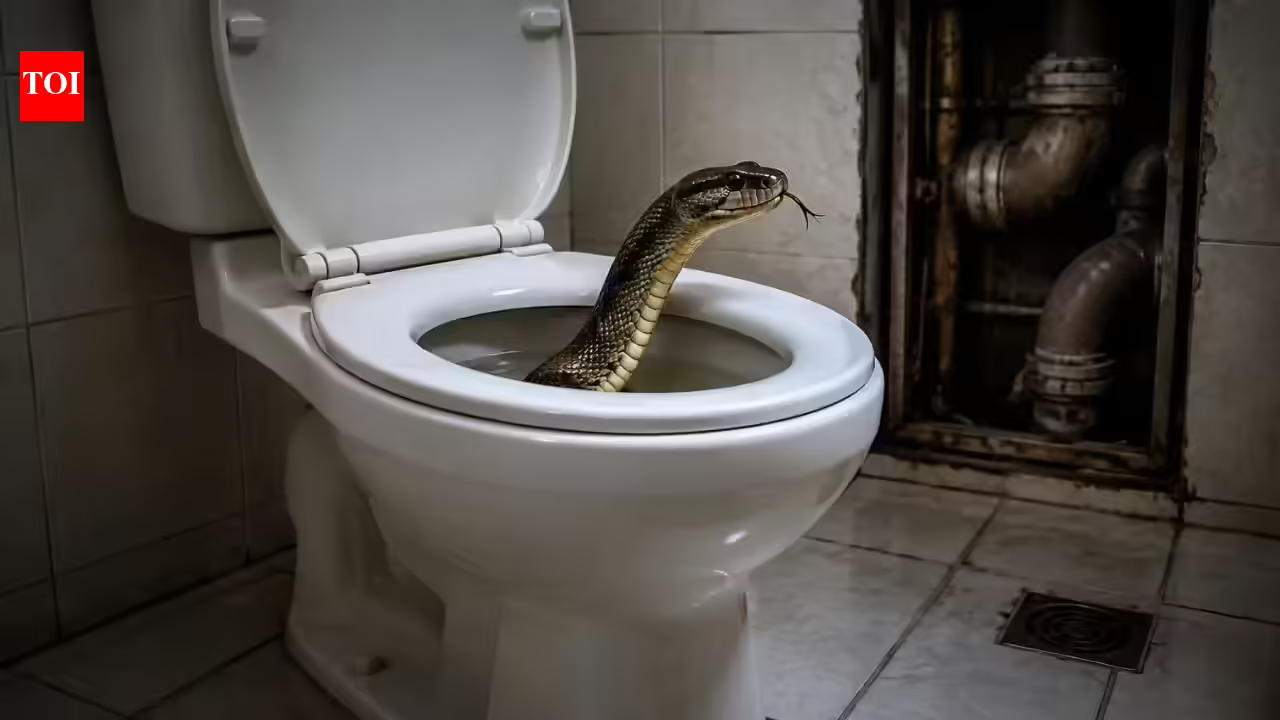
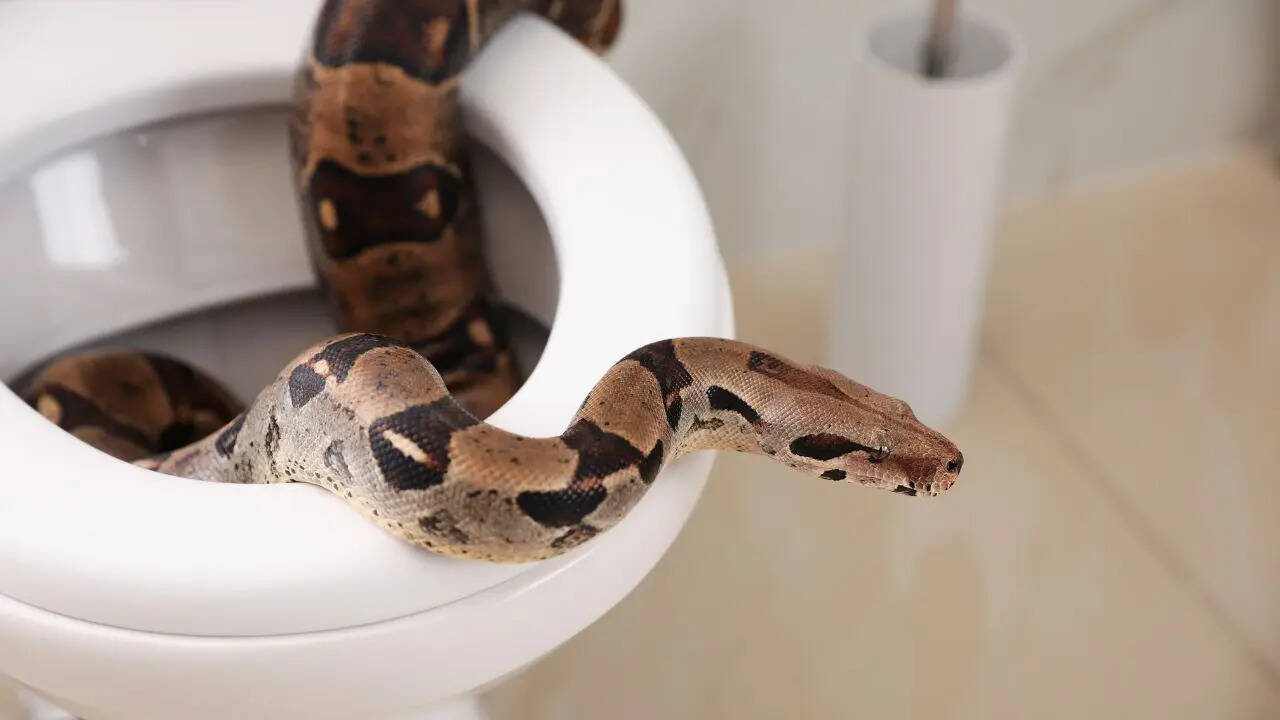
Toilets do not act as points of entrance for snakes. Instead, toilets act as the final connection within a plumbing network. Modern toilet designs come equipped with traps filled with water, which prevent gases and tiny particles from passing back and forth between the sewer and bathroom. Such an arrangement also acts as an obstacle to any animal.Under exceptional circumstances, the snake already in the drainage pipe can bypass this obstacle and make progress in either direction. This could be facilitated by fluctuating levels of water in the pipe, pressure within it, or openings.In such cases, however, the snake is not necessarily entering the toilet but following the pathway to the nearest point where it could emerge. That point will happen to be the toilet bowl, making it seem like the snake emerged from the toilet.
Understanding environmental triggers that influence snake movement during flooding
On rare occasions, certain environmental factors might boost their chances. Heavy rainfall is among the most prevalent triggers. During the monsoons, underground burrows get flooded, forcing the snakes to move to the mainland. On rainy days, the sewage system carries excess amounts of water, displacing animals into the adjoining pipelines.Floods impact their environment through the disruption of agricultural fields, gardens, and swamps. Burrowed snakes may be pushed into drainage pipes in the pursuit of escaping their surroundings.Extremes of temperatures could also lead to snakes’ reactions. Warm weather drives snakes to look for shady spots, while drastic temperature drops make snakes seek refuge in underground tunnels for warmth.
Role of rodents in attracting snakes
As reported by BBC reports, one of the most important indirect factors is rodent activity. Rats are among the most common urban pests, and their presence significantly influences snake behavior.Wherever rats thrive, snakes are likely to follow. Sewer systems and drains often serve as hidden highways for rodents because they provide safety and access to food waste. Snakes entering these systems are usually not exploring randomly but tracking potential prey.This relationship between predator and prey explains why snake movement is sometimes concentrated in human-linked infrastructure without any direct interaction with humans themselves.
Why bathrooms and toilets are not true targets
A key misconception is that snakes are somehow attracted to bathrooms or toilet bowls. In reality, these are not meaningful environments from a snake’s perspective. There is no food source, no natural shelter, and no ecological reason for a snake to prefer these spaces.Instead, bathrooms are simply endpoints connected to a larger system. The appearance of a snake in a toilet is the result of accidental navigation through connected pipes, not intentional behavior.Snakes operate on instinct rather than spatial awareness. They do not map environments in the way humans do, which means they cannot distinguish between a drain outside and a toilet inside a home.
Why these incidents feel more common than they are
Despite strong public attention, snake appearances in toilets are extremely rare. However, they tend to spread widely in news and social media due to their shocking nature.In most modern buildings with properly sealed plumbing systems, such events are almost impossible. The combination of water traps, pipe bends, and maintenance standards provides strong physical barriers.These incidents are more likely in older infrastructure, poorly maintained buildings, or regions close to natural habitats where wildlife movement overlaps with human drainage systems.