

Two of the world’s most formidable predators roam the wild, yet the puma and the jaguar navigate their shared territories using remarkably different strategies. Often shrouded in myth and local folklore, these apex felines represent two distinct branches of the cat family tree, shaped by thousands of years of evolutionary pressure.While the jaguar is celebrated as the “American tiger” for its incredible power and water-dwelling habits, the puma is a master of versatility, thriving in environments ranging from frozen peaks to arid deserts. Today, as landscapes shift due to human expansion and environmental change, understanding the biological nuances and conservation needs of these two icons is more critical than ever for ensuring their survival in a modern world.Key difference between Puma and Jaguar: Physical characteristics, hunting styleand more
Difference between Puma and Jaguar
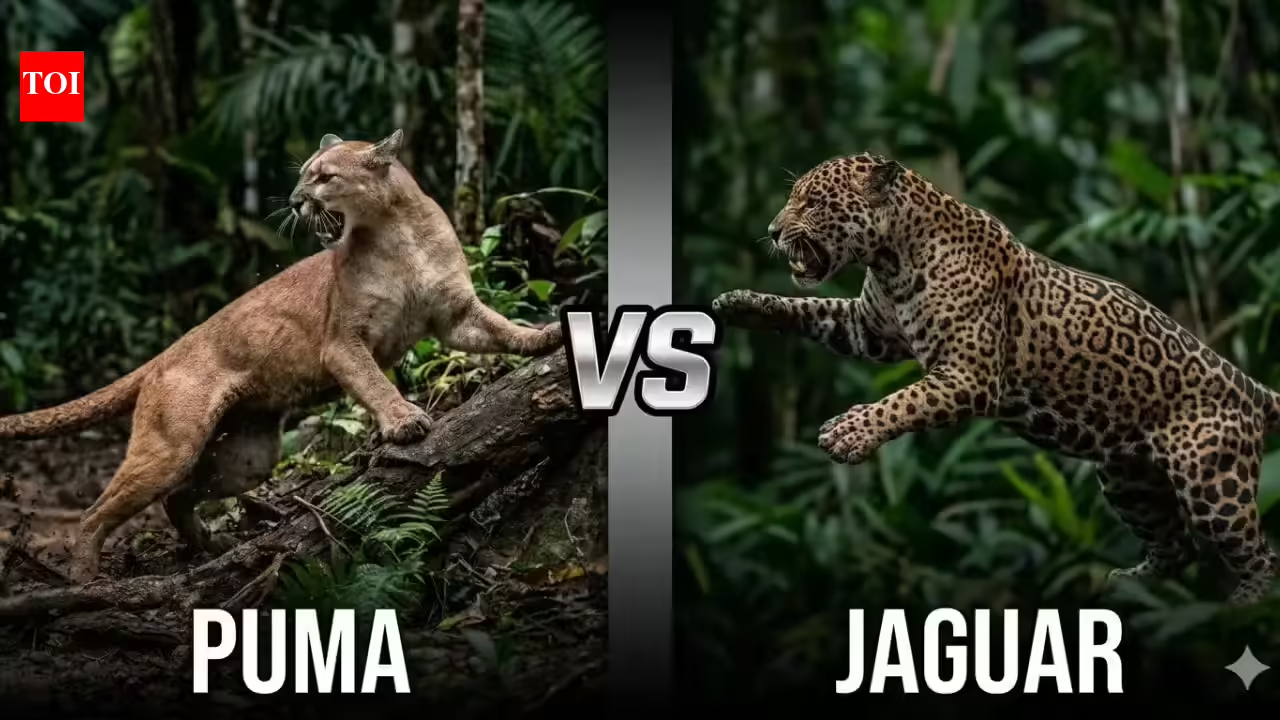
scientific classificationAccording to reports from the Smithsonian’s National Zoo and the IUCN Red List, the puma belongs to a different feline lineage and is technically classified as a “small cat” because it cannot roar. The jaguar, however, belongs to the Panthera genus, which includes the true roaring big cats.physical buildThe puma has a lean and athletic body designed for agility and speed. In comparison, the jaguar has a stocky and muscular frame built for strength and power.coat patternThe puma has a plain tawny-coloured coat that helps it blend into rocky and dry environments. The jaguar’s coat is marked with rosettes that provide camouflage in forests and wetlands.head and limbsThe puma’s longer hind legs allow it to leap and climb efficiently. The jaguar, on the other hand, has a broader head and shorter limbs that support its powerful hunting style.VocalizationThe puma communicates through purrs, whistles, hisses, and screams rather than roaring. The jaguar is capable of roaring, which is a defining feature of true big cats.hunting styleReports explain that the puma mainly relies on stealth, speed, and surprise attacks when hunting prey. In contrast, the jaguar depends more on brute force and crushing power.bite forceAccording to reports, although the puma has a strong bite, it relies more on agility and precision during hunts. The jaguar possesses one of the strongest bite forces among all big cats.Habitat adaptabilityReports from the IUCN Red List highlight that the puma can survive in a wide variety of habitats, including deserts, mountains, and forests. The jaguar is more commonly associated with dense forests, wetlands, and river systems.Relationship with waterAccording to reports, the puma is not especially linked to aquatic habitats. The jaguar, however, is recognized as an excellent swimmer and is comfortable in rivers and wetlands.Geographic rangeAs reported, state that the puma has one of the widest geographic ranges of any wild mammal in the Americas. The jaguar’s range has become more limited because of habitat loss and fragmentation, according to the IUCN Red List.Conservation StatusAccording to the IUCN Red List, the puma is currently listed as “Least Concern” due to its adaptability and broad distribution. The jaguar is listed as “Near Threatened” because of continuing habitat decline.Main survival challengeReports explain that the puma often faces conflict with humans because it can live close to settlements. The jaguar’s greatest challenge is habitat destruction caused by deforestation and human expansion, according to the IUCN Red List.Ecological identityAccording to reports, the puma is often referred to as the “ghost cat” because of its elusive and quiet behavior. The jaguar is known as the “American tiger” because of its strength and dominant presence.athletic abilityAs reported that the puma is highly agile and capable of remarkable vertical leaps using its powerful hind legs. The jaguar is less focused on agility and instead relies more on physical strength.Conservation focusAs reported, conservation efforts for pumas mainly focus on encouraging coexistence between humans and wildlife. Jaguar conservation is more focused on protecting forests and maintaining wildlife corridors, according to the IUCN Red List.
Puma vs jaguar: Inside the ultimate clash of predators
If a puma and a jaguar were ever to fight in the wild, the jaguar would most likely have the advantage because of its immense physical strength and crushing bite force. The jaguar possesses one of the strongest bite forces among all big cats relative to its size, with a stocky and muscular build designed for overpowering prey. Its ability to pierce turtle shells and caiman hides demonstrates the sheer force behind its jaws. The puma, by comparison, relies more on agility, stealth, and speed rather than direct physical confrontation. The puma’s longer hind legs and athletic frame make it an exceptional leaper and precision hunter, but it lacks the jaguar’s brute strength. While the puma could potentially avoid or outmanoeuvre a jaguar through speed and evasive movement, experts and conservation reports suggest that in a direct one-on-one fight, the heavier and more powerful jaguar would probably emerge victorious.