




Packing medicine is almost natural for most travelers. Painkillers, allergy medications, sleeping pills, or even routine prescriptions of thyroid, blood pressure, diabetes, or anti-anxiety pills can easily find their way into a traveller’s luggage. However, many international tourists do not realize that medicines which are common in one country might not be allowed in other nations.Whether it is Japan and its restrictions on stimulants or the UAE and its laws related to controlled medications, travelers from all over the world have found themselves subjected to interrogations and having to provide evidence of being medically qualified to carry certain medicine, not to mention having to give up their medicine at the customs.The problem has grown increasingly relevant as the issue of regulating prescription and controlled medicine across international borders has become more common.
Why medication rules vary across countries
Every country has its own drug-control laws. Medicines sold freely over the counter in one nation may be classified as controlled substances elsewhere. Even certain cold and flu tablets, sleeping pills, or strong painkillers can trigger scrutiny at international airports.
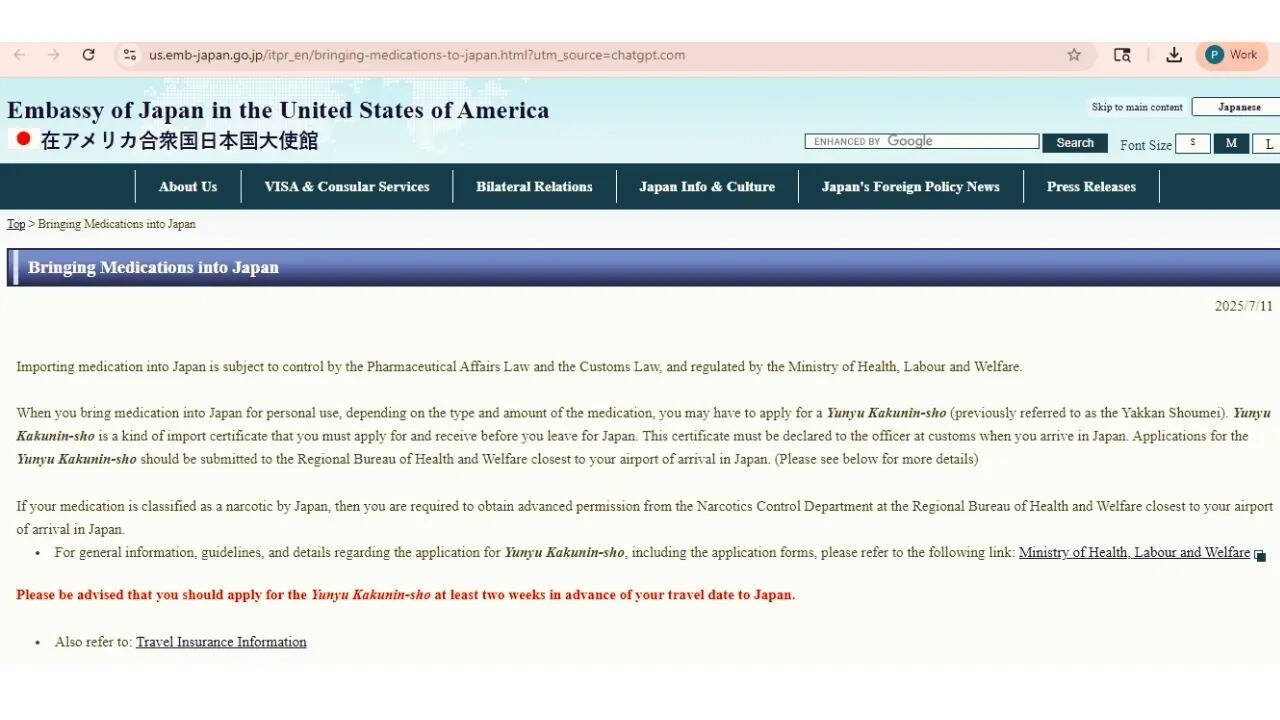
Bringing medicines into Japan
For instance, while traveling to Japan, caution is advised regarding the importation of medicinal drugs with stimulants or narcotics. There exist many everyday drugs and some decongestants that are legal in other nations but highly controlled in Japan, or even prohibited outright. The amount of the imported medication in such circumstances should also not exceed certain limits.
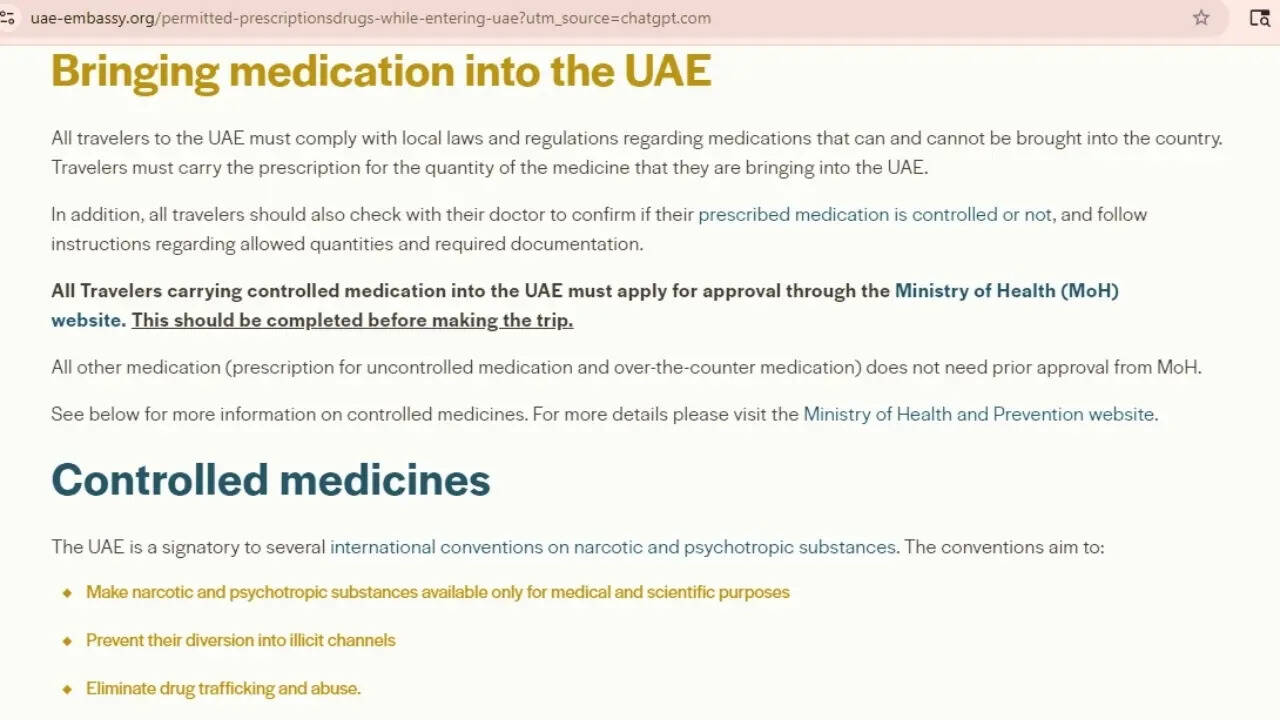
Bringing medicines into UAE
On the other hand, the United Arab Emirates has strict restrictions on any medicines containing narcotic or psychotropic drugs. Travelers carrying certain prescription medicines may need supporting medical documents, prescriptions, or prior approvals depending on the drug category.
The “30-day supply” rule travelers often misunderstand
One of the most common travel misconceptions online is that carrying more than a 30-day supply of medicine is universally illegal. That is not entirely accurate.It is crucial to remember that there are great variations in the regulations concerning the amount of drugs a tourist is permitted to import. However, many nations have established the limit of the quantity of drugs one may legally bring into the country. For instance, in Japan, one is permitted to import medications with no further documents required up to the amount of one-month supply based on prescriptions. Other countries could allow bringing a bigger amount of prescription drugs in case of appropriate documentation. The main lesson to learn here is that one cannot make any assumptions about the policies on the import of medicine.
Things travelers should always carry:
- Copy of the prescription
- Medicines in original packages
- Letter from the doctor describing the health problem.
The latter is very relevant for those who suffer from such diseases as diabetes, hypertension, problems with thyroids, epilepsy, psychological problems, and heart conditions.It is also useful to mention generic drug names.
Common mistakes travelers make
The most common mistake that travelers tend to do is pack medicine in an unlabeled pill box or Ziploc bag. Although this makes life easier, it can cause unnecessary difficulties in passing through customs.The second mistake that travelers usually make when traveling abroad is considering that all over-the-counter medicine is legal. Certain cough syrup, powerful painkillers, sedatives, and anti-anxiety drugs may have substances that are banned in other countries.It is recommended to consult government embassies or health ministries instead of using social media information on travel.
Growing problem for travelers
With the constant growth in international trips, drug testing at airports becomes more prevalent around the world. The majority of travelers who are taking prescribed medicines will have no trouble passing through the airport customs by following local laws and carrying required documents. However, not consulting the necessary regulations ahead of time can quickly result in a traveller’s nightmare.For those traveling internationally in the upcoming summer, one of the most sensible things to check before a flight may not be passport validity or luggage allowance, but the legality of the medicine carried on board.