


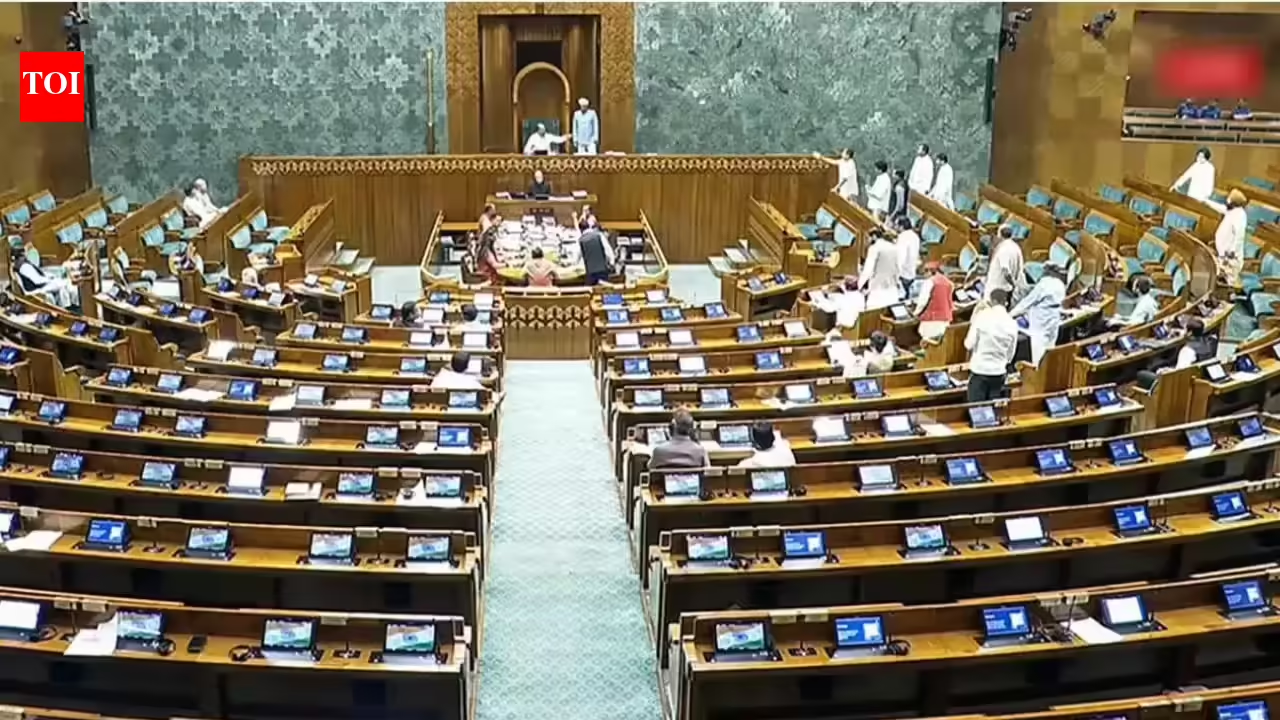
Govt will move a Constitutional (Amendment) Bill and Delimitation Bill in Parliament Thursday. The delimitation exercise is being closely watched as govt is keen to reserve 33% seats for women in Lok Sabha and state assemblies from 2029 general elections, without changing the proportion of seats that a state has. For this the overall size of the lower House of Parliament is sought to be enhanced by 50%. TOI looks at how delimitation works.
What is delimitation?
It’s an exercise to redraw constituencies for LS and assemblies, which is done on the basis of population. Based on the population in the last census, each state is assigned seats in the House of People and the state assembly. So, constituencies can be different in geographical size, but roughly equal in the density of population. Article 82 of the Constitution mandates that this exercise be undertaken after each census.While three delimitation exercises were undertaken in every decade starting 1952, in 1976 the 42nd constitutional amendment suspended the revision until after the 2001 census and froze the number of seats in LS at 543. In 2001, the 84th constitutional amendment extended the freeze on the number of seats until 2026.In 2008, a delimitation exercise was undertaken, but it, in deference to southern states’ sensitivities, relied on the 1971 census and demarcated fresh boundaries of LS constituencies without changing the respective shares of states in LS.
How is delimitation done?
The Constitution empowers Parliament to decide on delimitation and the government is moving a bill to set up a Delimitation Commission. The commission is proposed to be headed by a former Supreme Court judge with the chief election commissioner, or his nominee as a member.
How will next delimitation exercise be different?
The exercise for LS is likely to be delinked from 2011 census, with govt, in view of the resistance from southern states, keen that the proportion of seats for each state remain unchanged in LS, while ensuring that 33% reservation is provided to women. This means that each state will see the number of seats increase by 50% — UP, for instance, will have 120 seats in the expanded LS, instead of 80 — which will also equal the 33% of the seats reserved for women (40 seats). So, the exercise will be similar to the last one in the sense that boundaries of constituencies will be redrawn, but with a higher number of seats.The bill circulated to lawmakers is seen to have made some other changes. “Currently, Article 82 requires that delimitation of constituencies and readjustment of seats among states be undertaken after completion of every census, using population data of that census. The present bill removes this obligation and instead leaves it to Parliament to determine both timing of delimitation and census to be used for the exercise. Importantly, this transforms what was a constitutional obligation into a matter of legislative discretion,” said Swapnil Tripathi, Lead at Charkha (Centre for Constitutional Law) at Vidhi.
Will it address concerns of states?
While it’s been criticized, the change creates room for government not to use the 2011 census for LS delimitation. It addresses fear of southern states that a delimitation exercise based on latest census will see a drop in their share of LS seats, while will leave northern states aggrieved, whose share of LS seats has remained frozen despite rise in population. For instance, Vidhi’s calculations showed that going by 2026 population, TN will have 31 LS seats and U. More populous northern states have reason to complain because their representation is sought to be kept frozen. In any case, a UP lawmaker has more voters to represent than his counterpart from TN or Kerala.