


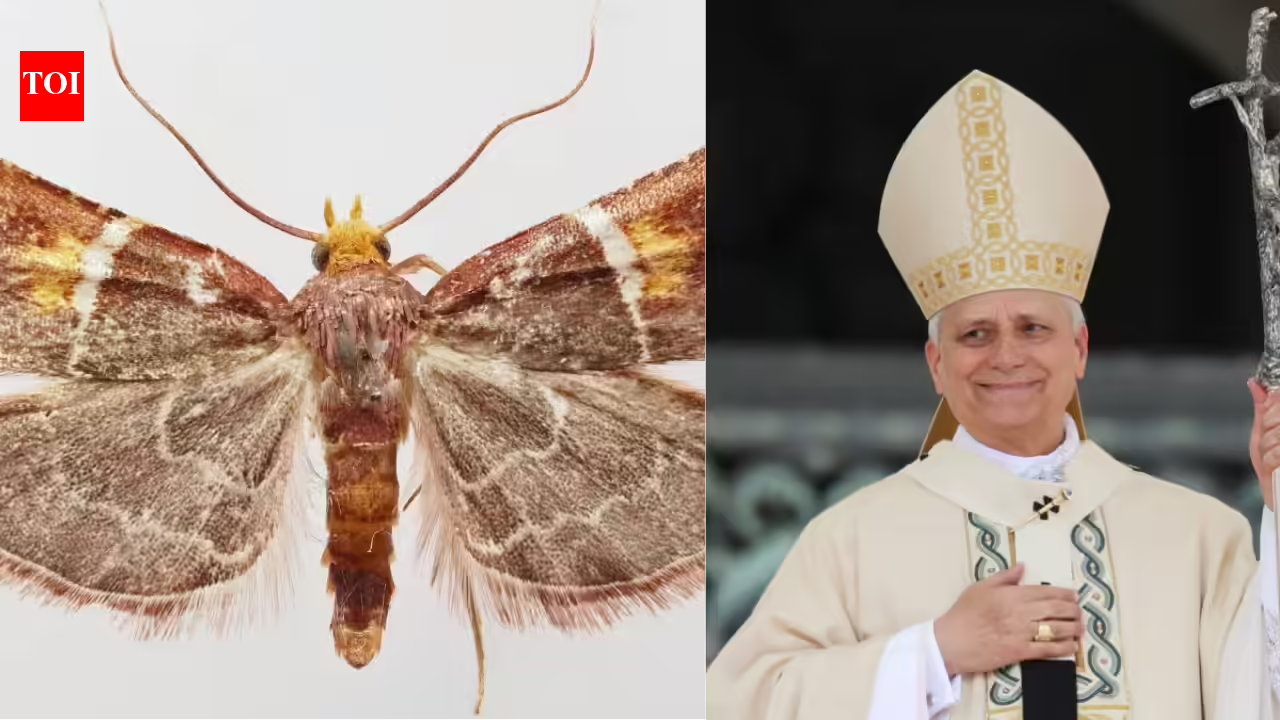
While exploring the White Mountains, or Lefka Ori, in the western part of the Greek island of Crete, researchers came across a striking moth that looked distinctive enough to warrant closer study. The species was later described as Pyralis papaleonei, named after Pope Leo XIV. The naming choice was intended to carry both scientific and symbolic significance. The moth was found to be an endemic species known only from this part of Crete, with a wingspan of around 2 centimeters and unusual purple forewings marked by an orange-golden patch and white bands.
The moth named after Pope Leo XIV
The scientists chose the name papaleonei from “Papa Leone”, Italian for Pope Leo, as a direct reference to Pope Leo XIV. According to the researchers, the name was meant to honor the pope’s support for climate and environmental protection and to serve as a symbolic appeal for stronger care of biodiversity. The naming also reflects the authors’ view that humanity has a responsibility to safeguard the natural world.The new species was not identified from appearance alone. The researchers distinguished it using wing pattern, colouration and genital morphology, then confirmed it with genetic analysis. The molecular data showed about 6 percent divergence from its closest relative, which supported the conclusion that it is a separate species. The paper lists Peter Huemer, Lauri Kaila and Andreas H. Segerer as the authors of the description.The moth is currently known only from the White Mountains of western Crete, making it both localized and ecologically significant. Researchers described it as an “endemic treasure” of the island and said the find is a reminder that even in Europe, where many habitats have been studied for decades, new species can still remain hidden. The moth was recorded at artificial light sources and appears to be mainly active in June, although its biology is still poorly understood.
A nod to tradition
The naming also fits an older pattern within the genus Pyralis, where species have been given titles such as Pyralis regalis, Pyralis princeps and Pyralis cardinalis. The researchers noted that moths and butterflies are often named for appearance, place or notable individuals, and pointed to Christian symbolism that associates them with resurrection, transformation and the soul. In that sense, the name Pyralis papaleonei connects science, culture and conservation in a single label.The broader significance of the discovery lies in what it says about biodiversity itself. Scientists involved in the study said the world continues to face a biodiversity crisis and that effective conservation begins with recognizing and documenting species before they disappear. Although Europe is one of the world’s most extensively studied regions, discoveries like Pyralis papaleonei show that nature still holds surprises, even in places explored for generations.