




Motherhood starts even before the child comes to this world and then, it never ends. Probably because, the mother-child bond is fluid in nature. It changes with time and takes different forms as children grow. One aspect that stays – joy of motherhood! Is it only about joy or it comes with its own moments of doubts, exhaustion and challenges? Once a mother, always a mother. The day a child is born, a mother is born too. It is actually a kaleidoscope of emotions that every mother goes through and its very complex to describe. Recent research has tried to explain this journey through the concept of Triad of work. Meghna Yadav, Child Psychologist and Family Counselor shares the unspoken challenges mothers face and how to overcome them.The Triad of Work: The Invisible Burden of Indian MothersResearch of recent times in social sciences have connected Indian motherhood with “Triad of Work”: the simultaneous management of paid professional labor, physical domestic chores, and the invisible mental load. While the triad of work is a global phenomenon, the Indian context adds cultural layers of multi-generational care and rigid gender expectations that intensify this burden.In Indian ContextResearch paints a stark picture of this imbalance. According to the Periodic Labor Force Survey (PLFS) and time-use data, Indian women spend nearly five hours a day on unpaid domestic services, compared to just 97 minutes by men. This creates a “time poverty” trap. Furthermore, a report by IIM Ahmedabad highlighted that even in dual-income households, the “mental load”—the cognitive labor of planning meals, school schedules, and social obligations—falls disproportionately on mothers by a margin of over 70%.87% moms are found to be shouting at children on accidental spill of milk in morning hours and close to 62% of working mothers are found to have no mental energy left for replying to children’s questions in evening after a long day at work.The story of staying at home is no different when it comes to mental exhaustion. A study published in the Journal of Health and Social Behavior in the year 2012 clearly indicates that when mothers are at home, their cortisol levels spike, biologically proving that being at home with children also adds on to the “worry work” of mothers.
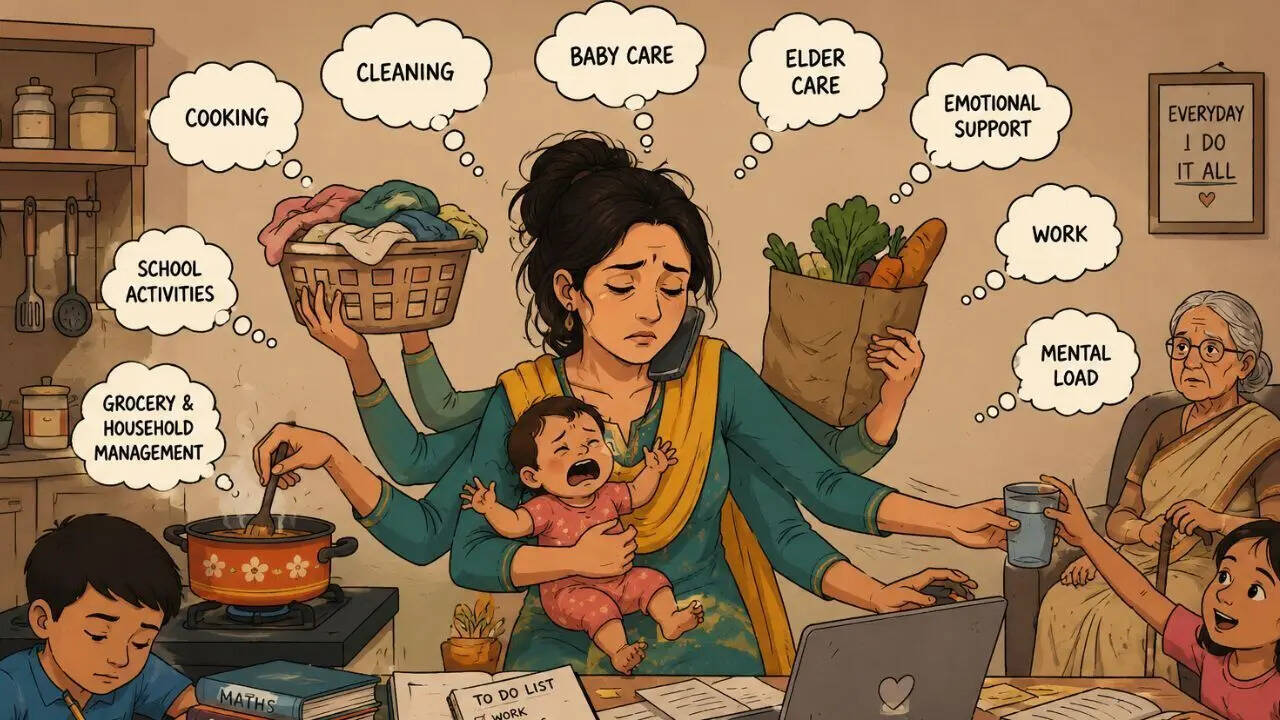
This triad is not just a personal struggle; it is a systemic reality that contributes to India’s declining female labor force participation rate. Let us try to build some solutions around it.To dismantle this triad, experts suggest three primary shifts:• Redefining Paternal care: : Research from the International Labor Organization (ILO) suggests that when father gets involved in day to day chores of running home, it sets a long-term precedent for shared domestic responsibility, reducing the mother’s “worry work.” Moreover, fathers need to keep checking themselves to break the mental barriers of “mother will handle it”. The mental load needs to be shared, probably more than the “physical care work”.•Corporate “Flex-Agility”: Beyond just remote work, studies in psychology journals show that “outcome-based” performance tracking—rather than hours logged—allows mothers to integrate their triad of responsibilities without the “motherhood penalty” affecting their career trajectory. This approach from organizations are found to reduce the professional labor load from mothers by around 50%.•The bucks stop at you: So, for all the women out there, the verdict is out! You need to invest in yourself and decide for yourself! Choose the path that keeps you emotionally healthy!! Take time out from home or work and just grab a few moments for yourself during the day.Investing in your bond as a couple is another significant aspect to keep yourself free of mental load of motherhood. Go out for dates again! Remember, even with your new role as parents, you do not cease to remain important for each other. Select three things that help you feel calm and relaxed and designate time, strictly, to do those for yourself, no matter what the day throws at you!I will leave it with you, mommy! You are unique and your situations are unique, so only you can decide what works best for you. Talk to the mother in you, your child needs you to take care of yourself!