


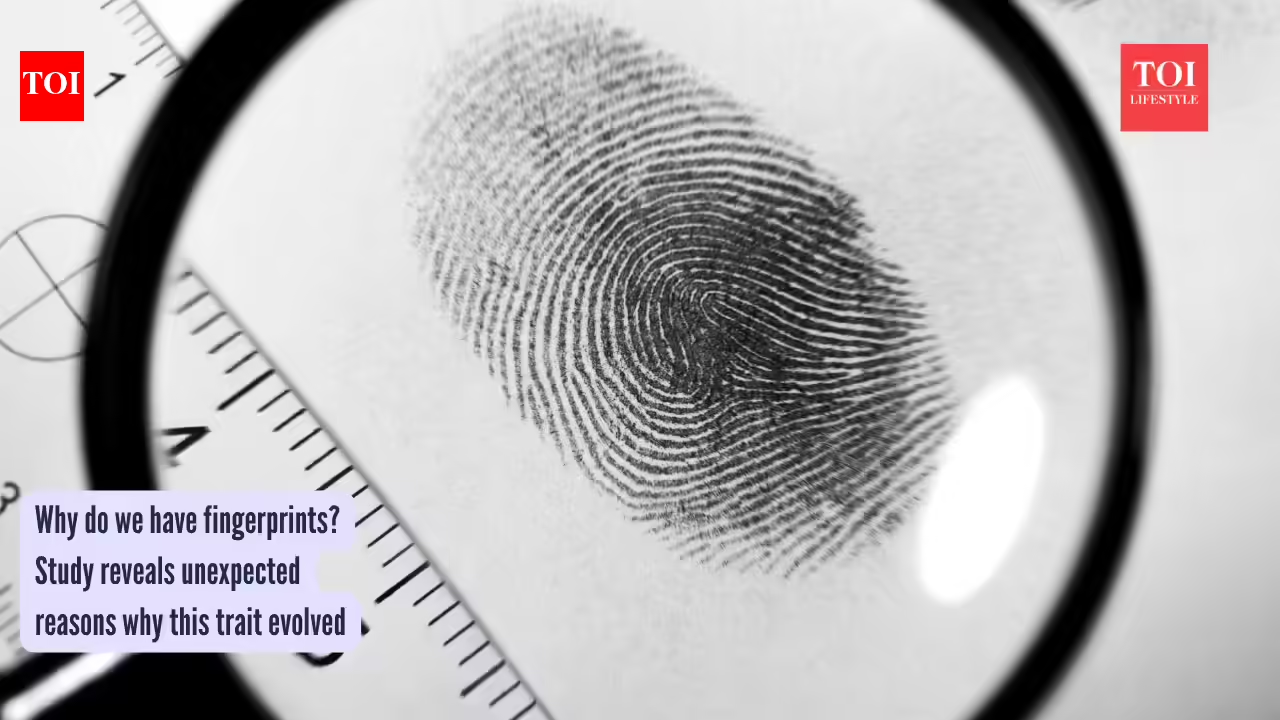
Ever wondered why those swirly patterns are present on your fingertips that unlock your phone or leave prints at a crime scene?Fingerprints feel like a mystery from a detective novel, but they’ve been with humans and a few surprising animals for millions of years.But are they present just for show or do they serve a purpose completely unimagined?
What are fingerprints?
Fingerprints are ridged patterns on fingertips, palms, toes, and soles called dermal ridges. They form three main types, including the loops, whorls, and arches. Among the mammals, only primates and koalas have them, even though these two species are completely unrelated. This is called convergent evolution, driven by similar needs like tree-climbing.This independent development in unrelated species hints at a big evolutionary advantage.
How to form fingerprints?
Ridges start developing at around week 10 of pregnancy on fetal volar pads, during which temporary fingertip swells.In a seminal 2005 study published in the Journal of Theoretical Biology, applied mathematicians Michael Kücken and Alan Newell, explained that stress buckles the skin layer, creating patterns perpendicular to max compression. Volar pad shape decides if it’s a whorl (dome), loop (asymmetric), or arch (flat).Your unique print emerges from physics and growth, not strict DNA blueprints.
Why do they help in a better grip?
Ridges help produce a better grip by managing moisture smartly. Sweat softens skin for friction on dry spots and furrows wick away excess moisture to avoid slips. A 2020 PNAS study showed this self-adjusts for wet or dry, which is important for primates grabbing branches.Arboreal life demanded a reliable hold and evolution nailed it.
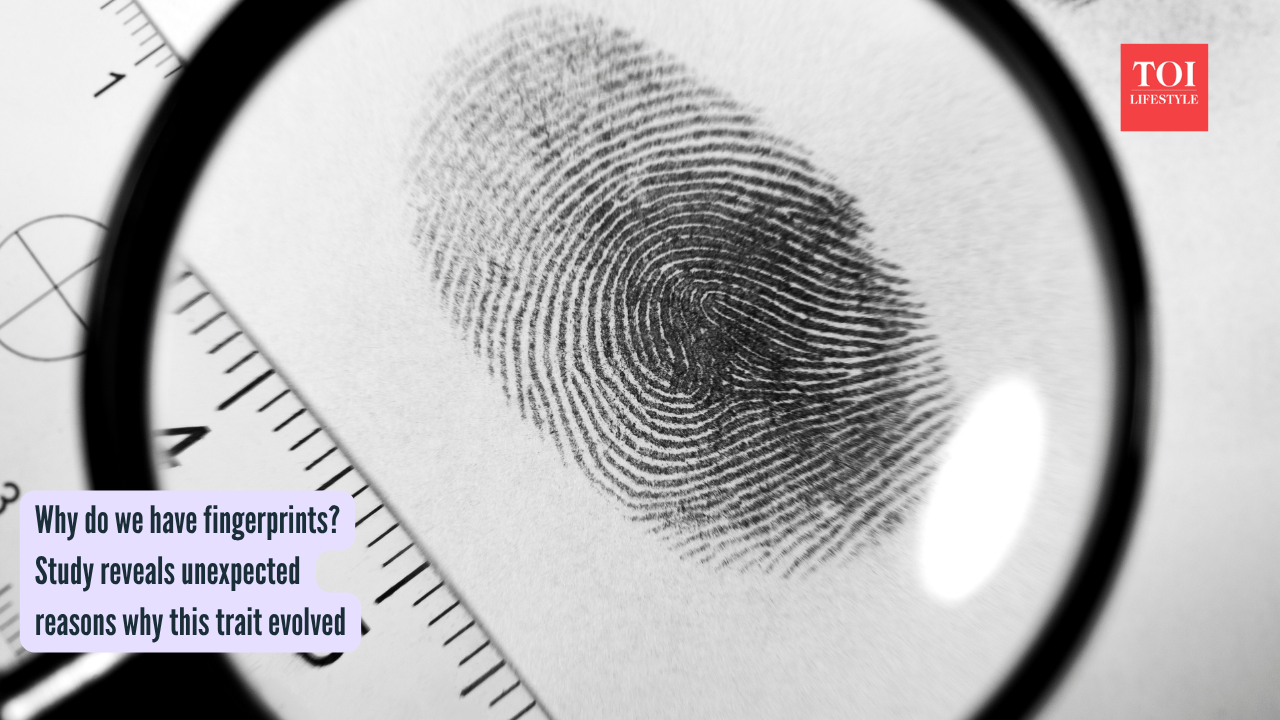
Representative Image
Boosting touch sensitivity
Ridges enhance touch by channeling vibrations to sensors below. This sharpens texture feel, like distinguishing ripe from unripe fruit. More contact area raises resolution for foraging or tools.Palms and soles have them too, helping the whole body sense better.
The unexpected modern role
Evolution developed fingerprints for climbing trees, grasping fruit, and staying secure in the branches. It never foresaw ink pads, biometric scanners, or crime databases. Yet here we stand, benefiting from them anyway.Each person’s fingerprint uniqueness comes from a delicate developmental process in the womb. These patterns remain stable throughout life, resist minor damage, and differ so greatly that no two people in history, not even identical twins, share the exact same set.An adaptation born for life in the treetops has unexpectedly become one of our best tools for personal identification.Ridges initially developed naturally for swinging through forests now unlock your phone. Your fingerprints predate humanity itself, older than identity, never intended as your personal mark, yet they fit the role flawlessly.