



For so many years, the harsh reality of childhood cancer treatment has haunted survivors, long after they beat the disease. Imagine growing up, celebrating life, but quietly carrying the pain of knowing you might never become a biological father. That was life for thousands of boys treated for leukemia, sickle cell disease, and other illnesses.However, with medical innovations and technological advancements, now comes real hope. Belgian doctors pulled off something people once thought couldn’t happen: they helped a man regain sperm, using tissue from his childhood that had been frozen for almost two decades.
The medical breakthrough What happened?
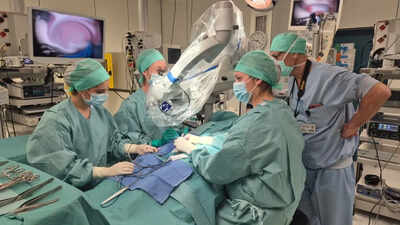
In what is being hailed as a world first, a medical team at the University Hospital Brussels and the Free University of Brussels (VUB) claims to have restored the sperm production of one such patient. In a new case study (yet to be peer reviewed), the medical team explains how they treated a male patient with no viable sperm by re-transplanting a sample of his own childhood testicular tissue into his adult testicle.So, what exactly happened? How did things unfold?Per Science Alert, when this man was just a kid, doctors took a small piece of his testicle before he started chemotherapy. They froze it, knowing that treatment would leave him infertile. Sixteen years later, after he’d grown up and confirmed he couldn’t produce sperm naturally, scientists thawed the tissue and replanted it. And, incredibly, it started making mature sperm.For boys who get cancer treatments before puberty, this is huge. Prepubescent boys don’t make sperm yet, so you can’t just freeze a sample as you do with adults. That’s why this kind of transplant feels almost unreal, as it’s proof that immature testicular tissue can be frozen, stored, and still come back to life years later.Now, let’s dig into the details.The patient, diagnosed with sickle cell disease as a kid, was facing chemo and a stem cell transplant in 2008. His doctors at University Hospital Brussels removed one testicle and froze tiny fragments of the tissue. It was a leap of faith; nobody actually knew if it would ever be useful.Inside that frozen tissue were spermatogonial stem cells, which grow into sperm after puberty. By the time the patient was an adult, he found out he had azoospermia, which means there are no sperm in his semen. Multiple tests confirmed it. Then, in late 2024 and early 2025, doctors decided to try something bold. They thawed the childhood tissue and grafted it back, some inside his remaining testicle and some under the scrotum. A year later, they checked the grafts.What they saw blew everyone’s mind. Two grafts inside the testicle had restarted sperm production. They found mature, motile sperm in the transplanted tissue.So, yes — in simple terms, frozen tissue from a kid woke up sixteen years later and started doing its job again.
Why this breakthrough matters
Now, this is not just about one person being potentially able to biologically father a child — the impact of this breakthrough goes beyond that.Cancer treatments save lives, but they often wreck fertility, especially for boys. For the unversed, roughly one-third of guys who receive gonadotoxic treatment such as chemotherapy or radiation in childhood are deemed ‘azoospermic’ after puberty, which means their ejaculate lacks any viable sperm. That implies that those who go through these treatments later face permanent fertility problems.Adult men have options: they can freeze their sperm. But boys? They can’t. That gap has left families and researchers frustrated for years.Since 2002, clinics have tried freezing immature testicular tissue for boys facing harsh treatments. Over 3,000 boys have gone through it worldwide, but nobody knew if the preserved tissue would actually work in humans. Now, they have proof.Rod Mitchell, a pediatric endocrinologist, summed it up: it makes scientific sense since the tissue went right back into the body’s hormonal environment, where sperm naturally develop.
What’s next?
What about the big question, then? Can this man now father children?We’re not there yet, but it’s possible. Right now, the sperm are stuck inside the transplanted tissue; they’re not in the patient’s semen because the grafts aren’t connected to the sperm ducts. Assisted reproductive technology, like IVF or intracytoplasmic sperm injection, would be needed. And scientists still need to figure out if the sperm can actually fertilize eggs and lead to healthy pregnancies. Plus, there’s some uncertainty about how long the tissue will keep working.However, fertility experts are calling this a breakthrough.This could change the conversation about fertility preservation for young boys facing cancer or other hard treatments. Online, people are reacting with amazement and relief. Families who chose tissue preservation years ago, without any guarantees, finally have real hope.