



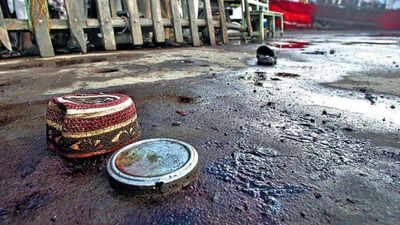
MUMBAI: “A criminal trial is not like a fairy tale where one is free to give flight to one’s imagination and fantasy,” said Bombay High Court Chief Justice Shree Chandrashekhar and Justice SC Chandak on Wednesday, citing inherent contradictions in the ATS and NIA cases to discharge four accused 13 years after their arrest in the Sept 8, 2006, Malegaon blasts case. The blasts, at four locations in Nashik district’s loom town, killed 31 persons and injured over 312 others.The NIA case against the four is on hearsay evidence, no direct witness, rests on Aseemanand’s confession held inadmissible, in another case, and seven retracted statements of first set of ATS accused, since discharged, apart from a test identification parade six years later, the HC observed and added plaintively, “The case seems to have reached a dead end.”
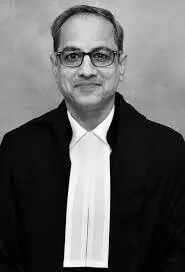
Bombay HC Judge, Justice SC Chandak
HC said the statements of accused used by NIA to claim ‘discovery’ of incriminating articles six years on, “that too, from a place accessible to general public” do not form admissible evidence.The blasts, where bombs planted also on two cycles went off, at first were probed by State Anti-Terrorist Squad (ATS). The ATS arrested nine alleged members of the banned outfit, SIMI (Students Islamic Movement of India). Then came the Central Bureau of Investigation (CBI) in 2007 that confirmed the “vivid description” by the ATS of each one’s role. Finally in 2011 came the National Investigation Agency (NIA), which as HC said “quite surprisingly” filed a supplementary chargesheet against four new accused.The original nine men were discharged from the case a decade ago.
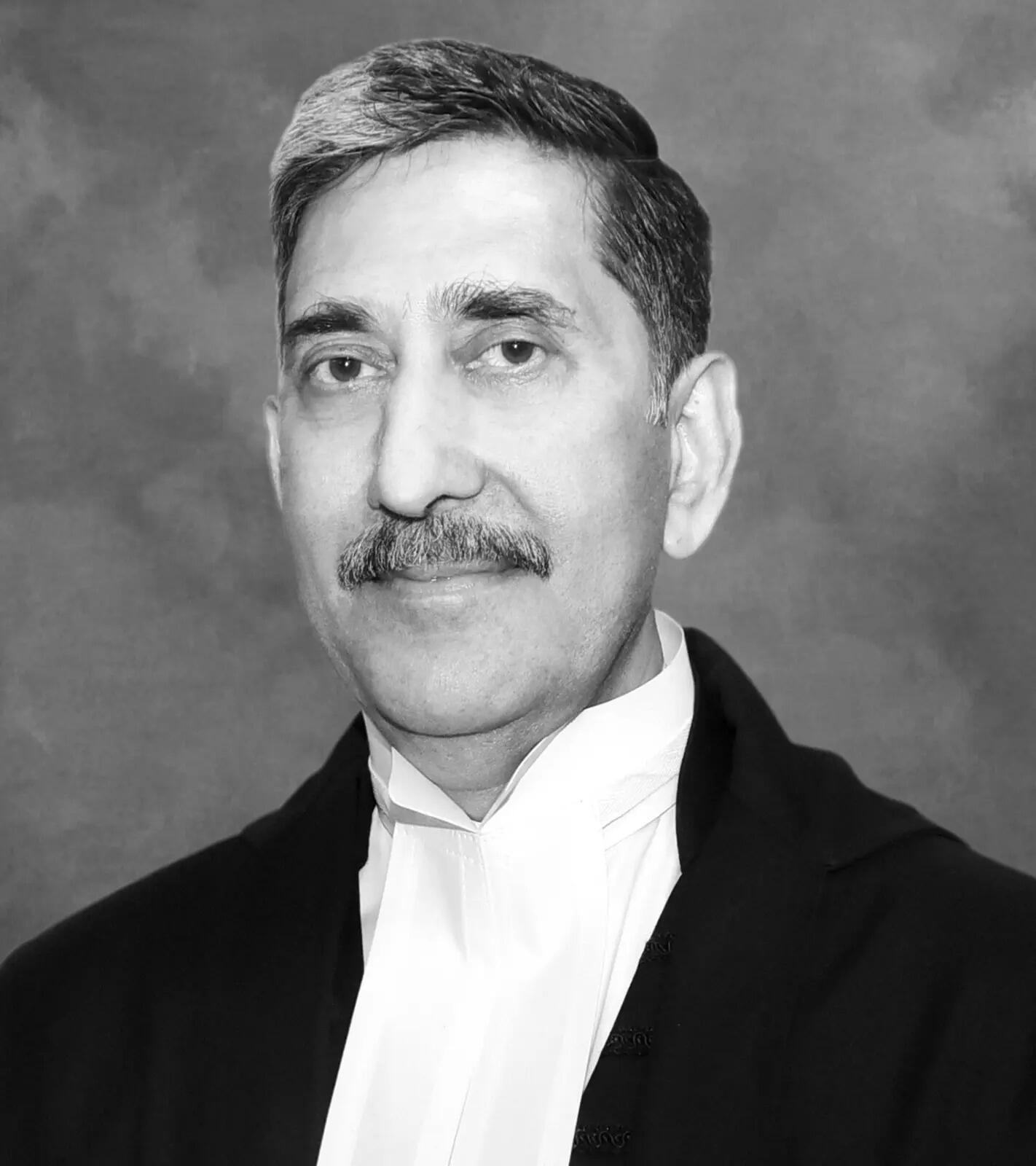
Bombay HC Chief Justice Shree Chandrashekhar
“The NIA projected an altogether new story. The things as stand today give two contradictory versions of the incident and both stories as floated by the ATS and NIA cannot be reconciled by any stretch of imagination,” observed the HC in its 25-page judgment made available late at night.Last September, a Special NIA trial court judge had framed charges under 19 heads, including for murder and terror offences, against Manohar Narwaria, Rajendra Chaudhary, Dhan Singh and Lokesh Sharma.The 4 accused approached the HC in appeal. They succeeded in having the trial court’s charge framing order set aside.“The Special Judge overlooked the inherent contradiction and intrinsic improbability in the prosecution story as put forward by the NIA,” the HC judgment authored by CJ Chandrashekhar said, adding, “There is no explanation coming forth as to how the voice samples (of accused) and FSL reports collected by the ATS and CBI can be ignored by the trial Court.”The NIA evidence is insufficient, inadmissible and accused cannot be tried on ATS probe, argued senior counsel Girish Kulkarni for two accused. The test identification after six years is inadmissible, as is Aseemanand’s confession on basis of which the four were even booked, and NIA did a legally impermissible fresh probe when ATS chargesheet already existed, argued counsel Kaushik Mhatre for two others. The HC found force in the submissions.ASG Anil Singh for NIA said the order framing charge is well reasoned, based on “additional incriminating material” and can’t be interfered with at this “crucial stage”.“Except narrating the incident and filing of the charge-sheet and supplementary charge-sheets by the CBI and NIA, nothing relevant has been stated by the NIA so as to support the order framing charge,” HC held.The evidence collected by the ATS is not wiped out from the record and must be considered by the trial Court, said the HC, adding, “There seems to be no answer in law as to how the trial Judge can deal with the materials collected by the ATS which implicate another set of accused persons.”In its supplementary charge-sheet, the NIA stated that Aseemanand who was an accused in a Hyderabad blast case confessed and disclosed that one Sunil Joshi, had told him that the Malegaon bomb blasts were handywork of his boys.The NIA had made eight new accused including Sunil Joshi, shown as dead, Ramcharan Kalsangara as absconding, and Ramesh Mahalkar and Sandeep Dange as wanted accused.The HC on the trial courtTo frame a charge against an accused person for serious crimes including murder, which may invite the noose as punishment, “trial court must be on guard to see whether there is sufficient material for proceeding against the accused,” said the CJ and Justice Chandak. But in the 2006 Malegaon blasts, the special NIA trial court judge failed to apply his mind, the HC held.The trial court on April 25, 2016, discharged all nine original accused, while ATS said there were eyewitnesses and one had even turned approver—state witness. The trial court discharged them by accepting the NIA stance that seven of them retracted their confessions recorded under MCOCA and “were projected accused by ATS merely on suspicion because they had criminal antecedents.” The trial court in 2016 also discharged one accused who never filed any discharge application, saying he too was entitled to similar relief.HC on NIAThe diagonally opposite stories in the charge-sheet filed by the ATS and the NIA lead nowhere. The witnesses proposed by the NIA are mostly hearsay witnesses. The materials collected by the NIA regarding purchase of bicycles etc. even if found truthful and admissible, cannot be considered as incriminating material against the appellants. A further investigation does not start with recording the statement of the accused person in a case. The further investigation is carried for the purposes of recording the evidence of a few more witnesses and for collection of additional materials to add other offenses or another accused person. This is a mystery why the NIA did not collect fresh materials and started recording the retracted statement of former accused. The Test Identification Parade conducted by the NIA six years after the blasts “would have no probative value” and in any case is not a substantive piece of evidence. It is of necessity to conduct a TIP without delay.Statements of a few witnesses on which the NIA seeks to lay a case against the appellants also cannot be admissible evidence. A witness who gives two versions of a story and retracts his previous statement becomes an unreliable witness and his testimony is liable to be discarded.Contradictions between ATS and NIA casesNIA projected an altogether new story that the appellants and other accused persons entered into a criminal conspiracy to commit terrorists acts with an intention to strike terror in the minds of the people. They were given arms and bomb preparation training at Bagli (MP) under the supervision of Sunil Shyamlal Joshi, Ramchandra Gopal Singh Kalsangara and Lokesh Sharma. The four, along with the wanted accused persons, made preparations, planning and procurement of materials and caused the bomb blasts.However, what is important to keep in mind is that the NIA created the prosecution story mainly based on confession and spot discovery statements of the accused and retracted confessions of former seven accused who stand discharged. On the other hand, the ATS claimed that the accused Mohd. Jahid Majjid Ansari was one of the planters of the bomb at Malegaon. The ATS is supported by the CBI. But NIA said he was 400 km from blast site.ATS said cycle purchasing was entrusted to A3-Munnawar Ahmed Mohammed Amin but the NIA claims that Rajendra Chaudhary went to a cycle shop and purchased a cycle in someone else’s name. The NIA also claims, on hearsay evidence since it knew cycles were used by the ATS accused, that other accused Manohar Narwaria went to another cycle shop and purchased a cycle.NIA completely ignored ATS chargesheet which gives vivid details of bomb blasts planning and the blast site soil sample Forensic Science Lab (FSL) report which matched with one original accused.The HC on legal principles governing Framing of Charge Court shall be within its powers to frame the charge against the accused person if record discloses grave suspicion that an accused can’t properly explain, but court doesn’t have to be convinced that an ensuing trial will end in conviction.It is well settled that the accused person is not required to undergo the rigors of trial if he can demonstrate that order framing charge is on evidence that “does not involve the accused person in the crime.”The HC on disclosure statementsThe disclosure statements of accused–statements leading to discovery of potential evidence–were not recorded in the presence of a Magistrate but NIA said were made during its probe; The jurisprudence on Criminal Law in India does not recognize the general perception that “he would never have confessed unless he was guilty”. The Indian Evidence Act, 1872 does not recognize the confession of a person accused of an offense admissible in evidence. Section 25 makes a confession to a police officer inadmissible against the accused person. Similarly, section 26 puts a bar on a confession of a person in the custody of a police officer being proved unless it is made in the immediate presence of a Magistrate. However, the statement made by an accused person in the police custody can be utilized by the prosecution provided it relates distinctly to the facts discovered based on information supplied by the accused. The disclosure statements of the appellants and other materials collected by the NIA cannot be relied upon to frame charges against them.