


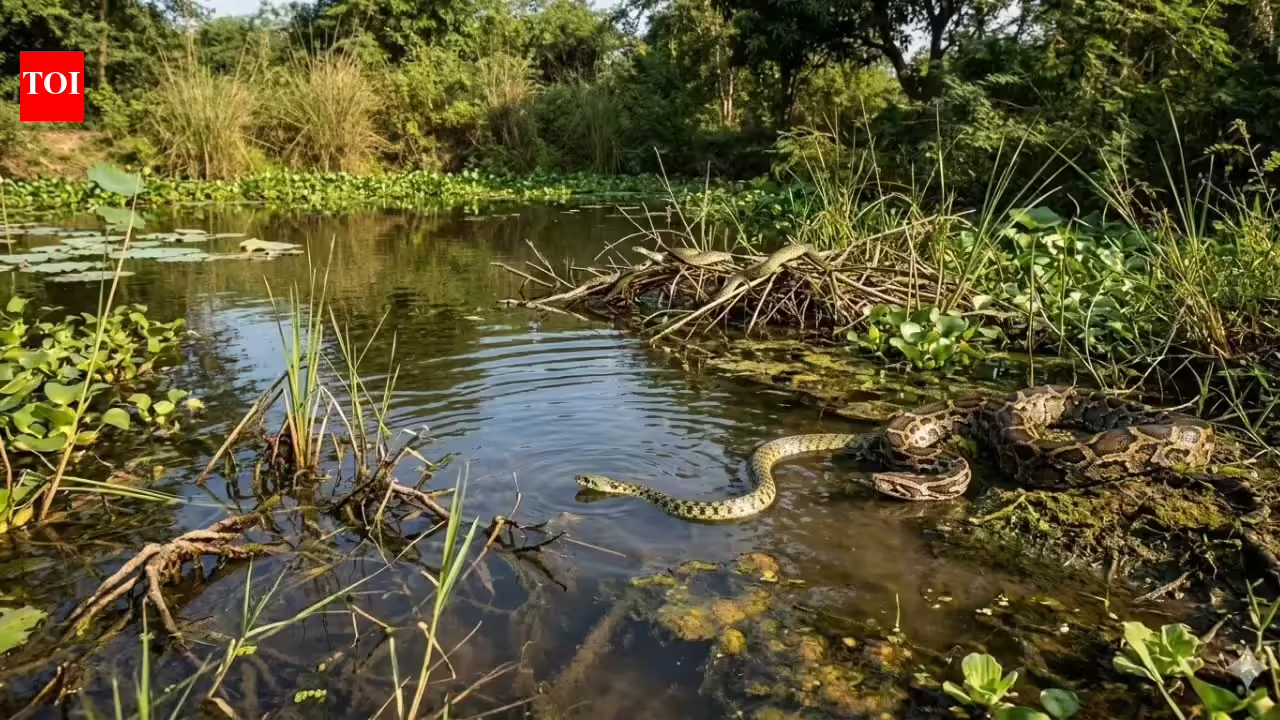
Lakes and rivers in Ontario stretch across enormous distances, from densely forested northern regions to quieter inland waterways that sit closer to towns and roads. Much of this terrain supports a wide range of reptiles, including several snake species that spend time near marshes, rocky shorelines, and shallow water. In some places, sightings are common enough that the relationship between snakes and water becomes part of the landscape itself. The list reflects geography more than danger. Most of the species found around these areas are non-venomous, and many remain hidden for much of the year despite large populations nearby.As reported by WorldAtlas, check the list below of 6 Ontario water bodies where snakes are commonly spotted.
6 Ontario water bodies where snakes are commonly spotted
1.Lake Erie
Along the northern shoreline of Lake Erie, wetlands and shallow coastal habitats create favorable conditions for several snake species. Eastern garter snakes appear regularly around grassy edges and marsh systems, while northern water snakes are often seen close to docks and rocky banks. Warmer temperatures around the lake help extend active periods during spring and summer.According to World Atlas, parts of the Lake Erie region also overlap with the habitat of the endangered Lake Erie watersnake, a reptile closely tied to shoreline ecosystems. Development and habitat loss have affected populations over time, particularly in areas with heavier human activity.
2. Georgian Bay
Georgian Bay has a fragmented coastline filled with rocky islands, inlets, and sheltered coves. That uneven terrain gives snakes plenty of hiding spaces, especially near sun-warmed stone surfaces where reptiles gather to regulate body temperature. Northern water snakes are frequently reported here, moving easily between shoreline rock and open water.The bay is also linked to one of Ontario’s better-known reptile habitats around the eastern Massasauga rattlesnake range. Sightings remain relatively uncommon because the species tends to avoid people, though its presence has shaped conservation work in sections of the region for years. As reported by World Atlas, Georgian Bay’s combination of wetlands and exposed rock creates unusually dense reptile diversity compared with many other parts of the province.
3. Lake Ontario
Urban areas dominate much of Lake Ontario, though quieter stretches of shoreline still support snake populations, particularly around marshlands and conservation zones. Water snakes and garter snakes remain the species most commonly observed near the lake itself. They are often spotted near reeds, drainage channels, and calmer inlets rather than open waterfronts.The contrast between urban infrastructure and reptile habitat makes the area slightly unusual. Some populations survive within narrow ecological corridors squeezed between roads, housing developments, and industrial shoreline projects. As referenced by World Atlas, the persistence of snakes around Lake Ontario reflects how adaptable some species can be when wetland systems remain partially intact.
4. Lake Huron
The shoreline surrounding Lake Huron changes constantly between sandy stretches, wooded areas, and marshy coastal pockets. These transitions matter because snakes often move between habitats depending on temperature and feeding conditions. Northern water snakes are particularly widespread here, especially near quieter bays where fish and amphibians are abundant.Inland wetlands connected to Lake Huron also support eastern fox snakes in some regions. They are large but generally non-aggressive snakes that rely heavily on wetland cover and shoreline vegetation. As described by the World Atlas, the lake’s broader ecosystem is one of the factors allowing multiple species to coexist within relatively close range.
5.St Lawrence River
The St. Lawrence River cuts through a large ecological corridor where wetlands, islands, and slower-moving channels provide shelter for reptiles. Snake sightings tend to increase in quieter backwater sections rather than the busier shipping routes associated with the river. Northern water snakes are again among the most visible species, though the surrounding habitat also supports milksnakes and garter snakes in certain areas. Seasonal flooding shapes much of the environment, creating dense vegetation along riverbanks where reptiles can remain hidden for long periods. According to the World Atlas, the river is partly because of the concentration of wetland habitat running alongside it through eastern Ontario.
6. Rice Lake
Compared with the Great Lakes, Rice Lake feels smaller and more enclosed, though its marsh systems attract a substantial reptile population. Shallow water, thick vegetation, and warmer summer conditions create a suitable habitat for several common Ontario snake species.The lake has long been associated with northern water snakes, which are frequently seen near fishing areas and shoreline rocks. Despite their appearance, they are non-venomous and usually retreat when approached. According to the World Atlas, the density of marsh habitat around Rice Lake is one of the main reasons snake activity remains so visible during warmer seasons.