


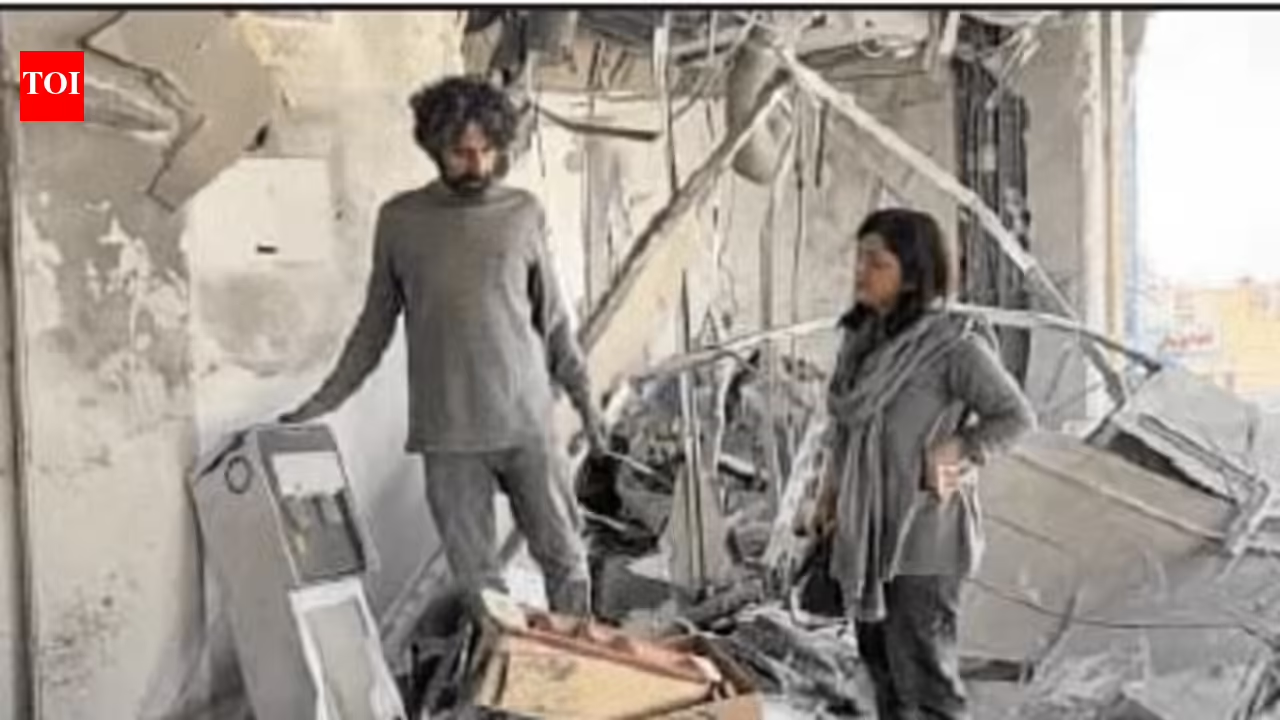
In the shattered remains of his 15year-old music school, Iranian musician Hamidreza Afarideh sat on a debris-laden floor, drew his bow and played with a kamancheh, what he called “the last sound” of a life’s work reduced to dust.Weeks after a strike destroyed Honiak Music Academy, Afarideh walked back into the hazardous ruins on April 7, 2026, and recorded a haunting video that quickly traveled far beyond Tehran, capturing his moments of deep grief after an airstrike on March 23 left the academy severely damaged.“Today was the last day to say goodbye to my school. I wanted the last sound that remains in this place to be the sound of music…not explosions and missiles,” Afarideh wrote the same day, in a now viral post. Within days, his images and clips had racked up millions of views across Instagram,“speaking to TOI Afarideh recalled the day of the attack. “I felt that a very important part of our memories, and sounds that could have continued in that space—sounds that many artists could hear, see, and live with for years—were suddenly destroyed by a missile and a drone.” The music academy, built over a decade and a half by Afarideh and his wife, Sheida Ebadatdoust, was what he calls “their shared life project.”“We worked with very limited resources, relying only on our dreams and dedication to build this academy. Losing it suddenly is extremely hard. All our hard work, efforts, actions to bring people closer to music and instruments was lost in a single night. It is very difficult to accept. Everything we built over so many years… This loss will take years to process.”Despite the risk of collapse, he returned to the damaged building. “I knew it was very dangerous… but I felt that if I didn’t record this sound, it would stay in my heart forever. I might not stay (alive) afterward… I felt I had to go there and make this the last image and the last sound remaining from the space we had created.”For Afarideh, the viral moment has brought global attention—but also underlined, he says, “the reality of war and destruction” faced by his 250 students and 22 teachers. His video has become a global plea for recognition of the cost of war not just in bodies and infrastructure, but in art, memory, and the fragile ecosystems of creativity that take decades to build and minutes to erase.He calls the place a “second home” where students came not just to learn music but to feel seen and held. “Students, who were to return someday, are now scattered, shell-shocked, and struggling to process what happened. One child crossed the building with his mother and didn’t speak for hours afterward. All students are going through similar feelings.”Yet, Afarideh insists on the power of art. “Music… is a symbol of freedom,” he said. “In times of war, it can heal—even if only a little—the pain of those who have lost everything.”