



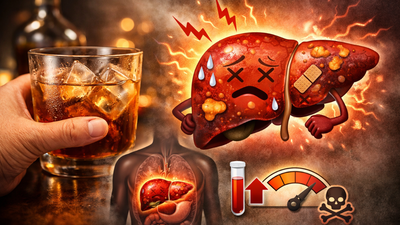
The damage builds up slowly, from fatty liver to cirrhosis, often before any symptoms show up.One of the most common mistakes I see in my clinical practice is the idea that “a little alcohol every day is fine.” The liver, on the other hand, tells a very different story, especially in India, where liver disease is becoming more common.India already has a lot of people who are exposed to alcohol. Recent data shows that about 14–16% of Indians drink alcohol, and a large number of them use it in ways that are harmful or addictive. It’s even more worrying that studies say about 1 in 12 Indians may have alcohol use disorder, which means they drink too much and put themselves in danger. This has a direct effect on the liver.If you drink alcohol every day, your liver has to break it down all the time. This process makes harmful by-products like acetaldehyde that hurt liver cells and cause inflammation. This leads to a dangerous but predictable progression over time.Fatty liver is the first stage, and it can happen within weeks of drinking regularly. If you stop drinking alcohol, you can get better at this point. But most patients keep drinking, which lets the damage get worse without anyone noticing.This can lead to alcoholic hepatitis, which is when the liver gets inflamed. Symptoms like tiredness, loss of appetite, and jaundice may start to show up, but not always. This stage is hard to deal with in a clinical setting because you never know what will happen.The liver gets fibrosis and then cirrhosis, which is a permanent condition, when it is exposed to the same thing over and over again. Alcohol is now the main cause of liver cirrhosis in India, accounting for more than 40% of cases in some studies. This has pushed other causes down the list. Liver disease caused by alcohol is common around the world and in India. It is thought that about 3–5% of the general population may already have some kind of liver damage from drinking alcohol. This number goes up a lot for people who drink regularly. What makes this especially worrying is that liver damage doesn’t show any signs. A significant number of patients remain asymptomatic until later stages. When problems like fluid buildup, internal bleeding, or liver failure happen, the damage is usually permanent.India has a lot of liver disease, too, with more than 18% of all liver-related deaths happening there. This shows how big the problem is. The main point is clear: the liver doesn’t fail all at once; it fails slowly, quietly, and often without warning. Even if you think you’re drinking “moderate” amounts of alcohol every day, you’re not giving your liver the time it needs to heal.People may accept drinking every day, but the liver doesn’t adapt; it just gets worse.Dr. Shaleen Agarwal, Principal Consultant & Chief of Liver Transplant & HPB Services, Amrita Hospital, Faridabad