

GOALS BEYOND THE GAME
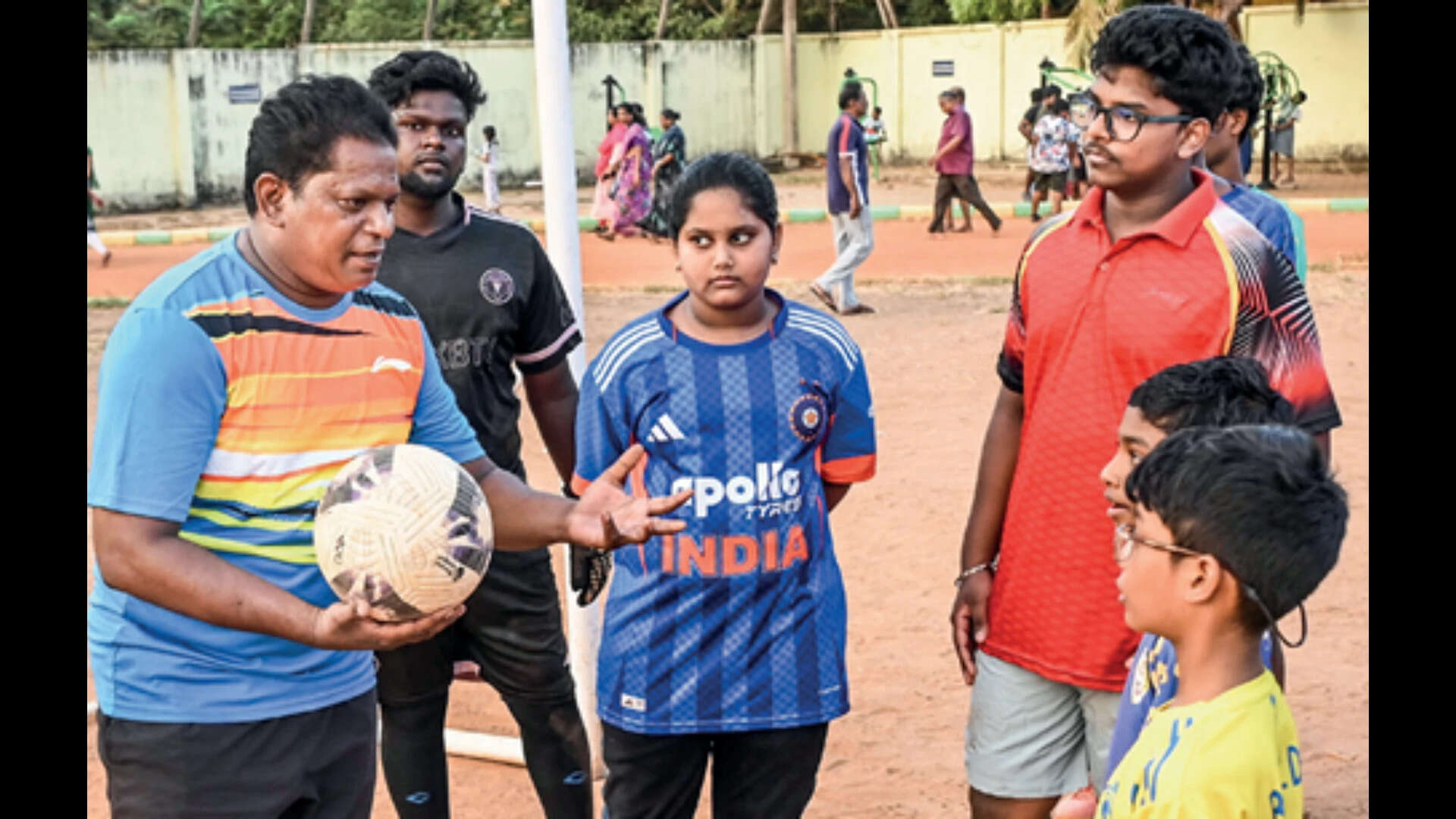
Senthilkumar teaches football to underprivileged kids in north Chennai every day. Pic by: C Suresh Kumar
The son of a daily wage worker in north Chennai earning about Rs 2,000 a month, V Senthilkumar’s route out was through football. “My parents considered sport a waste of time, but I loved watching football and wanted to learn,” says the 47-year-old. Having picked up the sport, playing with area seniors, his coach recognized his talent and decided to coach him. “I began participating in district and state-level tournaments and went up to the U-21 state-level football tournament,” says Senthil. “My father earned only Rs 2,000. We had no money for proper nutrition or gear. And so, I took up a part-time job as an office assistant. The owner looked after me like his own son and he paid me money to afford milk and four eggs a day, morning and evening for training and paid for me to travel all over India for my tournaments and even got me shoes,” he says. Senthil represented Tamil Nadu till 2004 but lost his way after his parents died when he was 26. Recognizing his determination and talent, his coach encouraged him to apply for a job in port customs through the sports quota. “I got a job as a sepoy,” says Senthil. Today, he is determined to give back to his community. Through his North Chennai Football Club, he trains children from his area. “All the kids here say they want to become like me, but I hope they go yond and empower more children.“CHOOSING DIGNITY IN LABOR
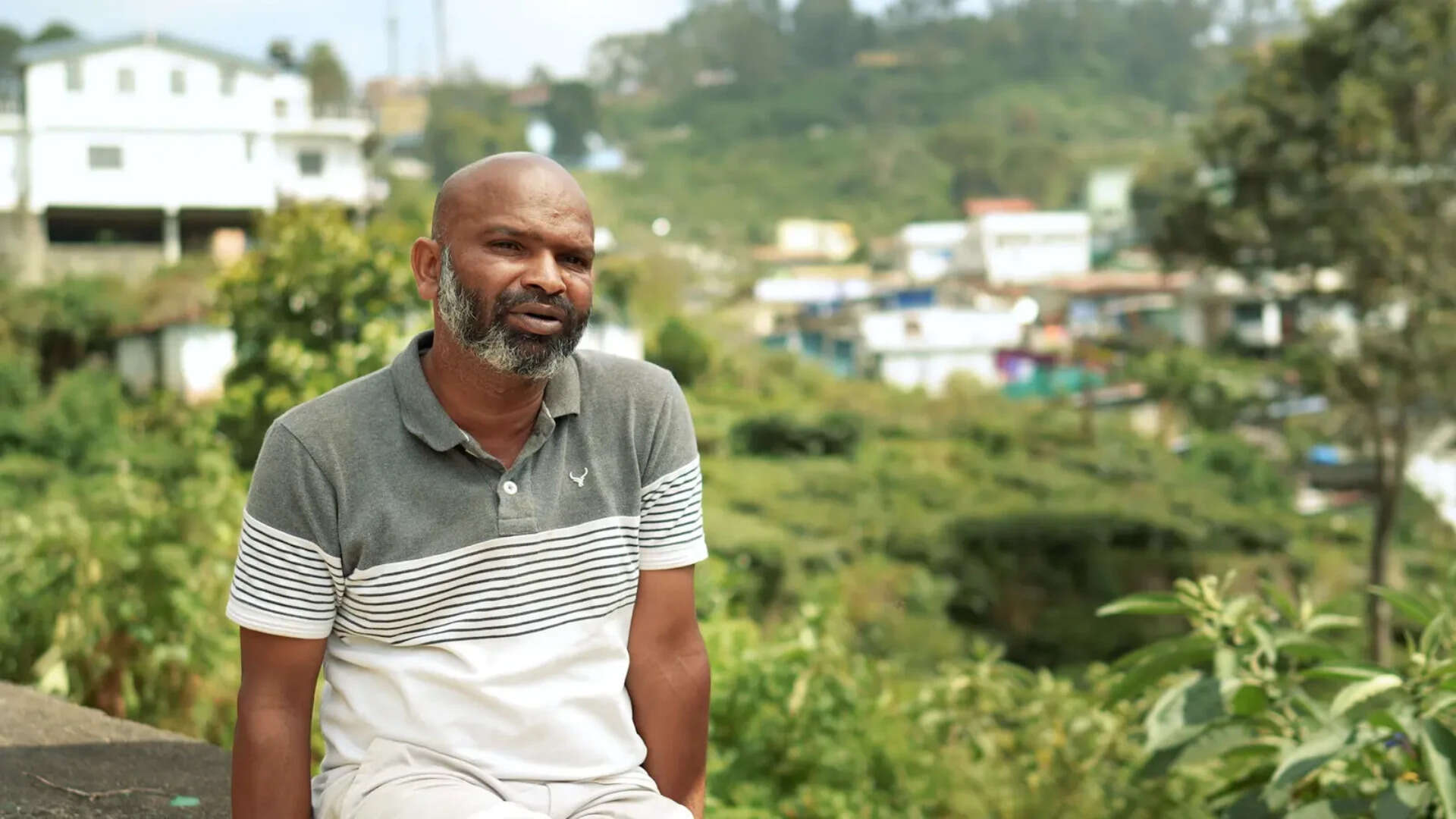
Raees went on to pursue a PhD on discrimination among scheduled castes, focusing on the working conditions of sanitation workers.
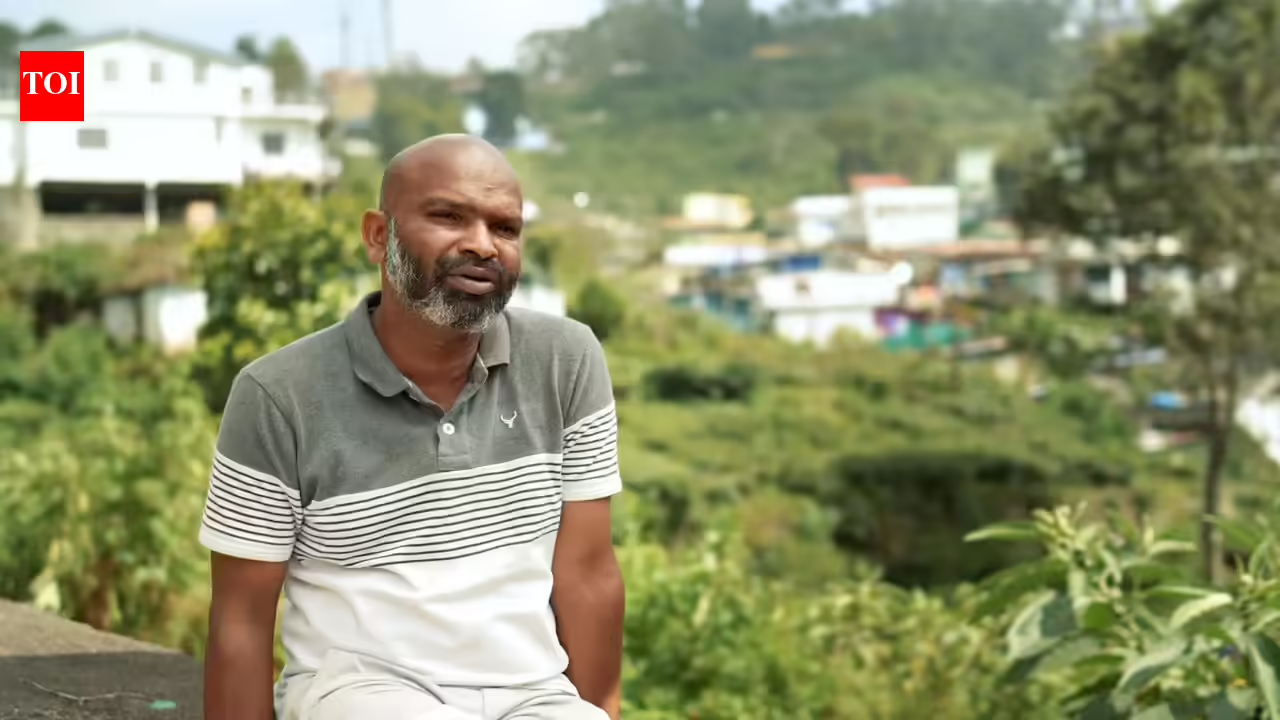
Raees Mohammed from the Arunthathiyar community grew up watching his father, a sanitation worker, take on any job available to put food on the table. “Some days it was manual scavenging. I would see him return home covered in sewer waste, dripping on the floor. On other days it was retrieving decomposing bodies for the police. He hated it and no matter how much he washed his hands, they never felt clean to him. He said the smell never left him and he eventually lost his ap petite in the evenings. My mother worked as a nanny in a govt school in Kotagiri,” says Raees, who later converted to Islam. “At village feasts, we were made to sit outside. When I asked why, my mother said that’s just how our life is. She also told me to make a name for myself.” Raees went on to pursue a PhD on discrimination among scheduled castes, focusing on the working conditions of sanitation workers. “There was no dignity in manual scavenging. I wanted to change that,” says the 44-year-old. After months of research, Raees discovered that globally, septic tanks are cleaned using machines such as slush mixers, vacuum systems and jet rodders, making the process free of human contact. Raees quit his job and started a machine-based septic tank cleaning service in Kotagiri, employing people from his community. In four years, his team has serviced more than 1,000 homes. “It’s not just a business for me. It’s helping my community see that sanitation can be done while keeping your self-respect intact.” Raees has now inspired many within the Arunthathiyar community to start their own septic tank cleaning businesses, turning a stigmatized occupation into more dignified work.FINDING A VOICE AMIDST THE RHYTHM OF PROTEST
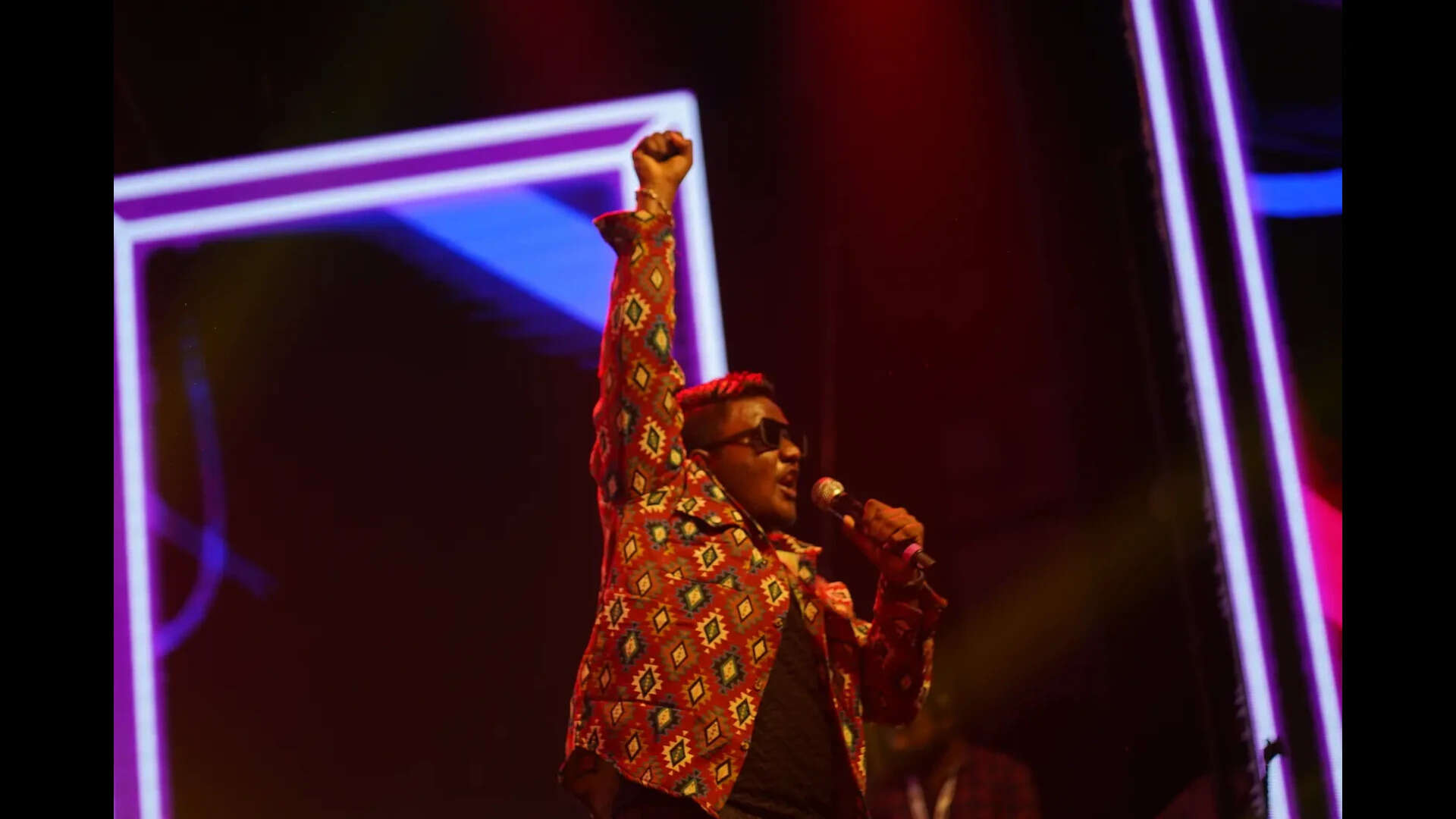
Known for his political songs, Rajendra has composed tracks on issues ranging from Special Intensive Revisions (SIR) in ‘Mera PM Vote Chori’ to the Israel–Palestine war in ‘Break the bloody silence’, and the recent assembly elections with ‘Delhi vs Tamil Nadu 2026’ for DMK and its allies.
“In North Chennai, where I grew up, music is everywhere. Parai processions, temple festivals, sea, protests, even street hawkers arguing. You grow up with it, so it comes naturally,” says Rajendra Prasad. But at home, where his parents and grandparents worked as sanitation workers, music did not seem like a viable future. “In our community, a job meant 9-to-5,” says the 27-year-old. So, he joined a B.Com course at a govt college, where his involvement with Students’ Federation of India (SFI) changed things. “I used to sing at protests, aware ness camps, even during arrests. After being arrested for protesting against NEET, we were waiting at the community hall and I began singing: ‘…kalvi enga moochu, da. Irukka maatom kizha, da. Padichu varuvom melai, da’ (Education is our right. We won’t be stifled. We will educate and empower ourselves). With no formal training, I turned to the internet. And YouTube became my best friend. I learned music programming and production,” says Rajendra, now a music composer known for his political songs. Rajendra has composed tracks on issues ranging from Special Intensive Revisions (SIR) in ‘Mera PM Vote Chori’ to the Israel–Palestine war in ‘Break the bloody silence’, and the recent assembly elections with ‘Delhi vs Tamil Nadu 2026’ for DMK and its allies. “My parents don’t support my musical career. But I’ve decided to continue using my voice to address issues,” says Rajendra, who wants to collaborate with Think Indie Music, a music label, and compose for films and help kids from his community.TEACHING KIDS TO LEAD
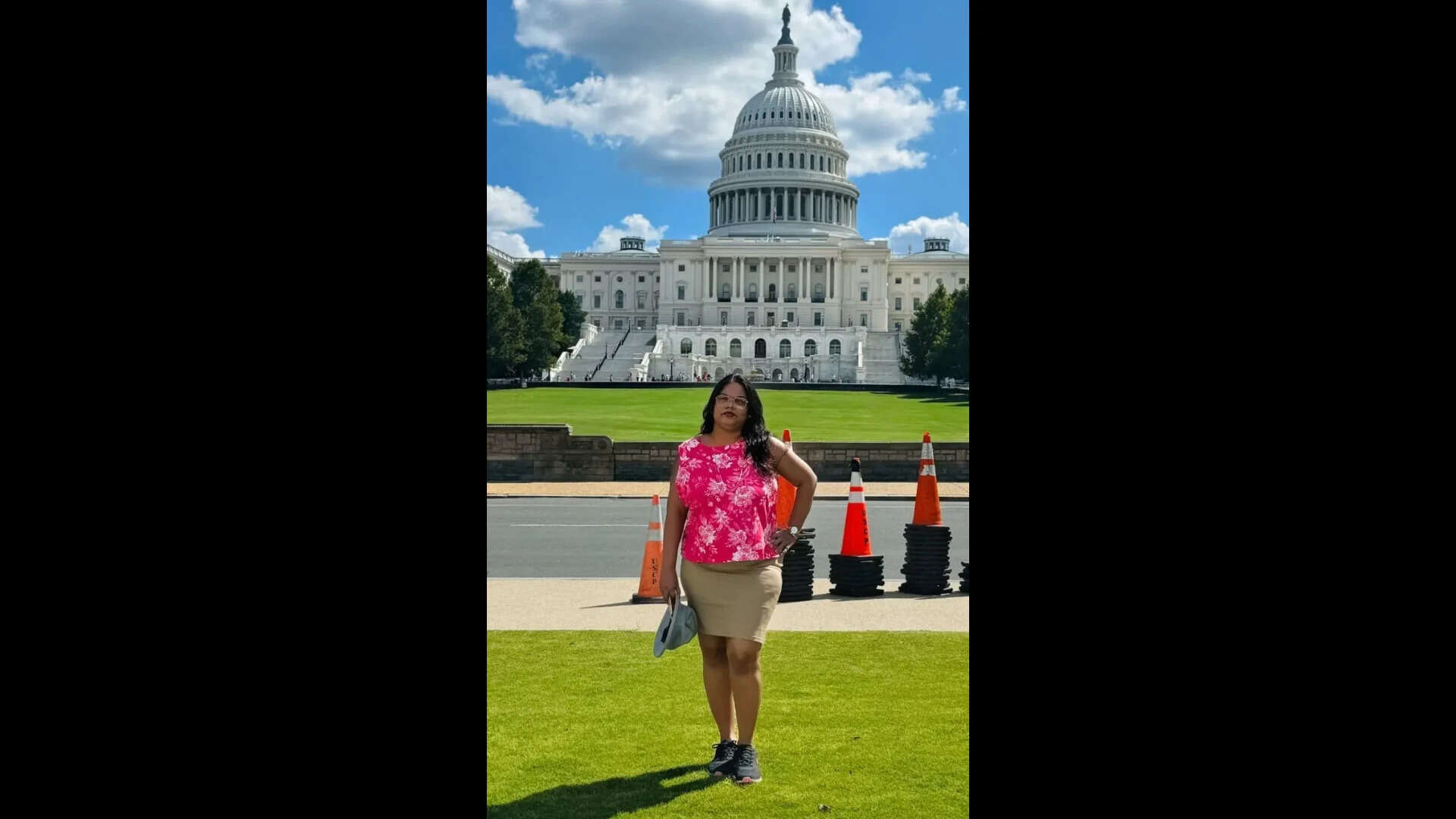
Shalin Maria Lawrence in the US
For Shalin Maria Lawrence, the daughter of a TNEB foreman, growing up in KM Garden, Choolai, international travel felt like an impossible dream. So, when she was selected for a US State Department leadership program in 2025, it almost became a community celebration in her neighborhood of 800 families. Shalin has been documenting the lived experiences of dalit communities in north Chennai through workshops, columns, and essays, writing about caste, access to education, and the everyday barriers young people face. “I was the first to ever step outside India. My neighbors and relatives kept video calling me while I was in the US. They were so proud,” says the dalit activist and writer. Shalin says she wants to pay it forward and helps teens from her community access scholarships and exchange programs. “It may seem small to others, but for us, it changes how we dream. I want to help young people from my community start thinking about writing, policy, leadership, so they can create a change,” says Shalin.WHY DO WE CELEBRATE DALIT HISTORY MONTH?“If we look back, there wasn’t a clearly articulated Dalit identity earlier. But from the 1980s onwards, you begin to see a rise in Dalit political assertion. With that came greater recognition of their struggles. In the last two decades, especially after 2000, there has also been a conscious documentation of Dalit literature, songs, art, and culture,” says Pratham Parekh, a sociologist.This is how identity formation usually works; first, the identity is asserted and recognized, and then its cultural expressions gain visibility. “So, dedicating a day or a month, like Dalit History Month, is a way of creating awareness and bringing the cultural and historical aspects of that identity into public consciousness,” he adds.“For communities that make up nearly 70% of India’s population, Dalit History Month is about reclaiming, documenting, and amplifying histories long ignored,” says Lakhshya Lakey, political commentator. “For Dalit History Month, we did three video series, revisiting figures such as Periyar, Ambedkar, and Phule. Examining Ambedkar beyond a Dalit icon as a feminist, economist, and architect of labor rights; Phule’s critique of caste and patriarchy and his role in shaping the language of resistance; and Periyar’s linking of caste with Dravidian identity and anti-Brahmanical thought,” he adds.In Chennai, Dalit History Month is marked through a mix of cultural and public events, from art and literature to political discussions. This year, the Dalit Aesthetics Art Show 2026 at Lalit Kala Akademi, part of the Vaanam Festival, brought together more than 30 artists exploring caste, identity and resistance through visual art.